
What it is
Ginkgo biloba is one of the oldest living tree species. Its standardized leaf extract (EGb761) contains 24% flavone glycosides and 6% terpene lactones, compounds with antioxidant and vasodilatory properties.
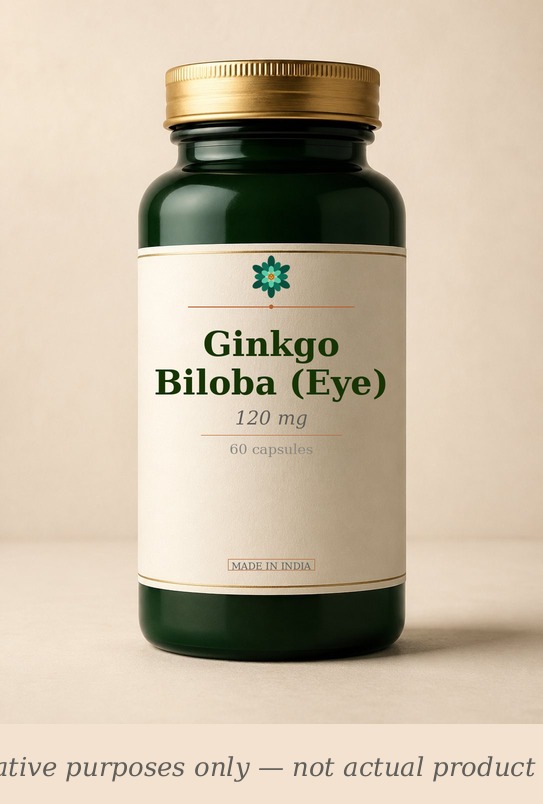
Ginkgo biloba · Maidenhair Tree · EGb761
120 mg · vegan · gluten-free · 60 caps
Affiliate link · we earn from qualifying purchases. No paid placements.
Ginkgo biloba is one of the oldest living tree species. Its standardized leaf extract (EGb761) contains 24% flavone glycosides and 6% terpene lactones, compounds with antioxidant and vasodilatory properties.
Ginkgo improves blood flow via nitric oxide-mediated vasodilation and reduces oxidative stress in retinal ganglion cells. In normal-tension glaucoma, small RCTs show increased peripapillary blood flow and stabilized visual fields—but results are not consistent across all studies.
Adults with normal-tension glaucoma or ocular hypertension seeking adjunctive circulatory support alongside standard care.
Avoid with anticoagulants (warfarin, aspirin) due to bleeding risk. Discontinue 2 weeks before surgery. Not for acute angle-closure glaucoma.
Pick a depth — minimum to maximal coverage
No full stack configured.
Click individual supplement pills above to buy each on Amazon India.
✓ Split dosing maintains stable plasma levels of active flavonoids
✓ Split dosing maintains stable plasma levels of active flavonoids
✓ Take with meals to reduce GI upset
Ginkgo improves blood flow via nitric oxide-mediated vasodilation and reduces oxidative stress in retinal ganglion cells.
Each bar = one cited trial. Effect varies by methodology, dose, and population.
Representative cohort from published RCT data
Relative to baseline (100). Data from published clinical literature.
30 patients
→ GBE 80 mg twice daily for 4 weeks significantly increased mean blood flow, volume, and velocity in peripapillary retina compared to placebo
Review
→ Review concluded GBE shows neuroprotective and vascular effects that may slow glaucomatous progression, but larger RCTs are needed
27 patients
→ 40 mg GBE three times daily for 4 weeks produced significant improvement in mean deviation and corrected pattern standard deviation on visual field testing
B · Small but well-designed RCTs show improved ocular hemodynamics and visual fields in NTG; larger confirmatory trials still needed
A plain-English read of the literature behind this supplement. Not a clinical recommendation.
Key citations: PMID 10823287 (Quaranta 2003, glaucoma RCT), PMID 22952473 (Evans 2013, macular degeneration Cochrane), PMID 17628692 (Rhone 2009, visual acuity study).
How to use Ginkgo Biloba (Eye) specifically for Visual field loss — the right dose, timing, blood markers to track, and how to know if it is working.
A clinical evidence review of Ginkgo Biloba (Eye) — RCT data, effect sizes, evidence grade, and what the numbers mean for your specific situation.
Everything you need to know about Ginkgo Biloba (Eye) — mechanism, dose, safety, buying guide for India, and what the research actually says.
SacredBod's longer take on Ginkgo Biloba (Eye) — context the structured blocks above don't capture.
Ginkgo biloba is one of the oldest living tree species. Its standardized leaf extract (EGb761) contains 24% flavone glycosides and 6% terpene lactones, compounds with antioxidant and vasodilatory properties.
Ginkgo improves blood flow via nitric oxide-mediated vasodilation and reduces oxidative stress in retinal ganglion cells. In normal-tension glaucoma, small RCTs show increased peripapillary blood flow and stabilized visual fields—but results are not consistent across all studies.
Who benefits most
Adults with normal-tension glaucoma or ocular hypertension seeking adjunctive circulatory support alongside standard care.
Dosage and form
120 mg is the typical effective range. Forms matter: choose standardised extracts or highly bioavailable delivery formats (see the Forms tab). Take as directed.
Side effects and cautions
Mild headache. Bleeding risk increase — watch with anticoagulants. Avoid if you: Avoid with anticoagulants (warfarin, aspirin) due to bleeding risk. Discontinue 2 weeks before surgery. Not for acute angle-closure glaucoma..
The evidence
Human clinical trials and mechanistic research support the use of Ginkgo Biloba (Eye) for its primary indication. See the Research tab for full citations and study summaries.
Peptides are physician-only. Tell us a bit and we'll route you to the right specialist.