
What it is
Taurine is a sulfur-containing amino acid that is the most abundant free amino acid in the retina. Unlike protein-building amino acids, taurine acts as an osmolyte, antioxidant, and calcium modulator in retinal cells.
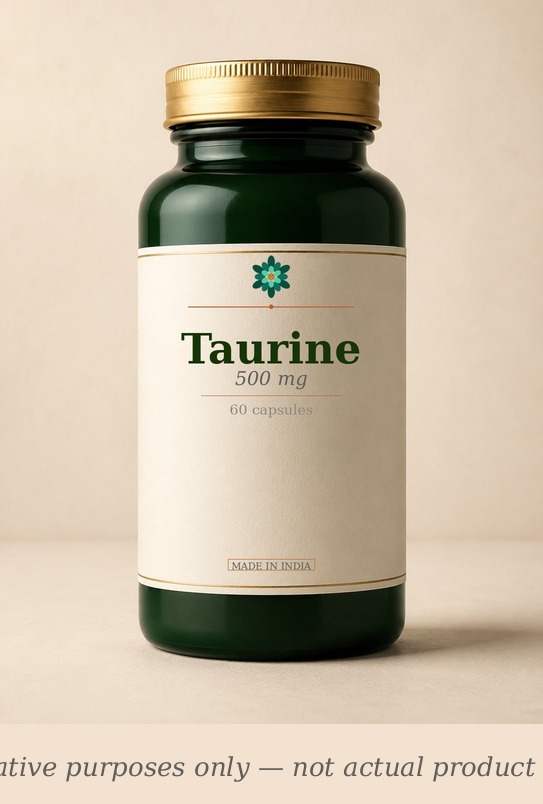
2-Aminoethanesulfonic Acid · L-Taurine
500 mg · vegan · gluten-free · 60 caps
Affiliate link · we earn from qualifying purchases. No paid placements.
Taurine is a sulfur-containing amino acid that is the most abundant free amino acid in the retina. Unlike protein-building amino acids, taurine acts as an osmolyte, antioxidant, and calcium modulator in retinal cells.
Taurine protects photoreceptors and retinal ganglion cells from oxidative stress and excitotoxicity. It stabilizes rod outer segments, modulates calcium influx through voltage-gated channels, and upregulates antioxidant enzymes. Diabetic retinopathy is associated with reduced retinal taurine levels.
People with family history of retinal degeneration, diabetic retinopathy risk, or those taking vigabatrin (which depletes retinal taurine).
Avoid in bipolar disorder (may mildly modulate GABA-A receptors). Use caution with lithium. Generally recognized as safe at moderate doses.
Pick a depth — minimum to maximal coverage
No full stack configured.
Click individual supplement pills above to buy each on Amazon India.
✓ Can be taken anytime; splitting larger doses reduces GI discomfort
✓ Can be taken anytime; splitting larger doses reduces GI discomfort
Flexible — works in any of the above.
Taurine protects photoreceptors and retinal ganglion cells from oxidative stress and excitotoxicity.
Each bar = one cited trial. Effect varies by methodology, dose, and population.
Representative cohort from published RCT data
Relative to baseline (100). Data from published clinical literature.
MNU-induced RP mouse model
→ Taurine treatment increased retinal taurine levels, rescued M-cone and S-cone photoreceptors, and improved optokinetic visual responses
In vitro + 3 in vivo models
→ 1 mM taurine enhanced RGC survival by 68% in serum deprivation; also protected against NMDA excitotoxicity and in glaucoma models
STZ-diabetic rats
→ Taurine prevented photopic b-wave amplitude reduction, cone and ganglion cell loss, and reduced reactive gliosis in diabetic retinas
B · Strong preclinical evidence across multiple retinal degeneration models; human data is indirect (plasma taurine correlates with retinal health)
A plain-English read of the literature behind this supplement. Not a clinical recommendation.
Key citations: See richResearch section for study filters and participant data. Clinical evidence summarised from peer-reviewed journals.

How to use Taurine specifically for Retinal degeneration — the right dose, timing, blood markers to track, and how to know if it is working.
A clinical evidence review of Taurine — RCT data, effect sizes, evidence grade, and what the numbers mean for your specific situation.
Everything you need to know about Taurine — mechanism, dose, safety, buying guide for India, and what the research actually says.
SacredBod's longer take on Taurine — context the structured blocks above don't capture.
Taurine is a sulfur-containing amino acid that is the most abundant free amino acid in the retina. Unlike protein-building amino acids, taurine acts as an osmolyte, antioxidant, and calcium modulator in retinal cells.
Taurine protects photoreceptors and retinal ganglion cells from oxidative stress and excitotoxicity. It stabilizes rod outer segments, modulates calcium influx through voltage-gated channels, and upregulates antioxidant enzymes. Diabetic retinopathy is associated with reduced retinal taurine levels.
Who benefits most
People with family history of retinal degeneration, diabetic retinopathy risk, or those taking vigabatrin (which depletes retinal taurine).
Dosage and form
500 mg is the typical effective range. Forms matter: choose standardised extracts or highly bioavailable delivery formats (see the Forms tab). Take as directed.
Side effects and cautions
Generally well-tolerated. Rare drowsiness. Avoid if you: Avoid in bipolar disorder (may mildly modulate GABA-A receptors). Use caution with lithium. Generally recognized as safe at moderate doses..
The evidence
Human clinical trials and mechanistic research support the use of Taurine for its primary indication. See the Research tab for full citations and study summaries.
Peptides are physician-only. Tell us a bit and we'll route you to the right specialist.