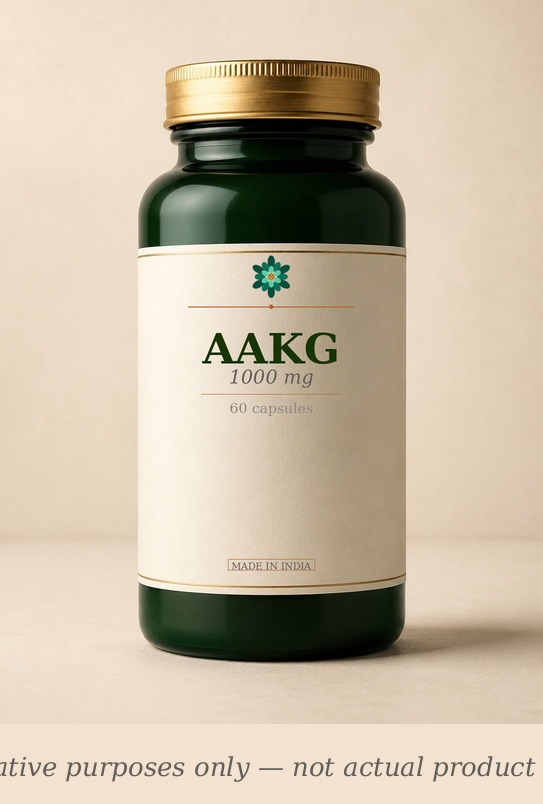
SacredBod's longer take on AAKG — context the structured blocks above don't capture.
L-arginine bound to alpha-ketoglutarate (AKG), a TCA cycle intermediate. The pairing claims better bioavailability than plain L-arginine, which has notoriously low oral absorption (<1% systemic). AKG itself has independent longevity research (Buck Institute), but that’s not the marketed mechanism here.
Arginine is the substrate for nitric oxide synthase (NOS) producing NO for vasodilation. Problem: oral arginine has poor bioavailability due to intestinal arginase. AKG binding may help slightly but doesn’t solve the fundamental issue. L-citrulline (which converts to arginine in kidneys, bypassing intestinal arginase) has better evidence for NO availability.
The evidence base (C+ grade) reflects this: Some small trials show modest performance effects. L-citrulline generally outperforms AAKG for the same intended mechanism at lower doses. For practical use, the typical dose range is 3000-6000 mg pre-workout, ideally with a fat-containing meal for fat-soluble compounds.
Who benefits most: Pre-workout supplementation seekers. Adults investigating arginine pathway support. People who prefer arginine over citrulline form for personal reasons.
Cautions: Herpes flare-history (arginine can trigger HSV reactivation in some). Concurrent nitrate medications. Asthma (case reports of bronchospasm with high-dose arginine). Hypotension medications without monitoring.
Pairing notes: Citrulline malate for combined NO pathways. Beetroot extract.