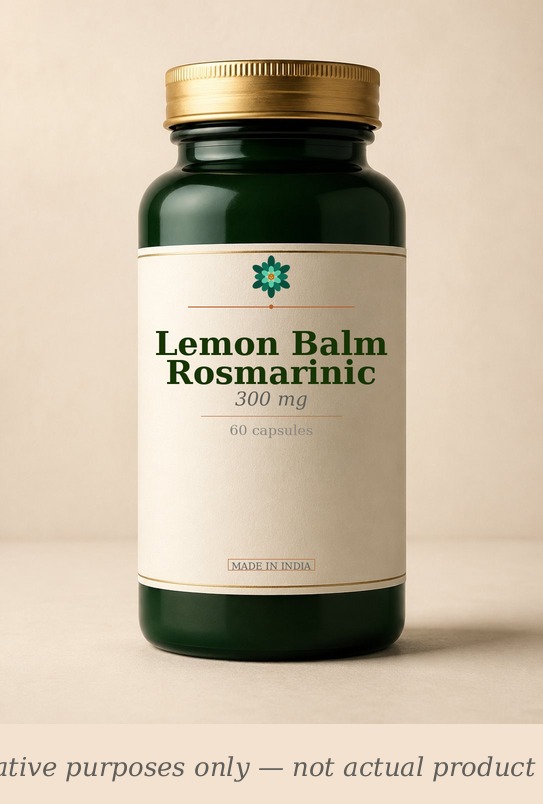
SacredBod's longer take on Lemon Balm Rosmarinic — context the structured blocks above don't capture.
What It Is
Lemon Balm Rosmarinic provides a standardised extract of Melissa officinalis — the lemon-scented Mediterranean herb — guaranteed to contain 5 % rosmarinic acid. While whole-herb lemon balm products vary in potency, rosmarinic acid is the key bioactive responsible for the anxiolytic, sleep-promoting and cognitive effects documented in clinical trials. Rosmarinic acid crosses the blood-brain barrier, inhibits GABA degradation and directly modulates GABA-A receptors — mechanisms that explain lemon balm’s centuries of traditional use for nervousness and insomnia. In India, lemon balm is not native but is cultivated in hill stations and available as an imported supplement.
How It Works
- GABA-T inhibition — Rosmarinic acid potently inhibits GABA transaminase (GABA-T), the enzyme that breaks down GABA in synapses. By preserving GABA, lemon balm increases inhibitory neurotransmission and reduces neuronal hyperexcitability.
- GABA-A receptor binding — Rosmarinic acid and other lemon balm compounds directly bind to GABA-A receptors as partial agonists, enhancing the receptor’s response to endogenous GABA — a mechanism shared with benzodiazepines but without dependence.
- Acetylcholinesterase inhibition — Rosmarinic acid inhibits AChE, increasing acetylcholine levels. This provides cognitive enhancement alongside anxiolysis — a unique combination among sleep herbs.
- Antioxidant neuroprotection — Rosmarinic acid is a potent scavenger of free radicals and inhibits lipid peroxidation, protecting neurons from oxidative stress that can disrupt sleep-wake circuitry.
Who Benefits Most
- Anxiety-related insomnia sufferers — racing thoughts and mental hyperactivity that prevent sleep onset.
- Older adults with mild cognitive impairment and sleep disturbance — the dual cognitive-sleep benefits are particularly relevant.
- Cardiac patients with post-surgical or chronic angina-related sleep disruption — validated in this population.
- Those who want anxiolytic sleep support without sedation — lemon balm does not cause morning grogginess.
Dosage Guide
| Goal | Dose | Timing |
|---|
| Sleep and anxiety | 300–500 mg extract (5 % RA) | With dinner or 1 hour before bed |
| Cognitive + sleep | 300 mg twice daily | Morning and evening |
| Intensive support | 1,500–3,000 mg whole herb equivalent | Divided doses |
Standardisation to rosmarinic acid content is critical. Raw lemon balm leaf or tea provides variable and often subtherapeutic amounts. Look for extracts specifying 5 % rosmarinic acid or the phytosomal form (Relissa) for enhanced bioavailability.
Safety and Interactions
Lemon balm has an exceptional safety profile. It is a culinary herb used in teas, sauces and desserts across Europe and the Middle East. The only caution is a theoretical thyroid-suppressing effect at very high doses — monitor if hypothyroid. Mild additive sedation with CNS depressants is possible but rarely clinically significant.
India-Specific Context
- Hindi/Sanskrit name: No classical equivalent; Melissa officinalis is not native to India. However, it is cultivated in hill stations (Ooty, Munnar, Shimla) for essential oil production.
- Local availability: Lemon balm supplements are less common on Amazon.in than valerian or ashwagandha. NOW Foods and INLIFE may stock it seasonally. Buyers may need to import via iHerb or combine with other sleep herbs. Himalaya Brahmi is the closest Ayurvedic alternative.
- Regulatory status: Not a Schedule H drug; sold as a dietary supplement and herbal product.
- Ayurvedic parallel: The anxiolytic-cognitive dual action aligns with Brahmi (Bacopa monnieri) — the premier Ayurvedic Medhya Rasayana. Both herbs enhance GABAergic activity and inhibit acetylcholinesterase. Modern integrative practitioners sometimes combine lemon balm with Brahmi for enhanced nootropic-anxiolytic effect.
- Cultivation note: Lemon balm grows well in Indian hill station climates. Some organic farms in Kerala and Tamil Nadu cultivate it for essential oil and herbal tea production.
Traditional Use in Indian Medicine
Lemon balm does not appear in classical Ayurvedic texts — it is a Mediterranean and Middle Eastern herb. However, the concept of using aromatic, calming herbs for Vata disorders of the mind is quintessentially Ayurvedic. Jatamansi, Brahmi and Shankhapushpi are the classical Indian equivalents for anxiety-insomnia management. Modern Indian integrative medicine is increasingly incorporating lemon balm — particularly its rosmarinic acid-standardised extracts — alongside classical herbs for patients who want evidence-based, non-sedating anxiolytic sleep support. The AYUSH Ministry’s openness to cross-traditional medicine has facilitated the import and cultivation of European herbs like lemon balm in India.