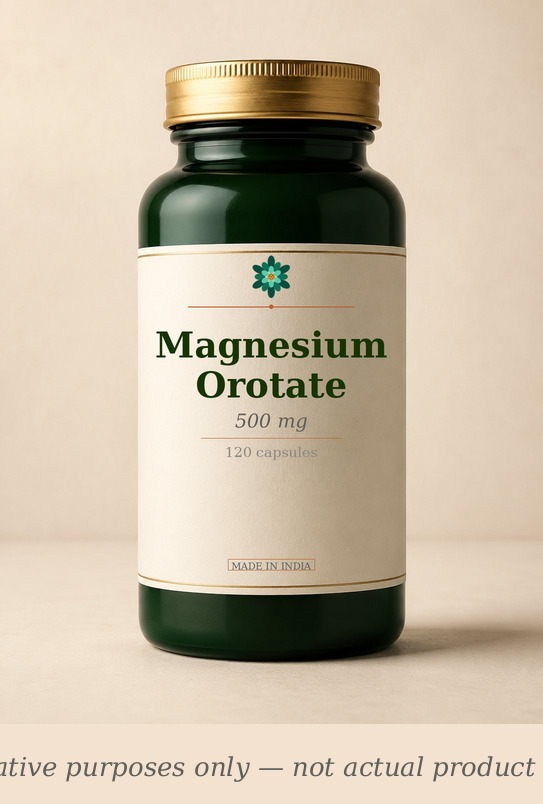
SacredBod's longer take on Magnesium Orotate — context the structured blocks above don't capture.
What It Is
Magnesium orotate is a magnesium salt of orotic acid, a compound that occurs naturally in the body and serves as a building block for RNA and DNA pyrimidine bases. Unlike magnesium oxide or citrate, the orotate carrier actively transports magnesium into cells — including cardiac myocytes — via specific membrane transport systems. This makes it particularly effective for conditions involving cellular magnesium depletion, such as heart failure, arrhythmias and post-surgical cardiac recovery.
How It Works
The orotate moiety acts as a carrier molecule that facilitates intracellular magnesium uptake. Once inside cells, magnesium regulates calcium channels, stabilises cardiac cell membranes and supports ATP production. A 1999 RCT in post-CABG patients showed magnesium orotate increased exercise capacity and reduced ventricular premature beats. A 2009 study in severe congestive heart failure (NYHA IV) demonstrated 75.7% survival at 1 year vs 51.6% with placebo. A 2015 Russian meta-analysis of 19 RCTs (n=1,190) confirmed significant benefits for arrhythmias, hypertension and exercise intolerance.
Who Should Consider It
Individuals with heart failure, arrhythmias or post-cardiac surgery recovery. Those with exercise intolerance and chronic fatigue. People with hypertension seeking magnesium support. Athletes wanting cardiac-specific magnesium replenishment. Not a replacement for prescription cardiac medication.
Dosage Guide
Typical dose: 500 mg per day
Form: capsules (120 count)
Best time: morning
With food: with-food
Expected onset: 2–4 weeks for arrhythmia benefits; 4–8 weeks for exercise tolerance; 6–12 months for heart failure support
Cycling: No cycling required. Can be taken continuously.
Safety & Side Effects
Known side effects: Generally well-tolerated at 500–3,000 mg/day. Mild diarrhoea at higher doses. Orotate may cause mild nausea in sensitive individuals. Very high magnesium levels can cause hypotension, bradycardia or muscle weakness — monitor if combining with other magnesium sources.
Who should avoid: Individuals with severe kidney disease (impaired magnesium excretion). Those with heart block or severe bradycardia. Pregnant and breastfeeding women at high doses. People with orotic aciduria (rare genetic disorder). Not for children.
Avoid combining with: Other magnesium supplements (risk of hypermagnesemia), Calcium channel blockers (additive effect), Digoxin (magnesium affects digoxin levels), Diuretics (may affect magnesium balance), Antibiotics (quinolones, tetracyclines — reduced absorption)
India-Specific Context
Magnesium Orotate is available on Amazon India with varying brand quality. When selecting a product, verify standardization claims against the evidence base cited above. Indian brand preferences include Carbamide Forte, HealthyHey, Nutrabay Pure, Pure Nutrition, Now Foods, Nutricost, Himalaya, Patanjali, Dabur, Trexgenics, Evorina, Nervana, Life Extension, VITARUHE, ASTERVEDA, BECLEC, GreenOpia, Rasayanam, Zyrex, and Shree Herbal. Prices vary significantly; compare cost-per-active-dose rather than capsule count alone.
Schedule status in India: Not a Schedule H drug; available as dietary supplement/herbal product.
Research Summary
Key citations: PMID 15532307 (post-CABG RCT — exercise capacity and arrhythmias), PMID 19400265 (severe CHF survival RCT), PMID 26687760 (2015 meta-analysis, n=1,190), PMID 9595733 (hypertension and exercise intolerance RCT)
Evidence grade: B — n=1,190 in 2015 meta-analysis; n=79 in severe CHF RCT