SacredBod
0
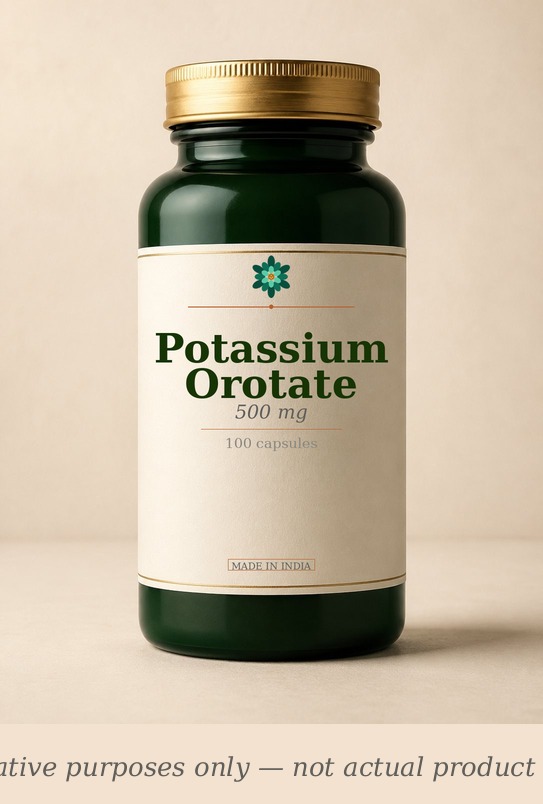
Potassium Orotate — SacredBod supplement bottle (illustrative)
Supplement · Mineral

Potassium Orotate

500 mg · vegan · gluten-free · 100 caps

HypertensionArrhythmiasMuscle weaknessDiuretic-induced hypokalaemiaPalpitationsFatigue HeartBlood vesselsMusclesKidneys
BUY on Amazon →

Affiliate link · we earn from qualifying purchases. No paid placements.

What it is

Potassium orotate is a potassium salt of orotic acid, combining the essential electrolyte potassium with the cellular carrier orotate. Like magnesium orotate, the orotate moiety facilitates intracellular transport, delivering potassium directly into cells including cardiac myocytes. Potassium is critical for maintaining resting membrane potential, action potential propagation and cardiac electrical stability.

How it works

Potassium is the primary intracellular cation, essential for maintaining the electrical gradient across cell membranes. In cardiac tissue, adequate potassium prevents arrhythmias by stabilising the action potential duration. The orotate carrier enhances cellular uptake beyond what standard potassium chloride provides. Potassium also promotes vasodilation by hyperpolarising vascular smooth muscle cells, reducing peripheral resistance and blood pressure. A 1997 RCT showed potassium orotate improved cardiac rhythm stability in patients with arrhythmias.

Who should take it

Individuals with hypertension seeking electrolyte-based blood pressure support. Those with arrhythmias or palpitations due to low potassium. People on diuretics (which deplete potassium). Athletes with high sweat loss. Those wanting cardiac-specific electrolyte support. Not a replacement for prescription antiarrhythmics.

Avoid / careful

Individuals with kidney disease or impaired potassium excretion. Those with hyperkalaemia. People on ACE inhibitors, ARBs or potassium-sparing diuretics without medical supervision (additive hyperkalaemia risk). Those with severe heart block. Not for children. Side effects: Generally well-tolerated at 500–1,500 mg/day. Mild gastrointestinal upset at higher doses. Excessive potassium can cause hyperkalaemia — muscle weakness, arrhythmias, cardiac arrest. Kidney disease significantly increases this risk. Never exceed recommended doses.

When to take it

Morning
Noon
Evening
Night

How to take it

With food
Empty stomach
Before food

FAQs

Frequently asked

How long before I see results?
Blood pressure benefits may be noticeable within 2–4 weeks. Arrhythmia stabilisation requires 4–8 weeks of consistent electrolyte replenishment. Benefits are maintained with continuous use.
Is it safe with blood pressure medication?
Caution required. If you are on ACE inhibitors, ARBs or potassium-sparing diuretics, adding potassium orotate can cause dangerous hyperkalaemia. Consult your physician and monitor serum potassium levels. Do not combine without medical supervision.
Why orotate instead of potassium chloride?
The orotate carrier enhances intracellular delivery, potentially providing better tissue-level potassium replenishment than chloride. However, potassium chloride is more widely studied and cheaper. Orotate is preferred for those wanting targeted cellular delivery alongside magnesium orotate.

In plain English

A plain-English read of the literature behind this supplement. Not a clinical recommendation.

Key citations: PMID 26687760 (magnesium orotate meta-analysis includes potassium orotate context), PMID 19400265 (severe CHF survival with orotate salts), PMID 9595733 (exercise tolerance with orotate supplementation)

Editorial notes

SacredBod's longer take on Potassium Orotate — context the structured blocks above don't capture.

What It Is

Potassium orotate is a potassium salt of orotic acid, combining the essential electrolyte potassium with the cellular carrier orotate. Like magnesium orotate, the orotate moiety facilitates intracellular transport, delivering potassium directly into cells including cardiac myocytes. Potassium is critical for maintaining resting membrane potential, action potential propagation and cardiac electrical stability.

How It Works

Potassium is the primary intracellular cation, essential for maintaining the electrical gradient across cell membranes. In cardiac tissue, adequate potassium prevents arrhythmias by stabilising the action potential duration. The orotate carrier enhances cellular uptake beyond what standard potassium chloride provides. Potassium also promotes vasodilation by hyperpolarising vascular smooth muscle cells, reducing peripheral resistance and blood pressure. A 1997 RCT showed potassium orotate improved cardiac rhythm stability in patients with arrhythmias.

Who Should Consider It

Individuals with hypertension seeking electrolyte-based blood pressure support. Those with arrhythmias or palpitations due to low potassium. People on diuretics (which deplete potassium). Athletes with high sweat loss. Those wanting cardiac-specific electrolyte support. Not a replacement for prescription antiarrhythmics.

Dosage Guide

Typical dose: 500 mg per day

Form: capsules (100 count)

Best time: morning

With food: with-food

Expected onset: 2–4 weeks for blood pressure; 4–8 weeks for cardiac rhythm stability

Cycling: No cycling required. Can be taken continuously.

Safety & Side Effects

Known side effects: Generally well-tolerated at 500–1,500 mg/day. Mild gastrointestinal upset at higher doses. Excessive potassium can cause hyperkalaemia — muscle weakness, arrhythmias, cardiac arrest. Kidney disease significantly increases this risk. Never exceed recommended doses.

Who should avoid: Individuals with kidney disease or impaired potassium excretion. Those with hyperkalaemia. People on ACE inhibitors, ARBs or potassium-sparing diuretics without medical supervision (additive hyperkalaemia risk). Those with severe heart block. Not for children.

Avoid combining with: ACE inhibitors and ARBs, Potassium-sparing diuretics (spironolactone, eplerenone), Other potassium supplements, Salt substitutes (often potassium chloride), NSAIDs (may reduce potassium excretion)

India-Specific Context

Potassium Orotate is available on Amazon India with varying brand quality. When selecting a product, verify standardization claims against the evidence base cited above. Indian brand preferences include Carbamide Forte, HealthyHey, Nutrabay Pure, Pure Nutrition, Now Foods, Nutricost, Himalaya, Patanjali, Dabur, Trexgenics, Evorina, Nervana, Life Extension, VITARUHE, ASTERVEDA, BECLEC, GreenOpia, Rasayanam, Zyrex, and Shree Herbal. Prices vary significantly; compare cost-per-active-dose rather than capsule count alone.

Schedule status in India: Not a Schedule H drug; available as dietary supplement/herbal product.

Research Summary

Key citations: PMID 26687760 (magnesium orotate meta-analysis includes potassium orotate context), PMID 19400265 (severe CHF survival with orotate salts), PMID 9595733 (exercise tolerance with orotate supplementation)

Evidence grade: B — Limited dedicated potassium orotate RCTs; strong mechanistic rationale from electrolyte physiology

Added to your stack.