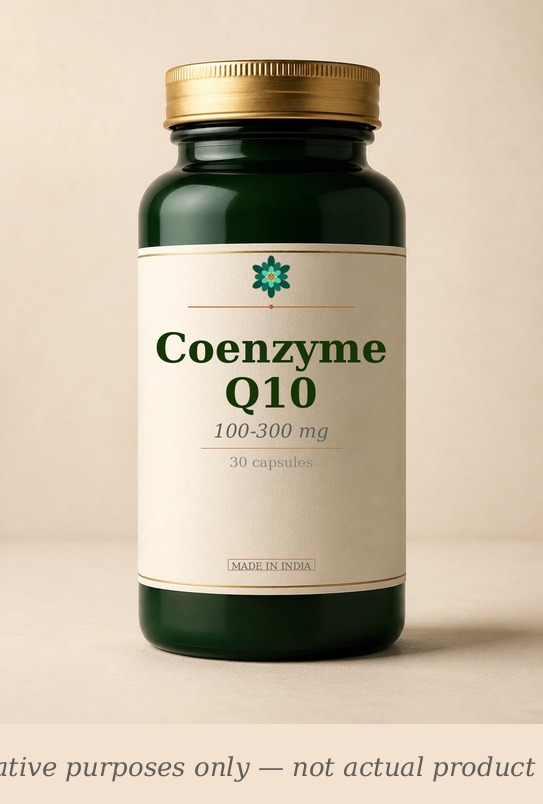
SacredBod's longer take on Coenzyme Q10 — context the structured blocks above don't capture.
Coenzyme Q10 is one of the most important molecules in cellular energy metabolism — a fat-soluble compound that shuttles electrons through the mitochondrial electron transport chain, enabling the production of ATP, the cell’s energy currency. Every cell in the body contains CoQ10, with the highest concentrations in organs with the greatest energy demands: the heart, liver, kidneys, and skeletal muscles. The body synthesizes CoQ10 endogenously through a complex pathway that requires B-vitamins, vitamin C, and trace minerals, but production peaks in the mid-20s and declines steadily thereafter, dropping by approximately 50% by age 60. Statin medications, which inhibit HMG-CoA reductase in cholesterol synthesis, also block the CoQ10 synthesis pathway, explaining why muscle pain is a common statin side effect.
The statin myalgia evidence is the most clinically validated indication. A 2007 randomized trial by Caso and colleagues gave patients with statin-induced myopathy 100 mg CoQ10 daily or placebo for 30 days. The CoQ10 group showed a significant reduction in pain severity scores compared to placebo, with improvements beginning within 2 weeks. The mechanism is straightforward: statins deplete muscle CoQ10 by 30-50%, impairing mitochondrial ATP production in muscle fibers. Supplementing CoQ10 replenishes muscle stores and restores energy production capacity. The honest framing: CoQ10 does not work for all statin myalgia cases (some are caused by non-mitochondrial mechanisms), but it helps a substantial subset and is worth trying before discontinuing a statin.
The migraine prophylaxis data is robust and underutilized. A 2005 randomized trial by Sándor and colleagues gave migraine patients 100 mg CoQ10 three times daily (300 mg total) or placebo for 3 months. The CoQ10 group had significantly fewer migraine attacks, fewer headache days, and less nausea compared to placebo. The mechanism involves mitochondrial dysfunction in migraine — many migraineurs have impaired mitochondrial energy metabolism, and CoQ10 supplementation corrects this deficit. The response rate (greater than 50% reduction in attack frequency) was approximately 50%, which is comparable to prescription migraine preventatives like beta-blockers or topiramate, but with far fewer side effects. The honest framing: CoQ10 is not a migraine cure, but it is a well-tolerated preventive option with genuine trial support.
The blood pressure data is promising but less definitive. A 2007 meta-analysis by Rosenfeldt and colleagues found that CoQ10 supplementation significantly reduced systolic blood pressure by up to 17 mmHg in hypertensive patients. However, the trials were small and methodologically heterogeneous. The mechanism involves improvement of endothelial function and nitric oxide bioavailability. For people with mild hypertension who want to complement lifestyle modification, CoQ10 is a reasonable adjunct, but it should not replace antihypertensive medication in moderate to severe hypertension.
The ubiquinone versus ubiquinol debate requires honest framing. Ubiquinone is the oxidized form; ubiquinol is the reduced (active antioxidant) form. The body converts ubiquinone to ubiquinol in the gut and bloodstream. Young, healthy adults convert ubiquinone efficiently, making the cheaper ubiquinone form perfectly adequate. Older adults, people with certain genetic polymorphisms, and those with malabsorption may convert ubiquinone less efficiently, potentially benefiting from pre-formed ubiquinol. However, head-to-head trials comparing ubiquinone to ubiquinol for clinical outcomes are limited, and the price differential (ubiquinol is 2-3x more expensive) may not be justified for most users. The honest recommendation: adults under 40 should use ubiquinone; those over 40 or with absorption issues might consider ubiquinol if budget allows.
Safety is excellent. CoQ10 is one of the best-tolerated supplements, with side effects rare and mild — occasional stomach upset, nausea, or insomnia if taken late in the day. The main drug interaction is with warfarin: CoQ10 is structurally similar to vitamin K and may reduce warfarin’s anticoagulant effect. If you are on warfarin, do not start CoQ10 without consulting your physician and monitoring INR. CoQ10 may lower blood pressure, so use caution with antihypertensive medications. Pregnancy and breastfeeding safety data is insufficient.
Quality and product selection requires attention to form and absorption enhancement. Look for products that specify “CoQ10 (ubiquinone)” or “ubiquinol” clearly. Softgel formulations with oil (soybean oil, MCT oil) enhance absorption 3-4 fold compared to dry powder in capsules. “Ubiquinol” products should specify the reduced form. In the Indian market, INLIFE, HealthyHey, and Now Foods offer quality CoQ10 products. For statin myalgia, choose a product with at least 100 mg per capsule and take 2-3 capsules daily. Chewable forms are available for those who cannot swallow capsules.
Comparative positioning within the cardiovascular and energy supplement landscape clarifies CoQ10’s role. For general energy support, B-vitamins, magnesium, and iron (if deficient) are more foundational. For cardiovascular health, omega-3 fatty acids and magnesium have stronger evidence. CoQ10’s unique niches are statin myopathy, migraine prevention, and mitochondrial support in aging. It is not a general wellness supplement for healthy young adults, but it is a targeted therapeutic agent for specific indications.
Practical guidance: Take 100-300 mg of CoQ10 (ubiquinone) daily with a fat-containing meal. For statin myopathy, use 200-300 mg daily. For migraine prevention, use 100 mg three times daily. For general cardiovascular support in adults over 40, 100-200 mg daily is standard. Allow 4-8 weeks before assessing effects. Combine with omega-3 (1-2 grams EPA+DHA) and magnesium (300-400 mg) for comprehensive cardiovascular support. If on warfarin, consult your physician before starting. Store in a cool, dry place; CoQ10 is light-sensitive, so opaque containers are preferable.
Dietary sources are limited and insufficient for therapeutic effects. Small amounts are found in fatty fish (salmon, mackerel, sardines), organ meats (heart, liver, kidney), whole grains, and nuts. To achieve the 100-300 mg daily doses used in clinical trials, you would need to eat impractical amounts of these foods — for example, approximately 5 kg of sardines daily. This gap between dietary availability and therapeutic need explains why supplementation is necessary for clinical indications.
Storage and handling requires attention to light sensitivity. CoQ10 degrades when exposed to light, so choose products in opaque or amber bottles. Softgels are preferable to dry capsules because the oil carrier protects the CoQ10 from oxidation. Keep in a cool, dry place; refrigeration is not necessary but may extend shelf life. Check expiration dates, as CoQ10 potency declines over time. If taking powder form, use within 6 months of opening and store in an airtight, opaque container.