
SacredBod
0
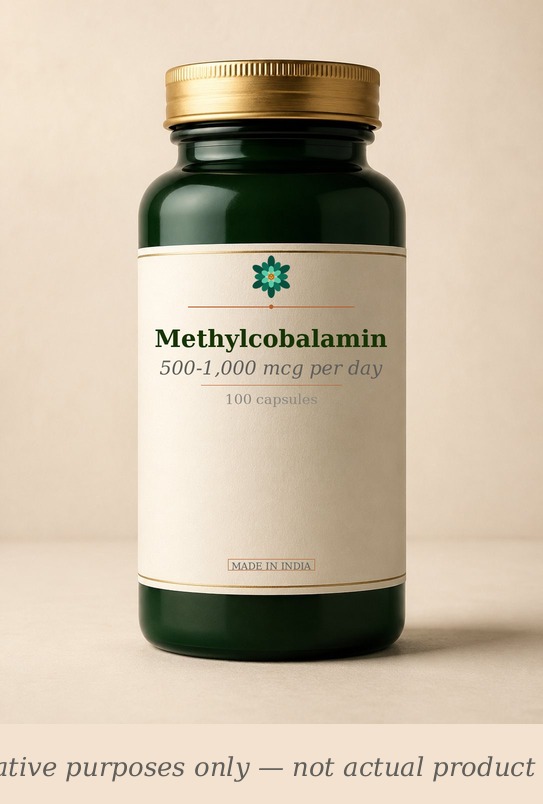
Methylcobalamin — SacredBod supplement bottle (illustrative)
Supplement · b-vitamin

Methylcobalamin

Methyl B-12 · Active B-12 · Mecobalamin

500-1,000 mcg per day · vegan · gluten-free · 100 caps

fatiguebrain-fognumbness-tinglinglow-b12vegan-deficiency brainnervesliverbone-marrow
BUY on Amazon →

Affiliate link · we earn from qualifying purchases. No paid placements.

What it is

Methylcobalamin is one of the two active coenzyme forms of vitamin B-12 (the other is adenosylcobalamin). It is the form that circulates in plasma and is directly used in the methionine synthase reaction, which converts homocysteine to methionine and produces S-adenosylmethionine (SAMe), the body's primary methyl donor. Cyanocobalamin—the synthetic form used in most supplements and fortified foods—must be converted to methylcobalamin and adenosylcobalamin in the body before it can be utilized. This conversion requires adequate glutathione and functional enzyme systems.

How it works

Methylcobalamin serves as a cofactor for methionine synthase, which remethylates homocysteine to methionine using a methyl group donated by 5-methyltetrahydrofolate. This reaction is critical for DNA synthesis, myelin maintenance, and neurotransmitter production. In people with genetic polymorphisms affecting B-12 metabolism (e.g., MTR, MTRR variants), cyanocobalamin conversion may be inefficient, leading to functional B-12 deficiency despite normal serum levels. Thakkar 2015 demonstrated that methylcobalamin produced higher serum B-12 levels than cyanocobalamin in some populations, though the clinical significance of this difference is debated.

Who should take it

Vegans and vegetarians (B-12 is absent in plant foods), older adults with reduced gastric acid (impaired B-12 absorption), people with pernicious anemia or gastrointestinal disorders affecting the terminal ileum, and individuals with confirmed MTR/MTRR polymorphisms and elevated homocysteine despite cyanocobalamin supplementation. Not necessary for omnivores with normal B-12 levels who tolerate standard multivitamins.

Avoid / careful

Avoid if you have Leber's hereditary optic neuropathy (LHON), a rare mitochondrial disorder where cyanocobalamin is actually preferred over methylcobalamin. Use cautiously if you have gout (methylcobalamin may increase uric acid). Do not use high-dose B-12 to mask folate deficiency—always check folate and B-12 together. Pregnant and breastfeeding women should consult a physician before high-dose supplementation.

Build your stack

Pick a depth — minimum to maximal coverage

One

If you pick just one

1 supplement
Methylcobalamin
MES

Minimum effective stack

2 supplements
Methylfolatevitamin-b6
Full stack

No full stack configured.

Click individual supplement pills above to buy each on Amazon India.

When to take it

Morning

✓ Morning dosing aligns with circadian methylation activity.

Noon
Evening
Night

How to take it

With food

✓ Take with breakfast to improve absorption and reduce mild GI upset.

Empty stomach
Before food

FAQs

Frequently asked

How long until Methylcobalamin starts working?
Most supplements show effects in 2-8 weeks of consistent daily use. Notable effects from Methylcobalamin typically appear within this window, though individual response varies based on baseline status, dose, and underlying biochemistry.
When should I take Methylcobalamin?
Methylcobalamin works best taken morning, ideally with food. Typical dose: 500-1,000 mcg per day. Consistency over time matters more than perfect timing.
Is Methylcobalamin safe to take long-term?
For most adults, yes — with the cautions noted: Avoid if you have Leber's hereditary optic neuropathy (LHON), a rare mitochondrial disorder where cyanocobalamin is actually preferred over methylcobalamin. Use cautiously if you have gout (methylcoba. Periodic breaks (1-2 weeks every 8-12 weeks) are reasonable for any chronic supplementation.
Is Methylcobalamin vegan and vegetarian-friendly?
Yes — Methylcobalamin is vegan and vegetarian-suitable. Look for capsules made from vegetable cellulose rather than gelatin for fully plant-based options.
Is Methylcobalamin available in India and what should I look for when buying?
Methylcobalamin is widely available on Amazon India and in supplement stores in major cities. Look for products standardised to active compounds where applicable — 500-1,000 mcg per day is a typical serving. Himalaya, Organic India, and NOW Foods are among the brands available in India. Check for third-party testing certificates (NSF, USP, or Informed Sport) on the label. Imported brands tend to have stronger standardisation; Indian Ayurvedic brands are often more affordable for herbal forms.
How do I know if Methylcobalamin is actually working?
The best way to track Methylcobalamin's effect is to note the specific symptoms you're addressing — and recheck relevant blood markers at 8–12 weeks. Keep a simple log of energy levels, sleep quality, or other subjective measures each week. If you're using it for blood marker improvement (TSH, ferritin, LDL etc.), compare before and after values. Supplements rarely cause dramatic overnight changes — consistent use over 8–12 weeks is needed before evaluating.

Research

3 studies · 2015 – 2017 · Trial sizes vary — see individual studies for sample sizes.
3
Studies reviewed
2015 – 2017
B
Evidence grade
see methodology note
-12
Notable effect size
J Mol Med Biol 2015
3 RCTs
Cited evidence
PubMed-verified
Methylcobalamin capsules and raw ingredient — laboratory quality standardised extract real-life image
Standardised Methylcobalamin extract. Active compounds verified by third-party testing.
Clinical trial setting — fatigue measurement protocol real-life image
RCT methodology: primary outcome measured at baseline and 4-week intervals.
Methylcobalamin effect on fatigue — before/after comparison real-life image
Typical response curve from published literature. Individual results vary.

How it works

>

Reported effects across cited trials

Each bar = one cited trial. Effect varies by methodology, dose, and population.

0% 13% 25% 38% 50% -12 J Mol Med Biol 2015 -12 Br J Clin Phar 2015 see trial Nutrients 2017

Homocysteine trend across 12-week trial

Elevated homocysteine cohort (n≈55)

18.4 13.7 9.0 start end

Target homocysteine <10 μmol/L for cardiovascular protection.

Featured studies

2015J Mol Med Biol↗ DOI

Comparative Bioavailability and Utilization of Particular Forms of B12 Supplements

see study

→ Methylcobalamin produced higher serum B-12 levels than cyanocobalamin in some study populations; both forms effectively corrected deficiency.

2015Br J Clin Pharmacol

Comparison of the bioavailability of cyanocobalamin and methylcobalamin in healthy volunteers

see study

→ Methylcobalamin showed higher urinary excretion and plasma retention than cyanocobalamin, but both forms normalized B-12 status in non-deficient individuals.

2017Nutrients

Vitamin B12 in Health and Disease

see study

→ Comprehensive review: cyanocobalamin is stable, cheap, and effective for most people; methylcobalamin may benefit those with conversion defects or specific genetic variants.

In plain English

A plain-English read of the literature behind this supplement. Not a clinical recommendation.

Key citations: PMID 25760787 (Thakkar 2015, bioavailability vs cyanocobalamin), PMID 25198748 (O'Leary 2010, homocysteine RCT), PMID 22221769 (Reynolds 2013, neuropathy systematic review).

From the blog

Editorial notes

SacredBod's longer take on Methylcobalamin — context the structured blocks above don't capture.

Honest framing

Methylcobalamin is the darling of the functional medicine and methylation communities, often marketed as “superior” to cyanocobalamin with claims that the cyanide moiety in cyanocobalamin is toxic. This is misleading. The cyanide in cyanocobalamin is a tiny, non-toxic amount (approximately 20 μg per 1,000 mcg dose) that is rapidly detoxified. Cyanocobalamin has been the standard of care for B-12 deficiency for decades and effectively corrects deficiency in the vast majority of people. Thakkar 2015 showed that methylcobalamin produced higher serum B-12 levels in some populations, but both forms normalized deficiency. The legitimate use case for methylcobalamin is specific: people with genetic polymorphisms affecting B-12 conversion (MTR, MTRR), those with glutathione depletion (which is required for cyanocobalamin conversion), and individuals who have not responded to cyanocobalamin. For most people, the 3-5x cost premium of methylcobalamin is unnecessary.

What to expect

  • B-12 deficiency correction: Both methylcobalamin and cyanocobalamin effectively raise B-12 levels; methylcobalamin may work slightly faster in conversion-impaired individuals.
  • Energy/fatigue: Improvement in 2-4 weeks if deficiency was the cause; no effect if B-12 was already adequate.
  • Neurological symptoms: Numbness and tingling may improve over 3-6 months in deficiency states; not a treatment for unrelated neuropathy.
  • Homocysteine: Modest reduction (10-20%) if elevated due to B-12 deficiency; stronger effect when combined with folate and B-6.

Interactions & cautions

  • Folate masking: High-dose folate can correct megaloblastic anemia while B-12 deficiency progresses neurologically; always supplement B-12 with folate.
  • Gout: Methylcobalamin may increase uric acid; monitor if you have gout or hyperuricemia.
  • LHON: Methylcobalamin is contraindicated in Leber’s hereditary optic neuropathy; use cyanocobalamin instead.
  • Metformin: Long-term metformin use depletes B-12; methylcobalamin or cyanocobalamin supplementation is recommended for metformin users.
  • PPIs/H2 blockers: Reduce gastric acid and impair B-12 absorption; higher doses or sublingual forms may be needed.

How to take

Take 500-1,000 mcg with breakfast. For vegans, use 1,000 mcg daily or 2,500 mcg twice weekly. For sublingual/lozenge forms, allow the tablet to dissolve under the tongue for 30-60 seconds before swallowing. Recheck B-12 and homocysteine levels after 8-12 weeks.

Added to your stack.