
SacredBod
0
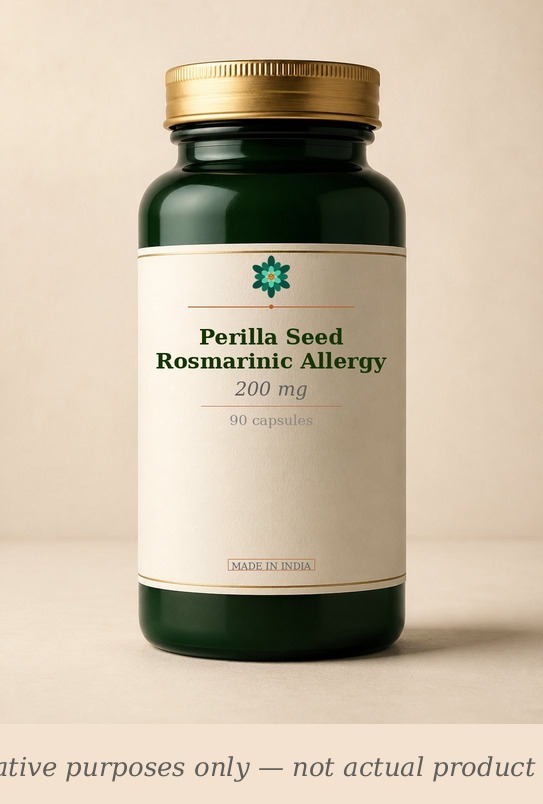
Perilla Seed Rosmarinic Allergy — SacredBod supplement bottle (illustrative)
Supplement · Allergy & Histamine Control

Perilla Seed Rosmarinic Allergy

200 mg · vegan · gluten-free · 90 caps

Seasonal allergic rhinitisItchy noseWatery eyesItchy eyesSneezingNasal congestionAsthma-related inflammation Nasal mucosaEyesLungsSkin
BUY on Amazon →

Affiliate link · we earn from qualifying purchases. No paid placements.

What it is

Perilla frutescens is an aromatic herb native to East Asia whose seed and leaf extracts are rich in rosmarinic acid — a polyphenolic compound with potent anti-allergic, anti-inflammatory, and antioxidant properties. A randomised double-blind trial demonstrated that rosmarinic acid-enriched perilla extract significantly improved seasonal allergic rhinoconjunctivitis symptoms and reduced inflammatory mediators in nasal lavage fluid.

How it works

Rosmarinic acid inhibits both cyclooxygenase (COX) and lipoxygenase (LOX) pathways, reducing prostaglandin and leukotriene production. It also suppresses NF-κB activation, inhibits mast cell degranulation, and reduces eosinophil and neutrophil infiltration into nasal mucosa. In the Takano trial, perilla extract significantly decreased histamine, eotaxin, IL-1β, IL-8, and IgE levels in nasal lavage fluid.

Who should take it

Adults with seasonal allergic rhinitis, allergic conjunctivitis, or asthma; individuals seeking a natural COX/LOX dual inhibitor; and those with both respiratory allergies and inflammatory skin conditions (eczema, atopic dermatitis).

Avoid / careful

Pregnant or breastfeeding women; individuals with bleeding disorders (rosmarinic acid may have mild anticoagulant effects); those allergic to mint family plants. Side effects: Very well tolerated. Rare mild stomach upset or allergic reaction in those sensitive to Lamiaceae family plants (mint, basil, oregano).

When to take it

Morning
Noon
Evening
Night

How to take it

With food
Empty stomach
Before food

FAQs

Frequently asked

How long before I see results?
The Takano trial showed significant symptom improvement within 21 days. Responder rates for itchy nose, watery eyes, itchy eyes, and total symptoms were significantly higher than placebo. Inflammatory mediators (histamine, eotaxin, IL-1β, IL-8) in nasal lavage fluid decreased significantly. For acute allergy flares, benefits may appear within 3–5 days.
Is perilla the same as tulsi?
No. Both belong to the Lamiaceae (mint) family, but they are different species. Perilla frutescens is native to East Asia (Korea, Japan, China) and is rich in rosmarinic acid and alpha-linolenic acid. Tulsi (Ocimum sanctum) is native to India and contains eugenol, ursolic acid, and ocimene. They have overlapping anti-allergic properties but distinct phytochemical profiles.
Can I use perilla oil instead of extract?
Perilla seed oil is rich in alpha-linolenic acid (ALA, an omega-3) and has anti-inflammatory benefits, but it lacks the concentrated rosmarinic acid of standardised leaf/seed extracts. For allergic rhinitis, the rosmarinic acid-enriched extract (200mg/day) is the clinically validated form.

In plain English

A plain-English read of the literature behind this supplement. Not a clinical recommendation.

Key citations: PMID 14988517 (Perilla frutescens rosmarinic acid for seasonal allergic rhinoconjunctivitis — Takano et al. 2004), PMID 21239739 (Perilla and rosmarinic acid on allergic inflammatory reactions — Oh et al. 2011), PMID 15619563 (complementary Guduchi evidence)

Editorial notes

SacredBod's longer take on Perilla Seed Rosmarinic Allergy — context the structured blocks above don't capture.

What Perilla Seed Rosmarinic Allergy Is

Perilla frutescens, also known as Korean perilla, shiso, or beefsteak plant, is an aromatic herb in the Lamiaceae (mint) family native to East Asia. Its leaves and seeds have been used in traditional Korean and Chinese medicine for centuries to treat respiratory conditions, allergies, and seafood poisoning.

The key active compound — rosmarinic acid — is a polyphenolic phytochemical also found in rosemary, sage, and oregano. In perilla, it is present at particularly high concentrations (up to 3–5% in leaf extracts). Rosmarinic acid is a dual COX/LOX inhibitor, meaning it blocks both the prostaglandin and leukotriene inflammatory pathways simultaneously — a rare property among natural compounds.

How It Works

  1. COX inhibition — Rosmarinic acid suppresses cyclooxygenase-1 and COX-2, reducing prostaglandin E2 and other pro-inflammatory prostaglandins in nasal and bronchial mucosa.
  2. LOX inhibition — It also inhibits 5-lipoxygenase, reducing leukotriene B4 and cysteinyl leukotrienes that cause bronchoconstriction and mucus production.
  3. Mast cell stabilisation — Reduces histamine, IL-1β, and IL-8 release from activated mast cells.
  4. Eosinophil suppression — The Takano trial showed significant reduction in nasal lavage eosinophils — the hallmark cells of allergic inflammation.
  5. IgE modulation — Reduces allergen-specific IgE levels in nasal secretions.

Who Benefits Most

  • Seasonal allergy sufferers — The Takano RCT demonstrated significant improvements in itchy nose, watery eyes, and total symptom scores.
  • Asthma patients — The dual COX/LOX inhibition addresses both bronchospasm and airway inflammation.
  • Individuals with allergic conjunctivitis — Eye symptoms improved significantly in the clinical trial.
  • Those seeking alternatives to NSAIDs — Natural COX inhibition without the GI and cardiovascular risks of ibuprofen/naproxen.

Dosage Guide

GoalDoseDuration
Seasonal allergies200 mg rosmarinic acid-enriched extract/dayDuring allergy season
Asthma support200–400 mg/day4–8 weeks
General anti-inflammatory100–200 mg/dayOngoing

Take with breakfast for consistent daily levels.

Safety & Interactions

  • Bleeding: Mild anticoagulant effect; caution with warfarin.
  • NSAIDs: Additive COX inhibition; monitor for stomach upset.
  • Mint allergy: Cross-reactivity possible in those allergic to basil, oregano, or mint.
  • Pregnancy: Not recommended due to insufficient safety data.

India-Specific Context

  • Availability: Perilla extract capsules are available on Amazon.in from Pure Encapsulations (B0BM56ZCPB, B07YX81H2Z) and generic brands (B07R3KM5G1). However, rosmarinic acid standardisation is not always declared on Indian listings. Prices range from ₹1,500–₹3,000 for 60–90 capsules.
  • Regulatory status: Sold as a dietary supplement. Not a Schedule H drug.
  • Ayurvedic parallel: While not in classical Ayurvedic texts, perilla is functionally similar to Tulsi (Ocimum sanctum) — both are Lamiaceae family herbs with anti-allergic, antimicrobial, and anti-inflammatory properties. Tulsi is the Indian equivalent, though perilla has stronger clinical evidence for allergic rhinitis specifically.
  • Culinary note: Perilla leaves are used in Korean cuisine (ssam wraps, kimchi). In India, one could conceptually substitute with Tulsi leaves for mild anti-allergic benefit, though the rosmarinic acid content differs.
  • Cost: Perilla is one of the more expensive supplements in this batch. For budget-conscious users, combining Tulsi + vitamin C may provide similar anti-allergic support at lower cost.
Added to your stack.