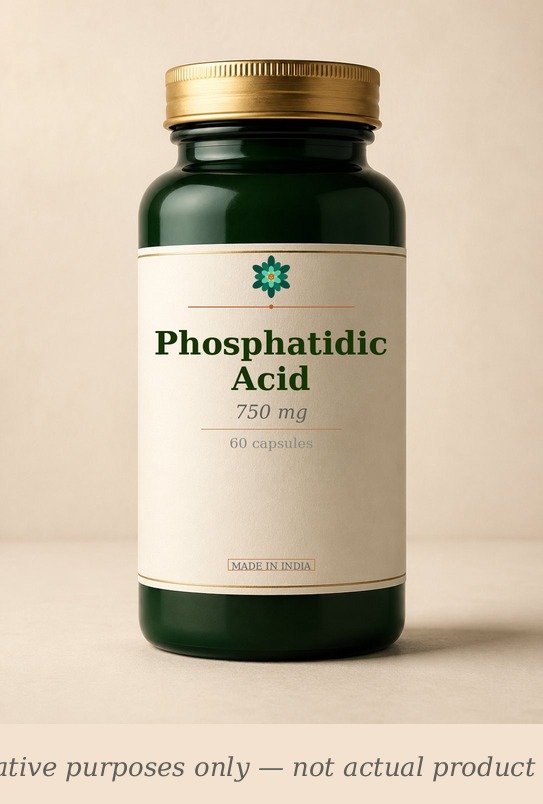
SacredBod's longer take on Phosphatidic Acid — context the structured blocks above don't capture.
What It Is
Phosphatidic acid (PA) is a simple phospholipid — a glycerol backbone with two fatty acid chains and a phosphate group. It is a natural constituent of all cell membranes and is produced endogenously during resistance exercise when the enzyme phospholipase D hydrolyses phosphatidylcholine. As a lipid messenger, PA binds directly to the mTOR complex to trigger muscle protein synthesis. Supplemental PA (typically soy-derived, branded as Mediator®) provides an exogenous anabolic signal that complements — rather than replaces — protein intake.
How It Works
PA activates mTOR through a unique mechanism: it binds to the FKBP12-rapamycin binding (FRB) domain of mTOR, allosterically activating the kinase. This is distinct from leucine/amino acid signalling, which activates mTOR via Rag GTPases. In cell culture studies, soy-derived PA stimulated mTOR signalling by +636%, significantly outperforming egg-derived PA (+221%). In a human RCT, 28 resistance-trained men consumed 750 mg soy-PA daily during an 8-week periodised programme. The PA group gained +2.4 kg lean body mass versus placebo, increased rectus femoris cross-sectional area by +1.0 cm², and improved leg press 1RM by +51.9 kg versus +32.4 kg in placebo.
Who Benefits Most
Resistance-trained individuals who have plateaued in hypertrophy or strength despite adequate protein intake. PA is particularly useful for those who want an anabolic signal independent of leucine — for example, athletes training fasted or those with lower protein tolerance. Not a substitute for protein, but a powerful adjunct.
Dosage Guide
- Standard dose: 750 mg soy-derived PA daily
- Timing: 450 mg 30 minutes before training + 300 mg immediately post-training on workout days; split between breakfast and dinner on rest days
- Cycle: Continuous use during hypertrophy phases
Safety and Interactions
Extremely safe. PA is a natural cell membrane component. No adverse effects on liver, kidney, lipid or hematologic markers in 8-week trials. Theoretical caution with anticoagulants due to phospholipid content. Rapamycin (sirolimus) directly antagonises mTOR and would counteract PA’s mechanism.
India-Specific Context
PA is a niche, premium import on Amazon.in. PA(7) by HPN is available at ₹10,000+ for 60 capsules (imported). Wellsports offers a blended product with PA, epicatechin and arachidonic acid at a lower price point. Standalone domestic PA products are virtually non-existent — the Indian market is still focused on basic protein, creatine and BCAAs. It is not a scheduled drug. There is no Ayurvedic equivalent for mTOR-activating phospholipids; the closest conceptual parallel is Ashwagandha’s anabolic effects, though the mechanism is entirely different (cortisol modulation vs direct mTOR binding).