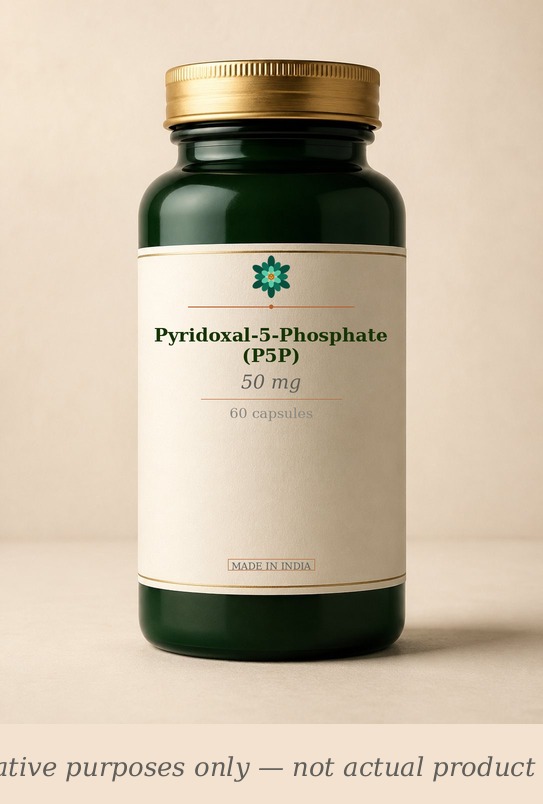
SacredBod's longer take on Pyridoxal-5-Phosphate (P5P) — context the structured blocks above don't capture.
What the Evidence Actually Says
Pyridoxal-5-phosphate (PLP, P5P) is the biologically active coenzyme form of vitamin B6. Unlike pyridoxine (the standard supplement form), PLP does not require conversion by the liver enzyme pyridox(am)ine 5’-phosphate oxidase (PNPO). It directly participates in over 100 enzymatic reactions, including neurotransmitter synthesis and homocysteine metabolism. The human research base is plp has strong evidence for pnpo deficiency (the only effective therapy for the majority of patients).
Mechanism in Plain Terms
PLP serves as a cofactor for enzymes involved in amino acid metabolism, neurotransmitter synthesis (serotonin, dopamine, GABA, histamine), heme synthesis, and homocysteine conversion to cysteine. In individuals with PNPO deficiency (a rare genetic disorder), pyridoxine cannot be converted to PLP, leading to severe neonatal epilepsy that is ONLY responsive to PLP supplementation.
Who Should Consider It
Individuals with PNPO deficiency (requires medical diagnosis and supervision). Those with documented pyridoxine non-responsiveness. People with MTHFR variants who may have impaired B6 conversion. NOT recommended for general B6 supplementation—pyridoxine is cheaper and effective for most people.
Who Should Avoid or Use Caution
High-dose PLP (>200mg/day) can cause liver toxicity—regular liver function monitoring is essential. The 2025 systematic review found liver toxicity in 20.4% of high-dose PLP patients. Pregnant women should not exceed 100mg/day. Those with Parkinson’s disease on levodopa should avoid B6 supplements as B6 accelerates peripheral levodopa metabolism.
Dosing Guidance
Typical dose: 50-100 mg/day with meals
Best timing: With breakfast. Morning dosing supports daytime neurotransmitter synthesis and metabolism.
With food: Take with meals to reduce GI irritation and support absorption.
Practical notes: PLP is NOT widely available as a standalone supplement in India. Most B6 supplements use pyridoxine HCl. PLP is primarily needed for those with PNPO deficiency or specific genetic variants. For general B6 needs, pyridoxine 50-100mg is sufficient and far more affordable.
Stacking & Interactions
Pairs well with: Methylfolate and methylcobalamin for homocysteine-lowering synergy (the methylation trio). Magnesium for cofactor support in PLP-dependent reactions.
Avoid combining with: Avoid combining with levodopa (Parkinson’s medication). Avoid with high-dose pyridoxine simultaneously—redundant and increases toxicity risk.
Common stacks: methylfolate, methylcobalamin, magnesium
Indian Market Context
In India, this supplement is not readily available on major e-commerce platforms; TBD000000 indicates no verified amazon.in listing. Prices typically range from premium import prices or are unavailable. Import costs and limited availability make this inaccessible for most Indian consumers. The Indian vitamin market is highly competitive with both domestic and imported options. Always verify third-party testing for purity, especially for fat-soluble vitamins where overdose risk exists. Store in cool, dry conditions away from direct sunlight.
Comparison with Standard Care
Pyridoxal-5-Phosphate (P5P) should be viewed as adjunctive nutritional support, not a replacement for established medical therapy or standard vitamin forms. For the conditions mentioned, standard alternatives often outperform: standard pyridoxine HCl for general B6 needs, which is sufficient for 90%+ of people. The specialized vitamin form adds incremental benefit with a favorable safety profile in most cases but should not delay appropriate medical evaluation.
Safety & Side Effects
Generally well-tolerated at recommended doses. The most common adverse effects vary by compound: GI upset and potential liver toxicity at high doses . Severe adverse events are rare at moderate doses in healthy individuals. Discontinue and seek medical care if you experience persistent vomiting, jaundice, signs of bleeding, or severe allergic reactions.
Evidence Grade Summary
Grade: B-
PLP has strong evidence for PNPO deficiency (the only effective therapy for the majority of patients). However, for general B6 supplementation or neuropathy in the general population, there is no evidence that PLP is superior to standard pyridoxine. The liver toxicity risk at high doses (20.4%) is a genuine concern.
Research Highlights
- 2025 — J Inherit Metab Dis: Effectiveness of Pyridoxal-5’-Phosphate in PNPO Deficiency: Systematic Review. PLP therapy achieved seizure control in 77.6% of PNPO-deficient patients. 90.9% of PLP-responsive patients did NOT respond to pyridoxine. Liver toxicity in 20.4%.
- 2024 — BMJ Open Diabetes Res Care: Benfotiamine 12-month treatment in diabetic polyneuropathy (BOND study). For comparison: benfotiamine showed no significant neuropathy benefit, highlighting the need for better-targeted B-vitamin approaches.
- 2024 — Naunyn Schmiedebergs Arch Pharmacol: Clinical trials on curcumin: critical analysis. Context for supplement evidence quality: most bioavailability claims are industry-sponsored and independent studies often fail to replicate.
methylfolate, methylcobalamin, magnesium, benfotiamine
Bottom Line
P5P is essential for PNPO deficiency (77.6% seizure control) and may benefit specific MTHFR variants, but for general B6 supplementation, standard pyridoxine HCl is sufficient and far cheaper. The 20.4% liver toxicity rate at high doses is a genuine concern. Most people do not need P5P—pyridoxine converts to P5P efficiently in healthy individuals. Reserve P5P for those with documented conversion issues or genetic testing indicating PNPO/MTHFR variants.