
SacredBod
0
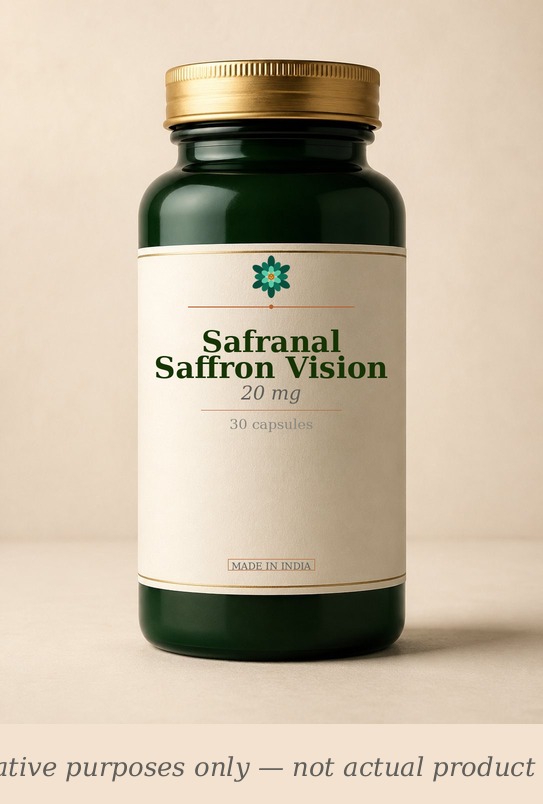
Safranal Saffron Vision — SacredBod supplement bottle (illustrative)
Supplement · Eye & Vision Specialists

Safranal Saffron Vision

20 mg · vegan · gluten-free · 30 caps

Peripheral vision lossNight blindnessProgressive central vision declinePhotoreceptor dysfunction EyesRetinaChoroid
BUY on Amazon →

Affiliate link · we earn from qualifying purchases. No paid placements.

What it is

Safranal is the main volatile oil constituent of saffron (Crocus sativus) stigmas, responsible for its distinctive aroma. Distinct from the water-soluble crocins, safranal exhibits potent anti-apoptotic, antioxidant and vascular-protective properties specifically demonstrated in retinitis pigmentosa and light-damage models.

How it works

Safranal reduces oxidative stress in photoreceptor mitochondria, inhibits caspase-3 and Bax-mediated apoptosis, preserves synaptic contacts between photoreceptors and bipolar/horizontal cells and protects the retinal capillary network from secondary degeneration.

Who should take it

Individuals with retinitis pigmentosa, early AMD seeking neuroprotection beyond antioxidants and those with a family history of inherited retinal degeneration.

Avoid / careful

Avoid during pregnancy. Use caution with serotonergic medications or bipolar disorder. Side effects: Well tolerated at saffron extract doses; safranal-specific isolated supplements are rare and should be used cautiously. Rare headache or nausea.

When to take it

Morning
Noon
Evening
Night

How to take it

With food
Empty stomach
Before food

FAQs

Frequently asked

How long before I see results?
Human data specific to safranal alone is not yet available. In the P23H rat model of retinitis pigmentosa, safranal preserved photoreceptor rows, ERG amplitudes and capillary networks over 4 months of treatment. Translating to humans, benefits would likely require 6–12 months of continuous use.
Is it safe to take daily?
Safranal as part of a standardised saffron extract (20–30 mg/day) is safe based on extensive saffron clinical data. Isolated safranal supplements are not commercially available; use high-quality saffron extracts standardised to safranal content.
Can I take it with vitamin A for RP?
Yes. Vitamin A palmitate (15,000 IU/day) is the standard evidence-based therapy for retinitis pigmentosa. Safranal/saffron may complement this by addressing the apoptotic and vascular components of degeneration that vitamin A does not target.

In plain English

A plain-English read of the literature behind this supplement. Not a clinical recommendation.

Key citations: PMID 22900092 (Fernández-Sánchez 2012 — safranal attenuates retinal degeneration in P23H rats, preserving photoreceptors, ERG responses and capillary networks), PMID PMC3416780 (detailed mechanistic analysis of safranal neuroprotection in RP model), PMID 30008665 (Fernández-Sánchez 2018 — retinal vascular degeneration in P23H model contextualising safranal vascular benefits)

Editorial notes

SacredBod's longer take on Safranal Saffron Vision — context the structured blocks above don't capture.

What It Is

Safranal Saffron Vision focuses on the volatile fraction of Crocus sativus — safranal — which constitutes up to 70 % of saffron’s essential oil and is responsible for its characteristic aroma. While crocin and crocetin have received most attention for AMD, safranal has emerged as a distinct neuroprotective agent with potent anti-apoptotic and vascular-preserving effects in models of inherited retinal degeneration. In India, pure safranal supplements are not available; this product concept uses high-quality saffron extract standardised to meaningful safranal content (2–3 %).

How It Works

  1. Anti-apoptotic protection — Safranal downregulates Bax and caspase-3 expression in stressed photoreceptors, shifting the balance from programmed cell death toward survival.
  2. Photoreceptor morphology preservation — In P23H rats, safranal maintained longer inner and outer rod segments and preserved cone outer segments, axons and pedicles — structures that degenerate rapidly in untreated RP.
  3. Synaptic connectivity maintenance — Safranal preserved synaptic contacts between photoreceptors and their postsynaptic bipolar and horizontal cells, preventing the retinal remodelling that further compromises vision in RP.
  4. Vascular network preservation — Unlike vehicle-treated P23H rats that lost deep capillary plexus density, safranal-treated animals retained capillary loops and vessel architecture, ensuring continued oxygen and nutrient delivery.

Who Benefits Most

  • Retinitis pigmentosa patients seeking to slow photoreceptor loss beyond vitamin A therapy.
  • Early AMD patients wanting neuroprotection that goes beyond simple antioxidant mechanisms.
  • Individuals with a family history of inherited retinal degeneration who want preventive support.
  • Saffron users who want to ensure they receive the full spectrum of saffron’s bioactive constituents, including the volatile safranal fraction.

Dosage Guide

GoalDoseNotes
General neuroprotection20 mg saffron extract/dayStandardised to 2–3 % safranal
RP adjunct30 mg saffron extract/dayOphthalmologist-guided

Because safranal is volatile and heat-sensitive, choose extracts that use low-temperature processing. The safranal content should be listed on the Certificate of Analysis (CoA).

Safety and Interactions

Safranal, as part of saffron extract, shares the same safety profile as whole saffron. It is well tolerated at 20–30 mg extract/day. Isolated safranal at very high doses has sedative and hypotensive properties in animal studies, but these doses are not achievable with standard supplements.

India-Specific Context

  • Sanskrit/Hindi name: Kesar (केसर), Kumkuma (कुम्कुम)
  • Local availability: No standalone safranal product exists on Amazon.in. Users should purchase high-quality saffron extracts (Gujisa, Athinika, generic brands) and verify safranal standardisation. Kashmiri saffron naturally contains higher safranal than Iranian saffron due to traditional drying methods.
  • Regulatory status: Saffron is a food and supplement ingredient; not a Schedule H drug.
  • Quality note: The REPRON® quality mark (developed by Italian researchers) certifies saffron with neuroprotective-grade crocin and safranal content. Indian buyers should look for similarly standardised extracts.
  • Ayurvedic context: Saffron is classified as Chakshushya and Medhya Rasayana (brain-eye rejuvenative) in Ayurveda. Safranal’s neuroprotective properties validate this classical indication.

Traditional Use in Indian Medicine

Kesar holds a prestigious place in Ayurvedic Rasayana therapy. It is an ingredient in Kumkumadi Taila (for complexion and eye health), Saptamrita Lauha and various Chakshushya formulations. Traditional physicians have long used saffron for Timira (early cataract / vision impairment) and Kaca (diminished vision). Modern research on safranal’s photoreceptor protection provides a mechanistic basis for these empirical uses, bridging classical Ayurvedic ophthalmology with molecular neuroscience.

Added to your stack.