
SacredBod
0
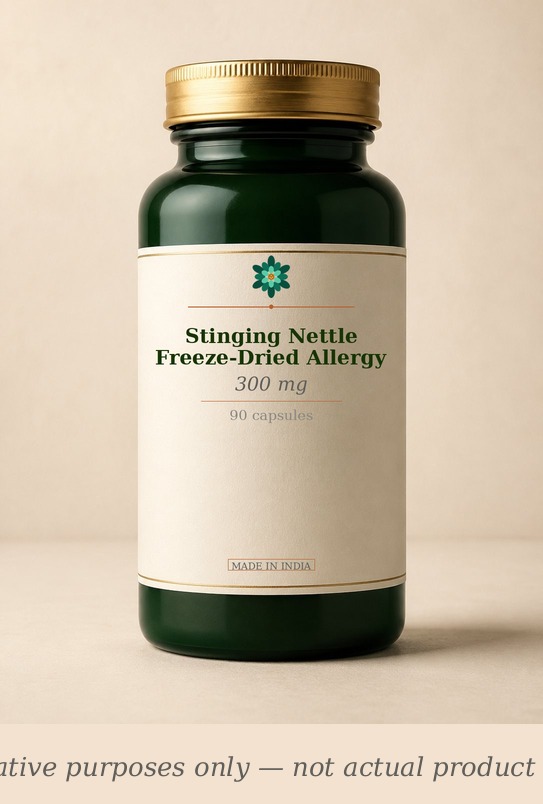
Stinging Nettle Freeze-Dried Allergy — SacredBod supplement bottle (illustrative)
Supplement · Allergy & Histamine Control

Stinging Nettle Freeze-Dried Allergy

300 mg · vegan · gluten-free · 90 caps

Seasonal allergic rhinitisSneezingItchy eyesNasal congestionHistamine intoleranceJoint inflammation Nasal mucosaEyesJointsProstate (in BPH)Kidneys
BUY on Amazon →

Affiliate link · we earn from qualifying purchases. No paid placements.

What it is

Urtica dioica (stinging nettle) leaf, when freeze-dried, preserves the bioactive compounds — including quercetin glycosides, chlorogenic acid, and lectins — that inhibit COX-1, COX-2, and 5-LOX enzymes. The 1990 Mittman RCT showed that freeze-dried nettle leaf was rated significantly more effective than placebo in global assessments of allergic rhinitis, with 58% of patients reporting moderate to high effectiveness.

How it works

Freeze-dried nettle leaf contains flavonoids (quercetin, isorhamnetin, kaempferol) and phenolic acids that inhibit cyclooxygenase and lipoxygenase enzymes, reducing prostaglandin and leukotriene synthesis. It also contains lectins that modulate immune cell activity and histamine release. The 2009 in vitro study by Roschek et al. demonstrated that nettle extract affects key receptors and enzymes associated with allergic rhinitis, including H1 receptors and tryptase.

Who should take it

Adults with seasonal allergic rhinitis, histamine intolerance, or inflammatory conditions; individuals seeking a natural COX/LOX dual inhibitor; and those with concurrent joint inflammation or BPH who want multi-benefit botanical support.

Avoid / careful

Pregnant or breastfeeding women; individuals with fluid/electrolyte disorders (nettle is a diuretic); those with low blood pressure (may potentiate hypotension); individuals on anticoagulants (vitamin K content may affect INR). Side effects: Mild stomach upset, nausea, or diarrhoea in some users. Rare allergic reactions. The diuretic effect may increase urinary frequency. Contact with fresh nettle leaves causes skin irritation (hence the name) — but freeze-dried capsules are safe.

When to take it

Morning
Noon
Evening
Night

How to take it

With food
Empty stomach
Before food

FAQs

Frequently asked

How long before I see results?
The Mittman trial showed that 58% of patients rated freeze-dried nettle as moderately or highly effective after 1 week, compared to 37% on placebo. Global assessment scores favoured nettle significantly, though daily diary scores showed only modest differences. For seasonal allergies, start 1–2 weeks before pollen season.
Is freeze-dried better than regular dried nettle?
Yes. Freeze-drying preserves heat-sensitive bioactive compounds (lectins, certain flavonoids) that may be degraded by standard drying or heat extraction. The Mittman trial specifically used freeze-dried leaf, and this is the form with the strongest clinical evidence for allergic rhinitis.
Can I make nettle tea instead?
Nettle tea provides mild anti-inflammatory benefits but lacks the concentration of bioactive compounds in freeze-dried extracts. The Mittman trial used 300mg freeze-dried leaf capsules — equivalent to several cups of strong tea. For therapeutic anti-allergy effects, standardised capsules are preferred.

In plain English

A plain-English read of the literature behind this supplement. Not a clinical recommendation.

Key citations: PMID 2192379 (Freeze-dried Urtica dioica for allergic rhinitis — Mittman 1990), PMID 29844782 (Urtica dioica root extract for allergic rhinitis — Bakhshaee 2017), PMID 19140159 (Nettle extract affects key receptors and enzymes — Roschek et al. 2009)

Editorial notes

SacredBod's longer take on Stinging Nettle Freeze-Dried Allergy — context the structured blocks above don't capture.

What Stinging Nettle Freeze-Dried Is

Urtica dioica, commonly known as stinging nettle or bichhua in Hindi, is a perennial herb found across Europe, Asia, and North America. Its leaves and stems are covered with fine hairs that inject histamine, acetylcholine, and serotonin upon contact — causing the characteristic “sting.” Paradoxically, when processed (cooked, dried, or freeze-dried), nettle becomes a potent anti-histamine and anti-inflammatory medicine.

The freeze-dried leaf form is particularly important. Freeze-drying preserves heat-sensitive compounds — including lectins and specific flavonoid glycosides — that standard drying or heat extraction may degrade. The landmark Mittman RCT (1990) specifically used freeze-dried leaf, establishing this as the gold-standard format for allergy support.

How It Works

  1. COX/LOX dual inhibition — Nettle flavonoids (quercetin, isorhamnetin, kaempferol glycosides) inhibit both cyclooxygenase and lipoxygenase, reducing prostaglandins and leukotrienes.
  2. H1 receptor modulation — The Roschek in vitro study showed nettle extract affects histamine H1 receptors, potentially reducing receptor sensitivity.
  3. Tryptase inhibition — Tryptase is a mast cell protease that amplifies allergic inflammation. Nettle extract inhibits this enzyme.
  4. Immunomodulation — Nettle polysaccharides stimulate neutrophil function and modulate cytokine production.
  5. Anti-inflammatory — Chlorogenic acid and caffeic acid malate suppress NF-κB and reduce TNF-α.

Who Benefits Most

  • Seasonal allergy sufferers — The Mittman trial showed 58% moderate-to-high effectiveness vs 37% placebo.
  • Histamine intolerance — COX/LOX inhibition reduces the inflammatory cascade triggered by histamine.
  • Joint inflammation + allergies — Nettle is also effective for arthritis and tendonitis, providing dual benefits.
  • Individuals with BPH — Nettle root is a standard European treatment for benign prostatic hyperplasia; leaf provides allergy support.

Dosage Guide

GoalDoseDuration
Allergic rhinitis300 mg freeze-dried leaf 2–3× dailyDuring allergy season
Histamine intolerance300 mg 2× dailyOngoing
General anti-inflammatory300 mg 1–2× dailyOngoing

Take with meals to reduce stomach irritation.

Safety & Interactions

  • Warfarin: Nettle leaf contains vitamin K; may reduce INR. Monitor closely.
  • Diuretics: Nettle is a mild diuretic; additive effect with furosemide, hydrochlorothiazide.
  • Blood pressure: May lower BP; monitor if on antihypertensives.
  • Diabetes: May lower blood sugar; monitor if on hypoglycaemic drugs.
  • Pregnancy: Not recommended.

India-Specific Context

  • Availability: Freeze-dried stinging nettle leaf capsules are not available on Amazon.in as of May 2026. Nettle root products (for prostate health) and nettle leaf tea may appear intermittently, but not the freeze-dried leaf extract form. Import from iHerb or Amazon.com is the best option.
  • Regulatory status: Nettle is not a Schedule H drug. It is occasionally sold as a herbal tea or powder.
  • Ayurvedic parallel: Nettle is not in classical Ayurvedic texts for allergy treatment. The closest equivalents are Tulsi (Ocimum sanctum) and Vasa (Adhatoda vasica) for respiratory allergies. However, nettle’s COX/LOX inhibition mechanism is distinct and complementary.
  • Import cost: Freeze-dried nettle capsules from brands like Nature’s Way, Solaray, or Oregon’s Wild Harvest cost approximately $10–15 for 90 capsules plus shipping (roughly ₹1,500–2,500 total).
  • DIY option: Fresh nettle leaves grow wild in the Himalayan foothills and can be blanched and consumed as a vegetable (similar to spinach) for mild anti-inflammatory benefits. However, this does not replicate the freeze-dried extract concentration.
Added to your stack.