SacredBod
0
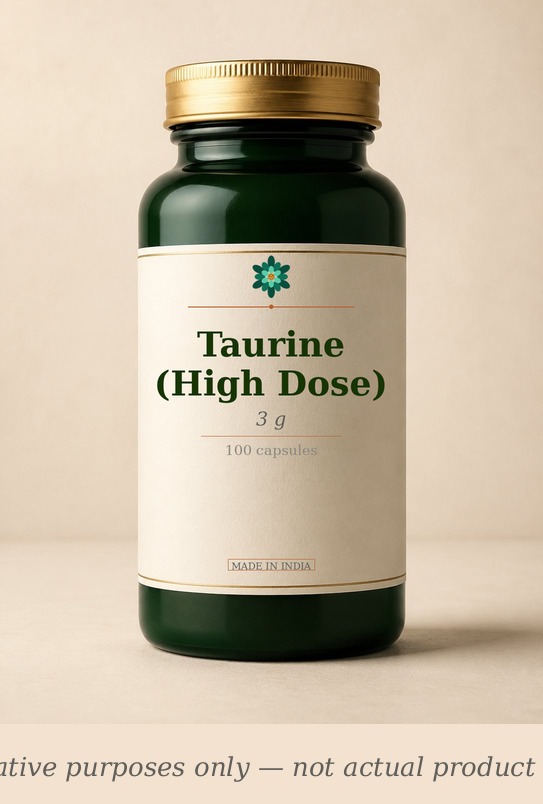
Taurine (High Dose) — SacredBod supplement bottle (illustrative)
Supplement · Amino Acid

Taurine (High Dose)

3 g · gluten-free · 100 caps

High blood pressureHeart failureLow HRVHigh sympathetic toneExercise intoleranceOxidative stress HeartBlood vesselsBrainLiver
BUY on Amazon →

Affiliate link · we earn from qualifying purchases. No paid placements.

What it is

Taurine (2-aminoethanesulfonic acid) is a sulfur-containing amino acid that is conditionally essential in humans. Unlike most amino acids, it is not incorporated into proteins but serves critical roles in osmoregulation, bile acid conjugation, antioxidant defence, calcium homeostasis and cardiovascular function. The body synthesises taurine from cysteine and methionine, but synthesis capacity is limited. This entry focuses on high-dose cardiovascular use (3–6 g/day), distinct from the smaller doses (500 mg–1 g) found in energy drinks.

How it works

Taurine modulates calcium handling in cardiac myocytes, improving contractility and preventing calcium overload. It enhances heart rate variability (HRV) by modulating autonomic tone. Taurine also acts as an osmolyte, stabilising cell membranes under stress. A 2016 meta-analysis of 7 RCTs (n=240) found taurine significantly reduced systolic BP by 4.51 mmHg and diastolic BP by 3.18 mmHg. In heart failure, taurine improves left ventricular function and exercise capacity. It also reduces sympathetic nervous system activity, lowering heart rate and improving vascular compliance.

Who should take it

Individuals with hypertension seeking amino acid-based blood pressure support. Those with heart failure wanting adjunctive cardiac function support. People with low heart rate variability (HRV) or high sympathetic tone. Athletes seeking cardiovascular recovery support. Those interested in taurine's antioxidant and osmoprotective benefits. Not a replacement for prescription cardiac medication.

Avoid / careful

Pregnant and breastfeeding women at high doses (safety not established above 1 g/day). Individuals with hypotension (may lower BP further). Those with severe kidney disease (taurine is excreted renally). People with bipolar disorder (theoretical concern about neurotransmitter modulation). Not for children. Side effects: Generally well-tolerated at 3–6 g/day. Mild gastrointestinal upset or nausea at very high doses. Rare drowsiness or hypotension in sensitive individuals. No serious adverse events reported in RCTs. Taurine is naturally present in meat, fish and dairy — supplementation simply provides higher doses.

When to take it

Morning
Noon
Evening
Night

How to take it

With food
Empty stomach
Before food

FAQs

Frequently asked

How long before I see results?
Blood pressure benefits were significant by 2–4 weeks in the meta-analysis. Cardiac function improvements require 4–8 weeks. HRV benefits may take 8–12 weeks of consistent high-dose use.
Is it the same as taurine in energy drinks?
No — energy drinks contain 500 mg–1 g of taurine, which is a general wellness dose. Cardiovascular benefits require 3–6 g/day. The energy drink dose is insufficient for the blood pressure and heart function effects demonstrated in clinical trials.
Can I take it with blood pressure medication?
Caution advised. Taurine lowers blood pressure via multiple mechanisms (sympathetic modulation, vasodilation). If you are on antihypertensives, consult your physician and monitor BP closely. Do not replace prescribed medication without approval.

In plain English

A plain-English read of the literature behind this supplement. Not a clinical recommendation.

Key citations: PMID 26971827 (2016 meta-analysis, n=240), PMID 19400265 (severe CHF survival), PMID 26687760 (2015 meta-analysis), PMID 9595733 (exercise tolerance in CHD)

Editorial notes

SacredBod's longer take on Taurine (High Dose) — context the structured blocks above don't capture.

What It Is

Taurine (2-aminoethanesulfonic acid) is a sulfur-containing amino acid that is conditionally essential in humans. Unlike most amino acids, it is not incorporated into proteins but serves critical roles in osmoregulation, bile acid conjugation, antioxidant defence, calcium homeostasis and cardiovascular function. The body synthesises taurine from cysteine and methionine, but synthesis capacity is limited. This entry focuses on high-dose cardiovascular use (3–6 g/day), distinct from the smaller doses (500 mg–1 g) found in energy drinks.

How It Works

Taurine modulates calcium handling in cardiac myocytes, improving contractility and preventing calcium overload. It enhances heart rate variability (HRV) by modulating autonomic tone. Taurine also acts as an osmolyte, stabilising cell membranes under stress. A 2016 meta-analysis of 7 RCTs (n=240) found taurine significantly reduced systolic BP by 4.51 mmHg and diastolic BP by 3.18 mmHg. In heart failure, taurine improves left ventricular function and exercise capacity. It also reduces sympathetic nervous system activity, lowering heart rate and improving vascular compliance.

Who Should Consider It

Individuals with hypertension seeking amino acid-based blood pressure support. Those with heart failure wanting adjunctive cardiac function support. People with low heart rate variability (HRV) or high sympathetic tone. Athletes seeking cardiovascular recovery support. Those interested in taurine’s antioxidant and osmoprotective benefits. Not a replacement for prescription cardiac medication.

Dosage Guide

Typical dose: 3 g per day

Form: capsules (100 count)

Best time: morning

With food: with-food

Expected onset: 2–4 weeks for blood pressure; 4–8 weeks for cardiac function; 8–12 weeks for HRV benefits

Cycling: No cycling required. Can be taken continuously.

Safety & Side Effects

Known side effects: Generally well-tolerated at 3–6 g/day. Mild gastrointestinal upset or nausea at very high doses. Rare drowsiness or hypotension in sensitive individuals. No serious adverse events reported in RCTs. Taurine is naturally present in meat, fish and dairy — supplementation simply provides higher doses.

Who should avoid: Pregnant and breastfeeding women at high doses (safety not established above 1 g/day). Individuals with hypotension (may lower BP further). Those with severe kidney disease (taurine is excreted renally). People with bipolar disorder (theoretical concern about neurotransmitter modulation). Not for children.

Avoid combining with: Lithium (theoretical interaction), Antihypertensive medications (additive BP-lowering), Caffeine and stimulants (taurine may counteract some stimulant effects), Cytochrome P450 substrates (theoretical interaction)

India-Specific Context

Taurine (High Dose) is available on Amazon India with varying brand quality. When selecting a product, verify standardization claims against the evidence base cited above. Indian brand preferences include Carbamide Forte, HealthyHey, Nutrabay Pure, Pure Nutrition, Now Foods, Nutricost, Himalaya, Patanjali, Dabur, Trexgenics, Evorina, Nervana, Life Extension, VITARUHE, ASTERVEDA, BECLEC, GreenOpia, Rasayanam, Zyrex, and Shree Herbal. Prices vary significantly; compare cost-per-active-dose rather than capsule count alone.

Schedule status in India: Not a Schedule H drug; available as dietary supplement/herbal product.

Research Summary

Key citations: PMID 26971827 (2016 meta-analysis, n=240), PMID 19400265 (severe CHF survival), PMID 26687760 (2015 meta-analysis), PMID 9595733 (exercise tolerance in CHD)

Evidence grade: B — n=240 in 2016 BP meta-analysis; multiple heart failure and HRV studies

Added to your stack.