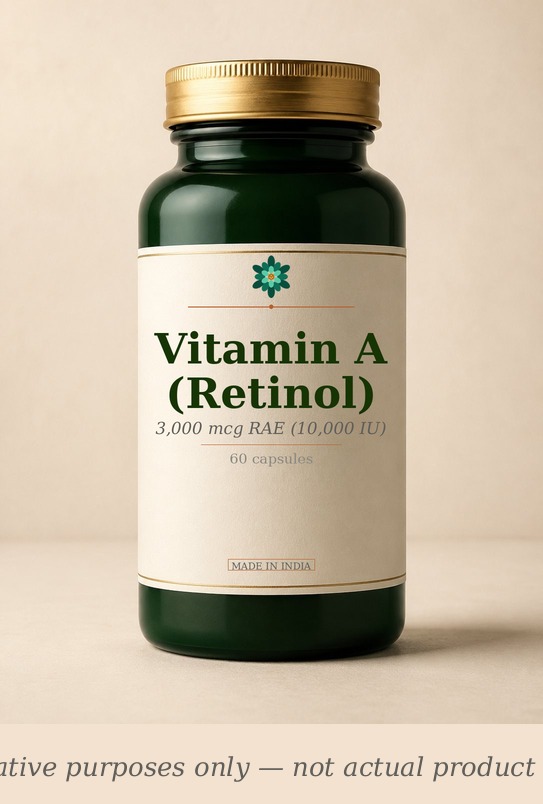
SacredBod's longer take on Vitamin A (Retinol) — context the structured blocks above don't capture.
What the Evidence Actually Says
Vitamin A in its preformed state (retinol and retinyl esters) is found in animal-derived foods and supplements. It is the biologically active form that does not require conversion like beta-carotene. Retinol is essential for rhodopsin synthesis (night vision), epithelial cell differentiation, immune cell function, and embryonic development. The human research base is vitamin a is essential for vision, immunity, and skin, but the evidence for supplementation in well-nourished adults is weak.
Mechanism in Plain Terms
Retinol is converted to retinaldehyde and then retinoic acid, which binds to nuclear receptors (RAR and RXR) to regulate gene transcription. In the eye, retinaldehyde combines with opsin to form rhodopsin. In skin, retinoic acid promotes epithelial cell turnover and collagen synthesis. In bone, retinoic acid modulates osteoblast and osteoclast activity—excessive doses increase bone resorption and decrease formation.
Who Should Consider It
Individuals with documented vitamin A deficiency (night blindness, Bitot’s spots). Those with malabsorption conditions. People with very low dietary intake of animal products. Pregnant women should NOT exceed 3,000 mcg RAE/day.
Who Should Avoid or Use Caution
Pregnant women must NOT exceed 3,000 mcg RAE/day—high doses cause birth defects. Postmenopausal women and older men should be cautious—higher retinol intake is associated with increased hip fracture risk. Those with liver disease should avoid high doses. Isotretinoin users should not supplement with retinol.
Dosing Guidance
Typical dose: 900 mcg RAE (3,000 IU) for men, 700 mcg RAE (2,333 IU) for women daily with meals
Best timing: With a meal containing fat. Morning with breakfast for absorption and to avoid potential sleep disruption.
With food: Take with a fat-containing meal for absorption. Avoid with high-fiber meals which may reduce absorption.
Practical notes: Most people in developed countries get adequate vitamin A from diet. The 2017 meta-analysis found higher retinol intake may INCREASE hip fracture risk (RR 1.40). The upper limit for adults is 3,000 mcg RAE/day. Retinol supplements are not widely available as standalone products in India.
Stacking & Interactions
Pairs well with: Vitamin D for bone health balance. Zinc for immune synergy. Omega-3 for anti-inflammatory support.
Avoid combining with: Avoid combining with isotretinoin or other retinoid medications. Do not exceed upper limit of 3,000 mcg RAE/day.
Common stacks: vitamin-d, zinc, omega-3
Indian Market Context
In India, this supplement is not readily available on major e-commerce platforms; TBD000000 indicates no verified amazon.in listing. Prices typically range from premium import prices or are unavailable. Import costs and limited availability make this inaccessible for most Indian consumers. The Indian vitamin market is highly competitive with both domestic and imported options. Always verify third-party testing for purity, especially for fat-soluble vitamins where overdose risk exists. Store in cool, dry conditions away from direct sunlight.
Comparison with Standard Care
Vitamin A (Retinol) should be viewed as adjunctive nutritional support, not a replacement for established medical therapy or standard vitamin forms. For the conditions mentioned, standard alternatives often outperform: medical treatment for night blindness and standard fracture prevention protocols. The specialized vitamin form adds incremental benefit with a favorable safety profile in most cases but should not delay appropriate medical evaluation.
Safety & Side Effects
Generally well-tolerated at recommended doses. The most common adverse effects vary by compound: Increased hip fracture risk at high doses . Severe adverse events are rare at moderate doses in healthy individuals. Discontinue and seek medical care if you experience persistent vomiting, jaundice, signs of bleeding, or severe allergic reactions.
Evidence Grade Summary
Grade: C+
Vitamin A is essential for vision, immunity, and skin, but the evidence for supplementation in well-nourished adults is weak. The 2017 meta-analysis raises genuine concerns about hip fracture risk with higher retinol intake. Most people get adequate vitamin A from diet.
Research Highlights
- 2013 — Endocr Rev: Vitamin A metabolism, action, and role in skeletal homeostasis. Vitamin A modulates bone cell functions via RAR-RXR. Excessive vitamin A increases bone resorption and decreases formation, potentially increasing fracture risk.
- 2017 — Nutrients: The Effect of Vitamin A on Fracture Risk: A Meta-Analysis. Higher dietary retinol intake may slightly decrease total fracture risk (RR 0.95) but INCREASE hip fracture risk (RR 1.40).
- 1985 — Cancer Lett: Effect of vitamin A supplementation on serum retinol and RBP levels. Retinyl palmitate supplementation (up to 36,000 IU/day for 6 months) produced small dose-related increases in serum retinol (2% per 10,000 IU).
vitamin-d, zinc, omega-3, beta-carotene
Bottom Line
Vitamin A retinol is essential for vision, immunity, and skin, but supplementation is rarely necessary in well-nourished populations. The 2017 meta-analysis found higher retinol intake INCREASES hip fracture risk (RR 1.40). The teratogenic risk in pregnancy is well-established (limit 3,000 mcg RAE/day). Most people get adequate vitamin A from diet. Beta-carotene is the safer alternative for general supplementation. Retinol should be reserved for documented deficiency or specific medical indications.