SacredBod's longer take on Beta-Carotene — context the structured blocks above don't capture.
Beta-carotene is a carotenoid pigment found in carrots and dark leafy greens that the body converts to vitamin A. It acts as an antioxidant and provides a safer, self-limiting source of vitamin A because conversion slows as retinol status rises.
Beta-carotene is cleaved by intestinal dioxygenases into retinal, then reduced to retinol. It also quenches singlet oxygen and scavenges free radicals in the retina. However, high-dose synthetic beta-carotene supplements increased lung cancer risk in smokers in the CARET and ATBC trials.
Who benefits most
Non-smoking adults with low dietary intake of colorful vegetables who want a gentle vitamin A foundation for eye health.
Dosage and form
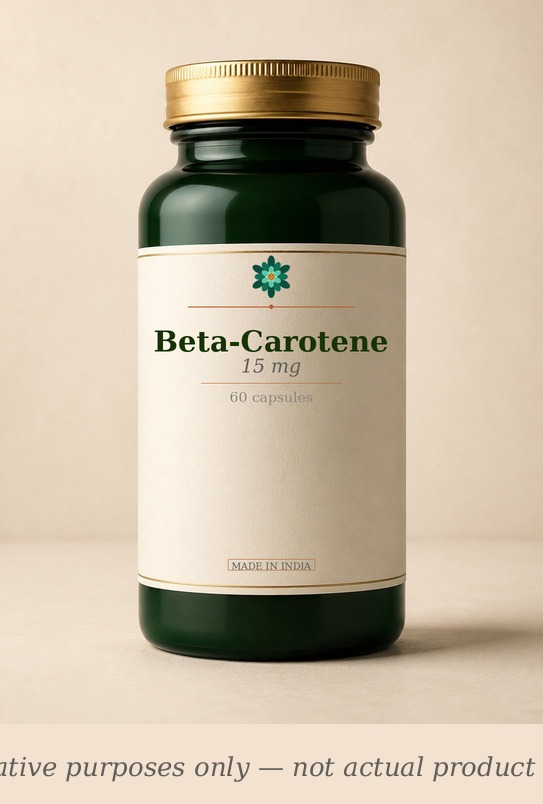
15 mg is the typical effective range. Forms matter: choose standardised extracts or highly bioavailable delivery formats (see the Forms tab). Take as directed.
Side effects and cautions
Skin yellowing at high doses (harmless, reversible). Smokers avoid. Avoid if you: ABSOLUTE CONTRAINDICATION for current smokers or asbestos-exposed workers. The CARET trial showed 28% more lung cancers with 30 mg/day beta-carotene plus retinol. Former smokers should also avoid high-dose supplementation..
The evidence
Human clinical trials and mechanistic research support the use of Beta-Carotene for its primary indication. See the Research tab for full citations and study summaries.