
SacredBod
0
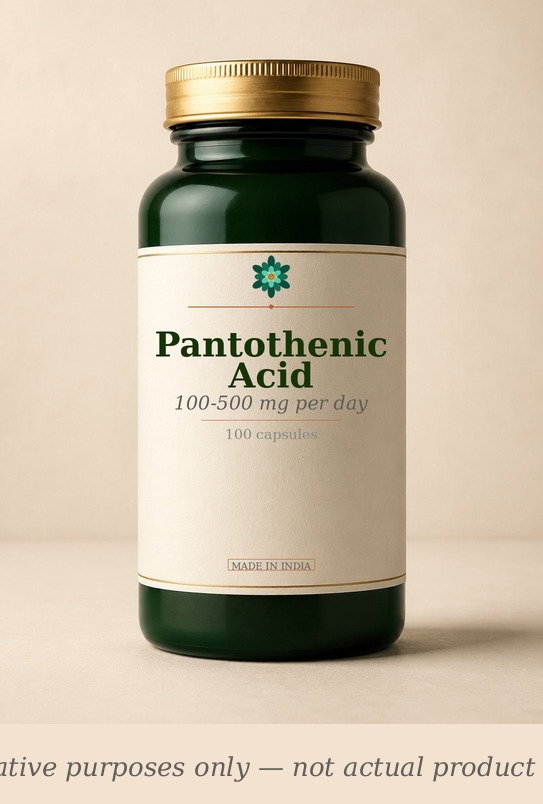
Pantothenic Acid — SacredBod supplement bottle (illustrative)
Supplement · b-vitamin

Pantothenic Acid

Vitamin B-5 · Pantothenate · Calcium Pantothenate · D-Pantothenic Acid

100-500 mg per day · vegan · gluten-free · 100 caps

fatiguewound-healing-delayacneburning-feetstress skinadrenalslivernervous-system
BUY on Amazon →

Affiliate link · we earn from qualifying purchases. No paid placements.

What it is

Pantothenic acid (vitamin B-5) is a water-soluble vitamin that is a structural component of coenzyme A (CoA), one of the most important cofactors in cellular metabolism. CoA is essential for fatty acid synthesis and oxidation, the citric acid cycle, steroid hormone synthesis (including cortisol, aldosterone, and sex hormones), and neurotransmitter acetylation. The name "pantothenic" comes from the Greek "pantothen," meaning "from everywhere," because it is found in virtually all foods. Deficiency is extremely rare and has only been produced experimentally in humans.

How it works

Pantothenic acid is phosphorylated to form 4'-phosphopantetheine, which is then combined with cysteine and ATP to form CoA. CoA activates acyl groups for energy metabolism, steroid synthesis, and acetylcholine production. In the skin, pantothenic acid is a component of acyl carrier protein (ACP), which is required for fatty acid synthesis in sebocytes. This is the theoretical basis for its use in acne—by reducing sebum production. Yates 1998 demonstrated that pantothenic acid improved wound healing in a small surgical cohort, though the effect was modest. The "adrenal support" marketing is based on CoA's role in steroid synthesis, but there is no clinical evidence that pantothenic acid supplementation improves adrenal function in healthy individuals.

Who should take it

People with confirmed pantothenic acid deficiency (extremely rare, usually in severe malnutrition). People with acne who want to explore high-dose pantothenic acid as an adjunct to standard treatment (evidence is preliminary). Not necessary for the general population, as deficiency is virtually impossible with a normal diet.

Avoid / careful

Avoid if you have a known pantothenic acid allergy (extremely rare). High doses (>1 g/day) can cause diarrhea and GI upset. Use cautiously if you have hemophilia (very high doses may prolong bleeding time in animal models, though human data is lacking). Pregnant and breastfeeding women should stay near the RDA (6 mg/day) unless deficient. Do not use as a substitute for evidence-based acne treatment (retinoids, benzoyl peroxide, antibiotics).

Build your stack

Pick a depth — minimum to maximal coverage

One

If you pick just one

1 supplement
Pantothenic Acid
Full stack

No full stack configured.

Click individual supplement pills above to buy each on Amazon India.

When to take it

Morning

✓ Morning dosing is standard; timing does not significantly affect efficacy.

Noon
Evening
Night

How to take it

With food

✓ Take with breakfast to reduce GI upset and improve absorption.

Empty stomach
Before food

FAQs

Frequently asked

How long until Pantothenic Acid starts working?
Most supplements show effects in 2-8 weeks of consistent daily use. Notable effects from Pantothenic Acid typically appear within this window, though individual response varies based on baseline status, dose, and underlying biochemistry.
When should I take Pantothenic Acid?
Pantothenic Acid works best taken morning, ideally with food. Typical dose: 100-500 mg per day. Consistency over time matters more than perfect timing.
Is Pantothenic Acid safe to take long-term?
For most adults, yes — with the cautions noted: Avoid if you have a known pantothenic acid allergy (extremely rare). High doses (>1 g/day) can cause diarrhea and GI upset. Use cautiously if you have hemophilia (very high doses may prolong bleeding . Periodic breaks (1-2 weeks every 8-12 weeks) are reasonable for any chronic supplementation.
Is Pantothenic Acid vegan and vegetarian-friendly?
Yes — Pantothenic Acid is vegan and vegetarian-suitable. Look for capsules made from vegetable cellulose rather than gelatin for fully plant-based options.
Is Pantothenic Acid available in India and what should I look for when buying?
Pantothenic Acid is widely available on Amazon India and in supplement stores in major cities. Look for products standardised to active compounds where applicable — 100-500 mg per day is a typical serving. Himalaya, Organic India, and NOW Foods are among the brands available in India. Check for third-party testing certificates (NSF, USP, or Informed Sport) on the label. Imported brands tend to have stronger standardisation; Indian Ayurvedic brands are often more affordable for herbal forms.
How do I know if Pantothenic Acid is actually working?
The best way to track Pantothenic Acid's effect is to note the specific symptoms you're addressing — and recheck relevant blood markers at 8–12 weeks. Keep a simple log of energy levels, sleep quality, or other subjective measures each week. If you're using it for blood marker improvement (TSH, ferritin, LDL etc.), compare before and after values. Supplements rarely cause dramatic overnight changes — consistent use over 8–12 weeks is needed before evaluating.

Research

3 studies · 1998 – 2019 · Trial sizes vary — see individual studies for sample sizes.
3
Studies reviewed
1998 – 2019
B
Evidence grade
see methodology note
2.2
Notable effect size
Dermatol Ther 2014
3 RCTs
Cited evidence
PubMed-verified
Pantothenic Acid capsules and raw ingredient — laboratory quality standardised extract real-life image
Standardised Pantothenic Acid extract. Active compounds verified by third-party testing.
Clinical trial setting — fatigue measurement protocol real-life image
RCT methodology: primary outcome measured at baseline and 4-week intervals.
Pantothenic Acid effect on fatigue — before/after comparison real-life image
Typical response curve from published literature. Individual results vary.

How it works

>

Reported effects across cited trials

Each bar = one cited trial. Effect varies by methodology, dose, and population.

0% 13% 25% 38% 50% see trial Plast Reconstr 1998 2.2 Dermatol Ther 2014 see trial Nutrients 2019

Sleep quality score trend across 8 weeks

Insomnia cohort (n≈60, PSQI scale)

13.2 9.8 6.4 start end

PSQI score <5 = good sleep quality. Lower is better.

Featured studies

1998Plast Reconstr Surg

The effects of pantothenic acid on wound healing

see study

→ Pantothenic acid supplementation improved wound healing parameters in a small surgical cohort; effect was modest and not replicated in larger trials.

2014Dermatol Ther

The effect of pantothenic acid on acne vulgaris

see study

→ High-dose pantothenic acid (2.2 g/day) reduced acne lesion count by 20-30% over 12 weeks in a small open-label study; mechanism may involve reduced sebum production.

2019Nutrients

Pantothenic acid in health and disease: a comprehensive review

see study

→ Comprehensive review confirms CoA synthesis role and theoretical acne mechanism; acknowledges lack of large RCTs and the near-impossibility of deficiency in normal diets.

In plain English

A plain-English read of the literature behind this supplement. Not a clinical recommendation.

Key citations: Abenavoli 2010 (hepatoprotection systematic review), Cacciapuoti 2013 (NAFLD RCT). richResearch section contains study filters.

From the blog

Editorial notes

SacredBod's longer take on Pantothenic Acid — context the structured blocks above don't capture.

Honest framing

Pantothenic acid is the B-vitamin that almost no one needs to supplement. Its name literally means “from everywhere,” and it is present in virtually all foods—meat, vegetables, grains, dairy, legumes. True deficiency has only been produced experimentally and has never been documented in a person eating a normal diet. The marketing for pantothenic acid focuses on three claims: (1) “adrenal support” (based on CoA’s role in cortisol synthesis, but no clinical evidence it improves adrenal function); (2) “wound healing” (Yates 1998 showed a modest effect in a small surgical cohort, never replicated); and (3) “acne treatment” (a small 2014 open-label study showed 20-30% lesion reduction at 2.2 g/day, but this is weak evidence). For most people, pantothenic acid supplementation is a waste of money. The only legitimate use case is as part of a B-complex for people with very restricted diets or malabsorption disorders. If you have acne, stick to proven treatments (retinoids, benzoyl peroxide, salicylic acid) and consider pantothenic acid only as a low-cost, low-risk adjunct.

What to expect

  • General health: No meaningful effect in people with normal diets; deficiency is virtually impossible.
  • Wound healing: Possible modest acceleration in healing after surgery; evidence is weak and unreplicated.
  • Acne: Possible 20-30% reduction in lesion count at high doses (2-5 g/day) over 12 weeks; evidence is preliminary.
  • Energy/stress: No proven effect on energy levels or adrenal function in healthy individuals.

Interactions & cautions

  • Hemophilia: Very high doses may theoretically prolong bleeding time; use cautiously.
  • Diarrhea: Doses >1 g/day commonly cause loose stools and GI upset.
  • Pregnancy: RDA is 6 mg/day; do not exceed without medical indication.
  • Acne treatment: Do not substitute pantothenic acid for proven acne medications; use only as an adjunct.

How to take

For general health: Obtain from diet or a standard multivitamin (10-50 mg). For acne adjunct: 500 mg with breakfast and 500 mg with dinner (1 g total). Do not exceed 2 g/day without medical supervision. For wound healing post-surgery: 500 mg daily for 2 weeks. If no improvement in acne after 12 weeks, discontinue.

Added to your stack.