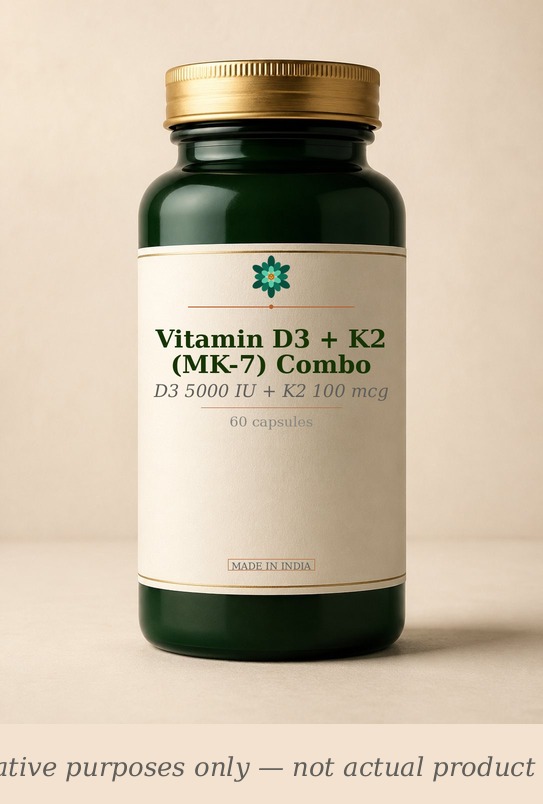
SacredBod's longer take on Vitamin D3 + K2 (MK-7) Combo — context the structured blocks above don't capture.
What the Evidence Actually Says
Vitamin D3 (cholecalciferol) and vitamin K2 (menaquinone-7, MK-7) are combined in a single supplement to optimize calcium metabolism. D3 increases intestinal calcium absorption and raises serum calcium, while K2 activates osteocalcin (a bone-building protein) and matrix Gla protein (MGP, which inhibits arterial calcification). The human research base is the d3+k2 synergy is mechanistically compelling, but the 3-year mk-7 rct found no effect on bmd when both groups received calcium + d3.
Mechanism in Plain Terms
Vitamin D3 upregulates intestinal calcium absorption and stimulates osteoblast activity. However, without adequate K2, the calcium may deposit in arteries and soft tissues instead of bone. Vitamin K2 (as MK-7) carboxylates osteocalcin, enabling it to bind calcium and deposit it in bone matrix. K2 also carboxylates matrix Gla protein (MGP), which prevents calcium deposition in arterial walls.
Who Should Consider It
Individuals with low vitamin D levels seeking bone health support. Postmenopausal women concerned about osteoporosis. Those taking calcium supplements who want to ensure proper calcium trafficking. Not a replacement for prescription osteoporosis medications or cardiac care.
Who Should Avoid or Use Caution
Individuals on warfarin or other vitamin K antagonists should NOT take K2 supplements without physician approval. Those with hypercalcemia or granulomatous diseases should avoid high-dose D3. Pregnant women should stay within recommended D3 limits (4,000 IU/day max).
Dosing Guidance
Typical dose: D3 2000-5000 IU + K2 MK-7 100-200 mcg daily with meals
Best timing: Morning or midday with a meal containing fat. Morning dosing aligns with natural circadian vitamin D metabolism.
With food: Take with a meal containing fat for absorption of both fat-soluble vitamins.
Practical notes: Both vitamins are fat-soluble and require dietary fat for absorption. The combo is widely available in India from brands like Carbamide Forte, Nutrabay, and Boldfit at ₹400-1,200 for 60-120 capsules. The 3-year MK-7 bone trial found NO effect on BMD when both groups received calcium + D3. For best results, ensure adequate magnesium intake (300-400mg/day).
Stacking & Interactions
Pairs well with: Magnesium (essential for D3 activation and bone matrix). Calcium (the mineral being trafficked). Omega-3 for anti-inflammatory bone support.
Avoid combining with: Avoid combining with warfarin or other vitamin K antagonists. Do not take with high-dose calcium at the exact same time—space by 2 hours.
Common stacks: magnesium, calcium, omega-3
Indian Market Context
In India, this supplement is available through amazon.in and domestic brands. Prices typically range from ₹300–₹1,500 for a 30-60 day supply. Domestic brands like Carbamide Forte, HealthyHey, and SUNOVA offer competitive pricing. The Indian vitamin market is highly competitive with both domestic and imported options. Always verify third-party testing for purity, especially for fat-soluble vitamins where overdose risk exists. Store in cool, dry conditions away from direct sunlight.
Comparison with Standard Care
Vitamin D3 + K2 (MK-7) Combo should be viewed as adjunctive nutritional support, not a replacement for established medical therapy or standard vitamin forms. For the conditions mentioned, standard alternatives often outperform: prescription bisphosphonates for osteoporosis and medical cardiac care for arterial calcification. The specialized vitamin form adds incremental benefit with a favorable safety profile in most cases but should not delay appropriate medical evaluation.
Safety & Side Effects
Generally well-tolerated at recommended doses. The most common adverse effects vary by compound: Hypercalcemia risk with excessive dosing . Severe adverse events are rare at moderate doses in healthy individuals. Discontinue and seek medical care if you experience persistent vomiting, jaundice, signs of bleeding, or severe allergic reactions.
Evidence Grade Summary
Grade: B-
The D3+K2 synergy is mechanistically compelling, but the 3-year MK-7 RCT found NO effect on BMD when both groups received calcium + D3. The 2024 meta-analysis shows modest lumbar spine BMD benefits from vitamin K. D3’s benefits are well-established; K2 adds theoretical but not robustly proven value.
Research Highlights
- 2021 — Osteoporos Int: Effect of MK-7 on BMD and microarchitecture in postmenopausal women: 3-year RCT. MK-7 375mcg daily for 3 years did NOT affect BMD or bone microarchitecture vs placebo, despite improved osteocalcin carboxylation.
- 2024 — Bone Joint Res: Effects of vitamin K supplementation on bone mineral density: meta-analysis. Vitamin K increased lumbar spine BMD (p=0.035) and carboxylated osteocalcin (p=0.004). Vitamin K2 maintained or increased lumbar spine BMD in subgroup analysis.
- 2021 — Endocr Pract: Calcifediol treatment reduces NLR in hospitalized COVID-19 patients. Oral 25(OH)D3 corrected vitamin D deficiency in COVID-19 patients. 76.4% achieved sufficiency at 30 days vs ≤12.5% placebo.
magnesium, calcium, omega-3, vitamin-d-25-oh-calcifediol
Bottom Line
The D3+K2 combo is mechanistically compelling and widely marketed, but the 3-year MK-7 RCT found NO effect on BMD when both groups received calcium + D3. The 2024 meta-analysis shows modest lumbar spine benefits from vitamin K. D3’s benefits are well-established; K2 adds theoretical value that is not robustly proven for bone density. The combo is safe and affordable in India (₹400-1,200), making it a reasonable adjunct for bone health, but expectations should be realistic.