
SacredBod
0
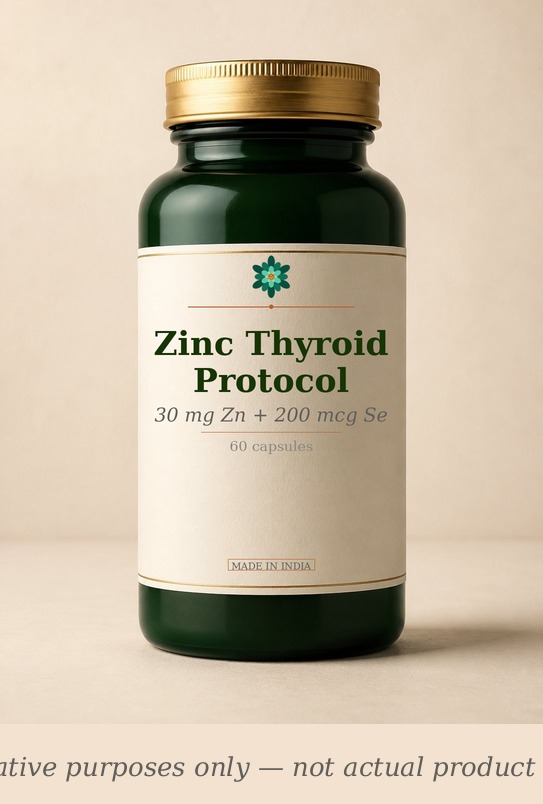
Zinc Thyroid Protocol — SacredBod supplement bottle (illustrative)
Supplement · Thyroid & Metabolic Rate

Zinc Thyroid Protocol

30 mg Zn + 200 mcg Se · vegan · gluten-free · 60 caps

Elevated TSHLow T3 despite normal T4FatigueHair lossCold intolerance ThyroidLiverPituitary
BUY on Amazon →

Affiliate link · we earn from qualifying purchases. No paid placements.

What it is

A combined zinc and selenium supplement providing the two most critical trace minerals for thyroid hormone synthesis, conversion and antioxidant protection. Zinc is required for thyroid peroxidase (TPO) activity and T3 receptor binding; selenium is the cofactor for deiodinases that convert T4 to T3.

How it works

Zinc stabilises the TPO enzyme structure, enables iodine organification on thyroglobulin and is essential for nuclear T3 receptor function. Selenium powers the deiodinases that activate T4 to T3 and the glutathione peroxidases that neutralise hydrogen peroxide during hormone synthesis. Together they cover both the synthetic and protective arms of thyroid biochemistry.

Who should take it

Individuals with subclinical or overt hypothyroidism, those with low serum zinc or selenium, vegetarians and vegans at higher risk of zinc deficiency, and anyone on levothyroxine seeking to optimise T4-to-T3 conversion.

Avoid / careful

Avoid if you have known zinc or selenium toxicity, Wilson's disease (copper-zinc imbalance) or are on high-dose zinc nasal sprays. Side effects: Well tolerated; rare mild nausea, metallic taste or GI upset at high zinc doses. Selenium at 200 mcg is safe; do not exceed 400 mcg combined daily intake.

When to take it

Morning
Noon
Evening
Night

How to take it

With food
Empty stomach
Before food

FAQs

Frequently asked

How long before I see results?
In the Mahmoodianfard 2015 RCT, the zinc + selenium group showed significant increases in free T3 and free T4 and a decrease in TSH over 12 weeks. Benefits are gradual and require consistent daily intake.
Is it safe to take daily?
Yes. Zinc 30 mg and selenium 200 mcg are within safe daily limits for long-term use. Do not exceed zinc 40 mg or selenium 400 mcg from all sources combined.
Can I take it with levothyroxine?
Yes, but separate by at least 4 hours. Minerals can chelate levothyroxine in the gut, reducing absorption. Take levothyroxine on an empty stomach and minerals with meals.

In plain English

A plain-English read of the literature behind this supplement. Not a clinical recommendation.

Key citations: PMID 25758370 (Mahmoodianfard 2015 — zinc + selenium RCT in overweight hypothyroid women: FT3 and FT4 increased, TSH decreased), PMID 8834378 (Olivieri 1996 — low T3/T4 ratio in elderly correlates with impaired selenium and zinc status), PMID PMC7783124 (2021 — thyroid function in selenium deficiency exhibits high FT4/FT3 ratio), PMID PMC10386647 (2021 — zinc and selenium co-supplementation effects on metabolic rate)

Editorial notes

SacredBod's longer take on Zinc Thyroid Protocol — context the structured blocks above don't capture.

What It Is

Zinc Thyroid Protocol combines the two trace minerals most essential for every step of thyroid hormone biology — from synthesis in the gland to activation in peripheral tissues. Zinc is required for thyroid peroxidase (TPO), the enzyme that organifies iodine onto thyrosine residues. Selenium is the cofactor for the deiodinases that convert the inactive prohormone T4 into metabolically active T3. Without adequate zinc and selenium, even a perfectly functioning thyroid gland cannot produce or activate sufficient hormone.

How It Works

MineralThyroid RoleConsequence of Deficiency
ZincTPO enzyme structure; iodine organification; nuclear T3 receptor DNA bindingImpaired hormone synthesis and cellular T3 response
SeleniumDeiodinase cofactor (DIO1, DIO2, DIO3); glutathione peroxidase antioxidantLow T3 despite normal T4; oxidative damage to thyrocytes
  1. Zinc-dependent synthesis — TPO contains zinc in its catalytic centre. Zinc deficiency reduces the rate of iodination and coupling reactions that form T3 and T4. Zinc is also required for the nuclear thyroid hormone receptor to bind DNA and initiate gene transcription.
  2. Selenium-dependent activation — DIO1 and DIO2 are selenoproteins. In selenium deficiency, T4 accumulates while T3 falls — creating a high FT4/FT3 ratio that mimics hypothyroidism at the tissue level despite “normal” blood tests.
  3. Combined antioxidant shield — During hormone synthesis, TPO generates H2O2. GPx1 and GPx3 (selenoproteins) neutralise it. Zinc-dependent copper-zinc superoxide dismutase (Cu/Zn SOD) handles superoxide. Together they protect the gland from oxidative autoimmune triggers.

Who Benefits Most

  • Subclinical hypothyroid patients with a high FT4/FT3 ratio suggesting poor conversion.
  • Vegetarians and vegans — plant-based diets are lower in bioavailable zinc and selenium.
  • Elderly Indians — the Olivieri 1996 study showed that low T3/T4 ratios in older adults correlate with impaired selenium and zinc status.
  • Levothyroxine users still feeling hypothyroid — the minerals may unlock better T4→T3 conversion.

Dosage Guide

GoalZinc DoseSelenium DoseTiming
General thyroid support30 mg200 mcgMorning with protein meal
Subclinical hypothyroidism30 mg200 mcgAs above
Maintenance (replete status)15 mg100 mcgAs above

Take with meals to reduce GI irritation. Separate from levothyroxine by 4 hours, from iron by 2 hours and from antibiotics by 2–4 hours.

Safety and Interactions

Both minerals are safe at these doses. Zinc >40 mg/day long-term can induce copper deficiency. Selenium >400 mcg/day can cause selenosis. The main interaction concern is chelation — zinc binds levothyroxine, iron and certain antibiotics in the gut, reducing absorption of all parties. Proper timing separation resolves this.

India-Specific Context

  • Hindi/Sanskrit names: No classical equivalents; zinc and selenium are modern trace element discoveries.
  • Local availability: No single “zinc + selenium thyroid” product dominates Amazon.in. Buyers typically purchase separate zinc and selenium capsules and combine them. Trexgenics THYROFREE is a multi-ingredient thyroid formula containing both. Individual zinc 30 mg and selenium 200 mcg products are widely available from NutriJa, Biotrex and HealthyHey at ₹300–700 each.
  • Dietary sources: Zinc — pumpkin seeds, chickpeas, lentils, cashews, dairy. Selenium — Brazil nuts, seafood, eggs, wheat (if grown in selenium-rich soil).
  • Regulatory status: Not Schedule H drugs; sold as dietary supplements. ICMR RDA: zinc 12 mg/day (men), 10 mg/day (women); selenium 40 mcg/day.
  • Soil deficiency: Zinc deficiency is widespread in Indian agricultural soils, particularly in rice-wheat systems. Biofortification programs are active but many Indians remain marginally deficient.

Traditional Use in Indian Medicine

Zinc and selenium do not appear in classical Ayurvedic texts. However, the concept of Dhatu Poshana (tissue nourishment) and Agni (metabolic fire) implicitly depends on mineral cofactors present in the diverse, whole-food diets of traditional India. Modern integrative practitioners increasingly combine zinc-selenium supplementation with classical formulas like Kanchanara Guggulu or Saptamrita Lauha for comprehensive thyroid support, recognising that Ayurvedic herbs work best when underlying micronutrient deficiencies are corrected.

Added to your stack.