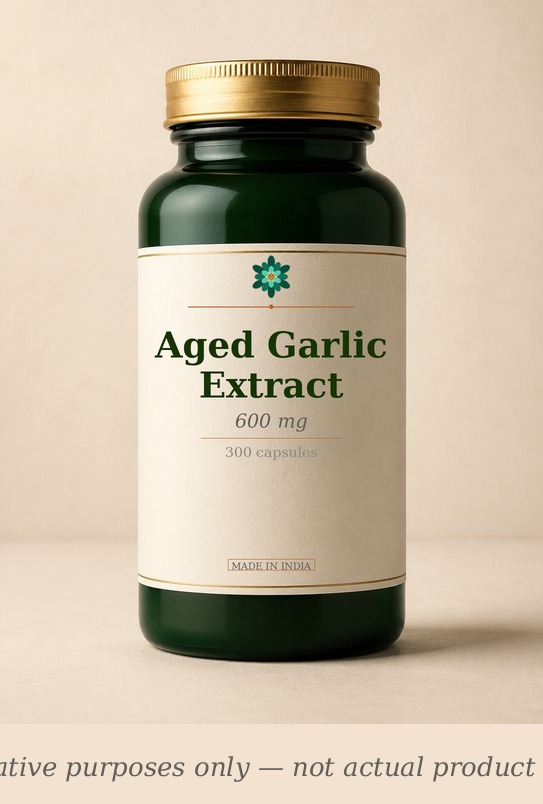
SacredBod's longer take on Aged Garlic Extract — context the structured blocks above don't capture.
Aged garlic extract represents a sophisticated evolution of garlic supplementation. The 20-month aging process in ethanol transforms raw garlic’s harsh, unstable allicin into stable, bioavailable S-allyl cysteine (SAC) and other organosulfur compounds. This transformation eliminates the characteristic garlic odor while potentially enhancing bioactivity. The result is a supplement that delivers garlic’s cardiovascular benefits without the social consequences of garlic breath.
The blood pressure data is dose-dependent and robust. Ried and colleagues (2010, BMC Cardiovascular Disorders, PMID 20070886) conducted a dose-response trial in 79 uncontrolled hypertensives, testing 480 mg, 960 mg, and placebo daily for 12 weeks. The 480 mg dose reduced systolic BP by 5.2 mmHg and diastolic by 4.2 mmHg. The 960 mg dose achieved larger reductions: 11.5 mmHg systolic and 5.5 mmHg diastolic. These are clinically meaningful effects—comparable to first-line lifestyle interventions. The dose-response relationship strengthens causal inference.
The arterial stiffness data adds mechanistic depth. Ried and colleagues (2013, European Journal of Clinical Nutrition, PMID 23532258) randomized 65 patients with metabolic syndrome to 1,200 mg AGE daily or placebo for 3 months. AGE reduced arterial stiffness (measured by pulse wave velocity) by 8.5% and improved endothelial function. Arterial stiffness is an independent predictor of cardiovascular events, and its reduction suggests AGE may slow vascular aging. The coronary calcification trial (2016, Journal of Nutrition, PMID 26962140) followed 65 metabolic syndrome patients for 1 year and found that AGE reduced coronary artery calcium (CAC) progression by 63% compared to placebo. CAC is a direct measure of atherosclerotic burden, and slowing its progression is a genuine anti-atherosclerotic effect.
The safety profile is excellent. Unlike raw garlic, which can cause gastrointestinal distress and body odor, AGE is well-tolerated with minimal side effects. However, the antiplatelet effect, while mild, warrants caution for those on blood thinners or scheduled for surgery. The honest framing: AGE is a well-studied, odorless garlic preparation with consistent blood pressure reduction, arterial stiffness improvement, and promising anti-atherosclerotic effects. It is best suited for mild hypertension and cardiovascular prevention rather than replacement for pharmaceutical therapy in established disease.