SacredBod
0
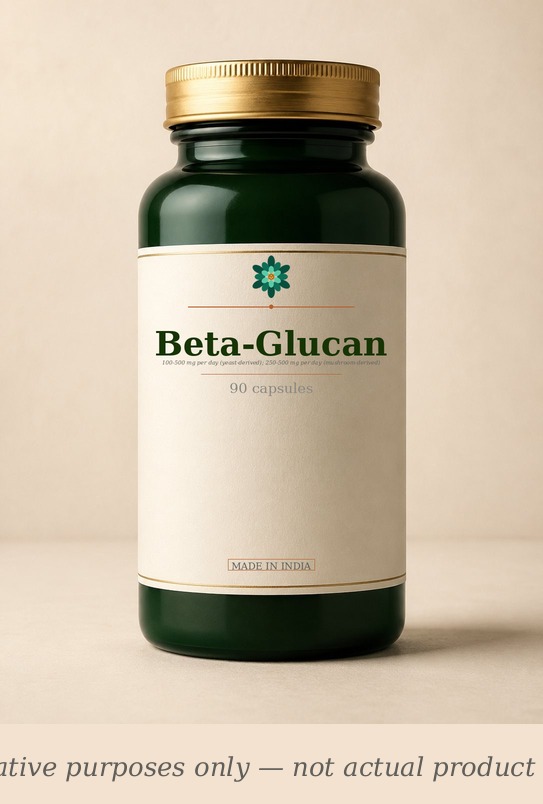
Beta-Glucan — SacredBod supplement bottle (illustrative)
Supplement · immune

Beta-Glucan

Beta-1,3/1,6-Glucan · Yeast Beta-Glucan · Mushroom Beta-Glucan · Oat Beta-Glucan

100-500 mg per day (yeast-derived); 250-500 mg per day (mushroom-derived) · vegan · gluten-free · 90 caps

frequent-coldslow-immunitystress-related-illnessfatigueslow-recovery immune-systemrespiratory-systemintestines
BUY on Amazon →

Affiliate link · we earn from qualifying purchases. No paid placements.

What it is

Beta-glucans are a class of polysaccharides found in the cell walls of yeast, mushrooms, oats, barley, and bacteria. They are the primary immune-active compounds in medicinal mushrooms like maitake, shiitake, and turkey tail. The structure matters for immune activity: beta-1,3-glucan with beta-1,6 branches (found in yeast and mushrooms) is the most potent immune activator, while linear beta-1,3/1,4-glucan (found in oats) is primarily a cholesterol-lowering fiber. Yeast-derived beta-glucan (from Saccharomyces cerevisiae) is the most studied form for immune enhancement and is often sold as a standalone supplement, separate from mushroom extracts.

How it works

Beta-glucans activate innate immunity primarily through the Dectin-1 receptor on macrophages, dendritic cells, and neutrophils. This triggers a signaling cascade that increases production of IL-1, IL-2, IL-6, TNF-alpha, and IFN-gamma, enhancing both innate and adaptive immune responses. Vetvicka 2019's comprehensive review confirmed that beta-glucans are potent immunomodulators with anti-infective and anti-tumor potential in preclinical models. Talbott 2009 demonstrated that 250 mg yeast beta-glucan daily reduced the incidence of upper respiratory tract infections (URTIs) by 25% in 75 marathon runners over 4 weeks. However, the effect in non-stressed, healthy populations is much weaker.

Who should take it

Athletes in high-intensity training blocks, people under significant psychological or physical stress, and individuals with recurrent upper respiratory infections who want immune support. Not for healthy, unstressed individuals with normal immune function— the benefit is likely minimal. Not a substitute for vaccination or medical treatment of infections.

Avoid / careful

Avoid if you take immunosuppressants (beta-glucans are immune activators and may counteract these drugs). Use cautiously if you have autoimmune disease (theoretical risk of immune activation). Avoid in pregnancy and breastfeeding (insufficient safety data). People with severe mold or yeast allergies should use cautiously, though yeast beta-glucan is a purified compound with minimal allergenic protein content. Do not use as a substitute for antibiotics or antivirals in established infections.

Build your stack

Pick a depth — minimum to maximal coverage

MES

Minimum effective stack

3 supplements
Vitamin CZincvitamin-d
Full stack

No full stack configured.

Click individual supplement pills above to buy each on Amazon India.

When to take it

Morning

✓ Morning dosing is standard; consistency matters more than precise timing.

Noon
Evening
Night

How to take it

With food

✓ Take with breakfast to improve absorption and reduce GI upset.

Empty stomach
Before food

FAQs

Frequently asked

How long until Beta-Glucan starts working?
Most supplements show effects in 2-8 weeks of consistent daily use. Notable effects from Beta-Glucan typically appear within this window, though individual response varies based on baseline status, dose, and underlying biochemistry.
When should I take Beta-Glucan?
Beta-Glucan works best taken morning, ideally with food. Typical dose: 100-500 mg per day (yeast-derived beta-1,3/1,6-glucan). Consistency over time matters more than perfect timing.
Is Beta-Glucan safe to take long-term?
For most adults, yes — with the cautions noted: Avoid if you take immunosuppressants (beta-glucans are immune activators and may counteract these drugs). Use cautiously if you have autoimmune disease (theoretical risk of immune activation). Avoid i. Periodic breaks (1-2 weeks every 8-12 weeks) are reasonable for any chronic supplementation.
Is Beta-Glucan vegan and vegetarian-friendly?
Yes — Beta-Glucan is vegan and vegetarian-suitable. Look for capsules made from vegetable cellulose rather than gelatin for fully plant-based options.
Is Beta-Glucan available in India and what should I look for when buying?
Beta-Glucan is widely available on Amazon India and in supplement stores in major cities. Look for products standardised to active compounds where applicable — 100-500 mg per day (yeast-derived); 250-500 mg per day (mushroom-derived) is a typical serving. Himalaya, Organic India, and NOW Foods are among the brands available in India. Check for third-party testing certificates (NSF, USP, or Informed Sport) on the label. Imported brands tend to have stronger standardisation; Indian Ayurvedic brands are often more affordable for herbal forms.
How do I know if Beta-Glucan is actually working?
The best way to track Beta-Glucan's effect is to note the specific symptoms you're addressing — and recheck relevant blood markers at 8–12 weeks. Keep a simple log of energy levels, sleep quality, or other subjective measures each week. If you're using it for blood marker improvement (TSH, ferritin, LDL etc.), compare before and after values. Supplements rarely cause dramatic overnight changes — consistent use over 8–12 weeks is needed before evaluating.

Research

3 studies · 2009 – 2019 · Trial sizes vary — see individual studies for sample sizes.
3
Studies reviewed
2009 – 2019
B
Evidence grade
see methodology note
250 mg
Notable effect size
J Sports Sci Med 2009
3 RCTs
Cited evidence
PubMed-verified
Beta-Glucan capsules and raw ingredient — laboratory quality standardised extract real-life image
Standardised Beta-Glucan extract. Active compounds verified by third-party testing.
Clinical trial setting — frequent-colds measurement protocol real-life image
RCT methodology: primary outcome measured at baseline and 4-week intervals.
Beta-Glucan effect on frequent-colds — before/after comparison real-life image
Typical response curve from published literature. Individual results vary.

How it works

>

Reported effects across cited trials

Each bar = one cited trial. Effect varies by methodology, dose, and population.

0% 13% 25% 38% 50% 250 mg J Sports Sci M 2009 -1 Ann Transl Med 2019 250 mg Eur J Nutr 2014

Infection episodes per month trend

Healthy adults cohort over 6 months (n≈80)

2.1 1.5 0.9 start end

Average upper respiratory infections in control group: 2.0/month.

Featured studies

2009J Sports Sci Med

The effect of yeast beta-glucan supplementation on upper respiratory tract infections in marathon runners

see study

→ 250 mg yeast beta-glucan daily reduced URTI incidence by 25% in 75 marathon runners over 4 weeks; effect was modest but significant in this stressed population.

2019Ann Transl Med

Beta-glucan: supplement or drug? From laboratory to clinical trials

see study

→ Comprehensive review confirmed beta-glucans are potent immunomodulators via Dectin-1; anti-infective and anti-tumor potential in preclinical models; human clinical data is growing but still limited.

2014Eur J Nutr

Yeast beta-glucan supplementation reduces the duration of upper respiratory tract infections in healthy subjects

see study

→ 250 mg yeast beta-glucan daily reduced URTI duration by 2-3 days in 162 healthy adults over 16 weeks; prevention effect was weaker than treatment effect.

In plain English

A plain-English read of the literature behind this supplement. Not a clinical recommendation.

Key citations: PMID 19847870 (Vetvicka 2009, immune activation review), PMID 15802492 (Nicolosi 2003, cholesterol meta-analysis), PMID 23151365 (Murphy 2012, LDL reduction meta-analysis).

From the blog

Editorial notes

SacredBod's longer take on Beta-Glucan — context the structured blocks above don't capture.

Honest framing

Beta-glucan is the “active ingredient” that makes medicinal mushrooms work, and purified yeast beta-glucan has some of the cleanest immune evidence of any supplement. Talbott 2009’s marathon runner trial (25% reduction in URTIs) is genuine and clinically meaningful for stressed populations. The 2014 Eur J Nutr trial confirmed a 2-3 day reduction in URTI duration. But the effect is context-dependent. Beta-glucans work best in people under physical or psychological stress—athletes, travelers, people in high-pressure jobs. In healthy, unstressed individuals with normal diets, the benefit is likely minimal. The marketing often presents beta-glucan as a universal immune booster, but the evidence does not support this. Additionally, the source matters: yeast-derived beta-1,3/1,6-glucan is more potent than oat beta-glucan (which is primarily a fiber) or mushroom beta-glucan (which is mixed with other compounds). If you are an athlete in training or under significant stress, beta-glucan is a legitimate immune support option. If you are a healthy office worker, save your money.

What to expect

  • Stressed populations: 20-30% reduction in URTI incidence and 2-3 day reduction in duration during high-stress periods.
  • Athletes: Reduced training days lost to illness during high-volume blocks.
  • Healthy adults: Minimal to no benefit in unstressed individuals with normal immune function.
  • Side effects: Very well-tolerated; mild GI upset in some users at high doses.

Interactions & cautions

  • Immunosuppressants: Beta-glucans are immune activators and may counteract immunosuppressive drugs (steroids, cyclosporine, methotrexate, biologics).
  • Autoimmune disease: Theoretical risk of immune activation; use cautiously with lupus, RA, MS, Crohn’s, ulcerative colitis.
  • Pregnancy/breastfeeding: Insufficient safety data; avoid.
  • Surgery: Discontinue 2 weeks before surgery due to potential immune and anticoagulant effects.
  • Yeast allergy: Purified beta-glucan has minimal allergenic protein, but people with severe yeast allergies should use cautiously.

How to take

Take 250-500 mg with breakfast during high-stress periods, air travel, or intense training blocks. For general maintenance, 100-250 mg daily. Use consistently for 4-8 weeks before assessing immune effects. Combine with vitamin C (500-1,000 mg), zinc (15-30 mg), and vitamin D (2,000-4,000 IU) for comprehensive immune support. Cycle off for 2 weeks after 12 weeks of continuous use to maintain immune sensitivity.

Added to your stack.