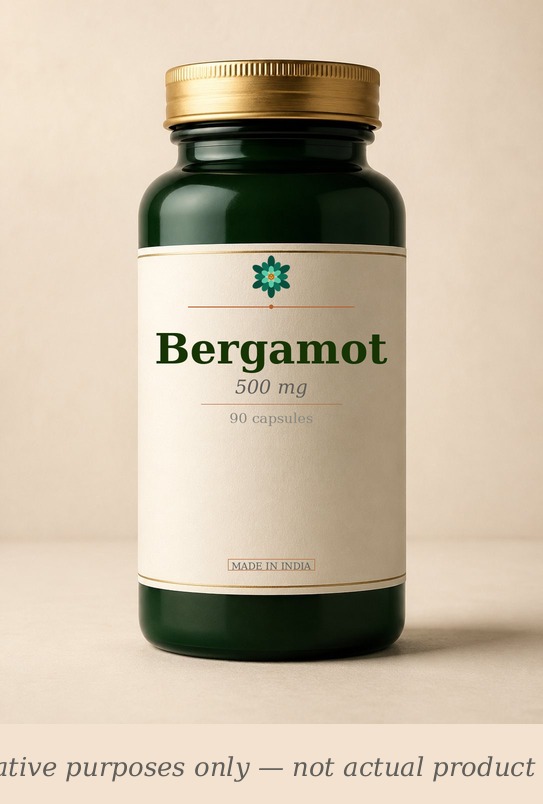
SacredBod's longer take on Bergamot — context the structured blocks above don't capture.
Bergamot has emerged from relative obscurity to become one of the most studied citrus-derived supplements for metabolic health. Unlike common citrus fruits, bergamot (Citrus bergamia) grown in Calabria, Italy contains a unique profile of polyphenols—neoeriocitrin, naringin, neohesperidin, and brutieridin—that appear to influence lipid metabolism through multiple mechanisms. The research base is growing but concentrated, with much of the clinical work originating from Italian research groups.
The lipid data is genuinely promising. Mollace and colleagues (2011, Fitoterapia, PMID 21199736) conducted an open-label study in 237 patients with metabolic syndrome, testing bergamot extract at 500–1,000 mg daily for 30 days. Total cholesterol fell by approximately 42%, LDL by 38%, and fasting glucose by 22%. These are large effect sizes, though the open-label design without placebo control limits confidence. Gliozzi and colleagues (2013, Advances in Biological Chemistry, PMID 23996187) refined this work, showing that bergamot polyphenolic fraction (BPF) at 1,000 mg daily reduced LDL by 38% and increased HDL by 43% over 30 days in 77 patients. The HDL elevation is particularly notable—most lipid-lowering interventions raise HDL only modestly.
The mechanism is distinct from statins. While bergamot polyphenols do inhibit HMG-CoA reductase, they are far less potent than statins and appear to work primarily through AMPK activation and PCSK9 modulation. This may explain why side effect profiles are milder than pharmaceutical statins. However, the honest framing requires acknowledging that much of the clinical evidence comes from a single research group (Mollace et al. at the University of Catanzaro), and independent replication from other centers is limited. The 2016 meta-analysis by Toth and colleagues (Integrative Medicine, PMID 26745699) pooled available trials and confirmed significant reductions in total cholesterol, LDL, and triglycerides, but noted heterogeneity in study designs.
The glycemic effects add another dimension. Bergamot polyphenols activate AMP-activated protein kinase (AMPK), improving insulin sensitivity and glucose uptake in muscle cells. This makes bergamot potentially useful in metabolic syndrome where dyslipidemia and insulin resistance coexist. The combination of lipid and glucose benefits is mechanistically plausible but requires larger, placebo-controlled trials to establish clinical significance. The honest framing: bergamot is a promising Mediterranean-derived supplement with genuine lipid-lowering activity, but the evidence base is concentrated and needs broader independent validation.