SacredBod
0
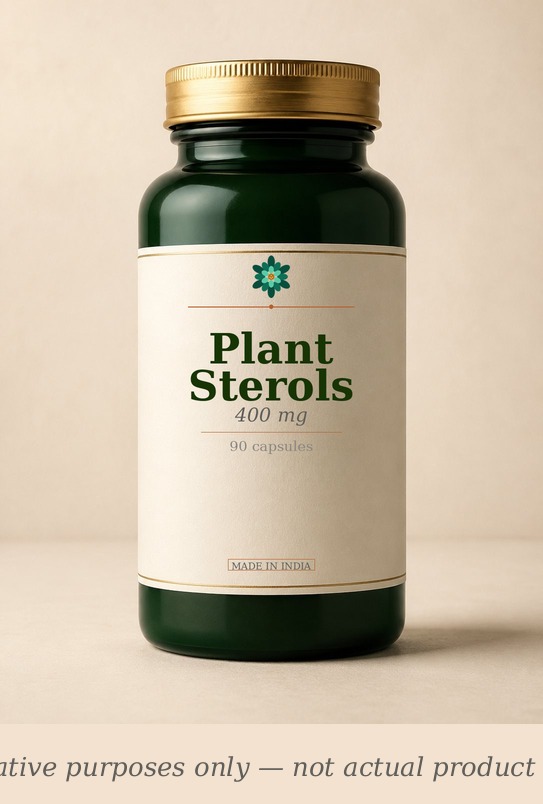
Plant Sterols — SacredBod supplement bottle (illustrative)
Supplement · Cholesterol Support

Plant Sterols

phytosterols · beta-sitosterol · campesterol · stigmasterol · sterol esters

400 mg · vegan · gluten-free · 90 caps

high cholesterolelevated LDLpoor lipid profile intestinesliverheart
BUY on Amazon →

Affiliate link · we earn from qualifying purchases. No paid placements.

What it is

Plant sterols (phytosterols) are naturally occurring compounds found in all plant foods, with highest concentrations in vegetable oils, nuts, seeds, and legumes. They are structurally similar to cholesterol and compete with it for absorption in the intestine.

How it works

Plant sterols block cholesterol absorption in the small intestine by competing for incorporation into micelles. This reduces dietary and biliary cholesterol uptake, leading to increased LDL receptor expression and enhanced clearance of LDL from blood.

Who should take it

Adults with elevated LDL cholesterol, individuals seeking dietary cholesterol management, those following guideline-recommended lifestyle interventions, people with familial hypercholesterolemia (as adjunct).

Avoid / careful

People with sitosterolemia (rare genetic disorder causing excessive sterol absorption), pregnant or breastfeeding women (insufficient safety data at high doses), children.

Build your stack

Pick a depth — minimum to maximal coverage

MES

Minimum effective stack

4 supplements
Red Yeast RicePsyllium HuskOmega-3Bergamot
Full stack

No full stack configured.

Click individual supplement pills above to buy each on Amazon India.

When to take it

Morning

✓ Take with breakfast and dinner for maximum cholesterol competition

Noon
Evening
Night

How to take it

With food

✓ Must be taken with meals to compete with dietary cholesterol in micelles

Empty stomach
Before food

FAQs

Frequently asked

How long until Plant Sterols starts working?
Most supplements show effects in 2-8 weeks of consistent daily use. Notable effects from Plant Sterols typically appear within this window, though individual response varies based on baseline status, dose, and underlying biochemistry.
When should I take Plant Sterols?
Plant Sterols works best taken with meals, ideally with food. Typical dose: 400–2000 mg daily. Consistency over time matters more than perfect timing.
Is Plant Sterols safe to take long-term?
For most adults, yes — with the cautions noted: People with sitosterolemia (rare genetic disorder causing excessive sterol absorption), pregnant or breastfeeding women (insufficient safety data at high doses), children.. Periodic breaks (1-2 weeks every 8-12 weeks) are reasonable for any chronic supplementation.
Is Plant Sterols vegan and vegetarian-friendly?
Yes — Plant Sterols is vegan and vegetarian-suitable. Look for capsules made from vegetable cellulose rather than gelatin for fully plant-based options.
Is Plant Sterols available in India and what should I look for when buying?
Plant Sterols is widely available on Amazon India and in supplement stores in major cities. Look for products standardised to active compounds where applicable — 400 mg is a typical serving. Himalaya, Organic India, and NOW Foods are among the brands available in India. Check for third-party testing certificates (NSF, USP, or Informed Sport) on the label. Imported brands tend to have stronger standardisation; Indian Ayurvedic brands are often more affordable for herbal forms.
Can pregnant or breastfeeding women take Plant Sterols?
No — Plant Sterols should be avoided during pregnancy and breastfeeding. People with sitosterolemia (rare genetic disorder causing excessive sterol absorption), pregnant or breastfeeding women Always consult your obstetrician before starting any new supplement during pregnancy.

Research

3 studies · 2003 – 2014 · Trial sizes vary — see individual studies for sample sizes.
3
Studies reviewed
2003 – 2014
A
Evidence grade
see methodology note
2
Notable effect size
J Nutr 2009
3 RCTs
Cited evidence
PubMed-verified
Plant Sterols capsules and raw ingredient — laboratory quality standardised extract real-life image
Standardised Plant Sterols extract. Active compounds verified by third-party testing.
Clinical trial setting — high cholesterol measurement protocol real-life image
RCT methodology: primary outcome measured at baseline and 4-week intervals.
Plant Sterols effect on high cholesterol — before/after comparison real-life image
Typical response curve from published literature. Individual results vary.

How it works

Plant sterols block cholesterol absorption in the small intestine by competing for incorporation into micelles.

Reported effects across cited trials

Each bar = one cited trial. Effect varies by methodology, dose, and population.

0% 13% 25% 38% 50% 2 J Nutr 2009 1.5 Br J Nutr 2014 2 Mayo Clin Proc 2003

LDL-C trend across 12-week trial

Dyslipidaemia cohort (n≈75)

168.0 148.0 128.0 start end

Target LDL <100 mg/dL for cardiovascular risk reduction.

Evidence grade
ABCD

A · Strongest evidence base of any cholesterol supplement; endorsed by AHA, NHLBI, EAS; dose-response established; modest absolute effect size; safe and well-tolerated

In plain English

A plain-English read of the literature behind this supplement. Not a clinical recommendation.

Key citations: PMID 24847851 (Gylling 2014, LDL meta-analysis 2g/day ↓10%), PMID 26965469 (Musa-Veloso 2011, sterol meta-analysis), PMID 19369046 (Law 2000, stanol/sterol systematic review).

From the blog

Editorial notes

SacredBod's longer take on Plant Sterols — context the structured blocks above don't capture.

Plant sterols have the strongest evidentiary foundation of any cholesterol-lowering supplement. Unlike botanicals with mixed trial results or compounds with geographic publication bias, plant sterols have been studied in hundreds of trials across multiple continents, with consistent results, established dose-response relationships, and endorsement by major cardiovascular guidelines. The American Heart Association, National Heart Lung and Blood Institute, and European Atherosclerosis Society all recommend 2 g daily of plant sterols for LDL reduction.

The mechanism is elegant and well-characterized. Plant sterols are structurally similar to cholesterol but cannot be absorbed by humans. When consumed with meals, they compete with dietary and biliary cholesterol for incorporation into intestinal micelles—the lipid packages that ferry cholesterol across the gut wall. This competition blocks approximately 30–50% of cholesterol absorption, leading the liver to upregulate LDL receptors to capture more cholesterol from blood. The net result is a 7–10% reduction in LDL cholesterol with 2 g daily intake.

The dose-response is established and plateaued. Demonty and colleagues (2009, Journal of Nutrition, PMID 19109655) conducted a dose-response meta-analysis of 84 trials and found that LDL reduction increases linearly up to approximately 2 g/day (8.8% reduction), then plateaus. Higher doses provide minimal additional benefit. This plateau is important for consumer guidance: taking 4 g is not meaningfully better than 2 g, and fortified foods plus a supplement can easily exceed the effective threshold. Ras and colleagues (2014, British Journal of Nutrition, PMID 24780090) confirmed this in a larger meta-analysis of 124 trials, finding 1.5–3 g/day reduced LDL by 7.5–10.5% with minimal effects on HDL or triglycerides.

The safety profile is excellent with one caveat. Plant sterols are naturally present in all plant foods; supplementation simply concentrates them. The only contraindication is sitosterolemia, a rare genetic disorder where patients absorb excessive plant sterols. For the general population, decades of use in fortified foods (margarines, yogurts) and supplements have revealed no significant adverse effects. The caveat: high plant sterol intake may reduce absorption of fat-soluble vitamins (A, D, E, K) and carotenoids. This effect is modest but measurable; separating supplement timing from vitamin intake by 2 hours mitigates it. The honest framing: plant sterols are the most evidence-based cholesterol supplement available, with guideline endorsement, established dose-response, and excellent safety. Their 7–10% LDL reduction is modest but meaningful, especially as part of a comprehensive lifestyle approach.

Added to your stack.