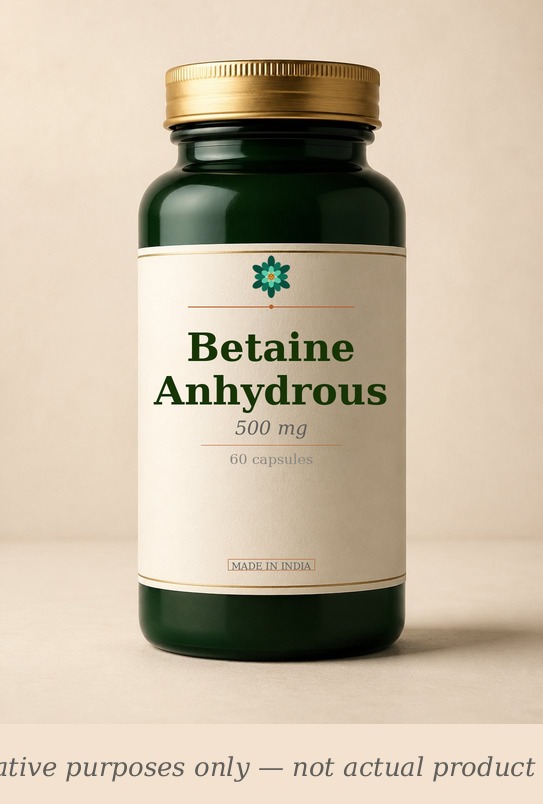
SacredBod's longer take on Betaine Anhydrous — context the structured blocks above don't capture.
What It Is
Betaine — also called trimethylglycine (TMG) — was first isolated from sugar beets (Beta vulgaris), though it is also abundant in spinach, quinoa and wheat bran. It serves two primary physiological roles: (1) as a methyl donor in the methionine-homocysteine cycle, and (2) as a cellular osmolyte that protects proteins and enzymes from denaturation under osmotic stress. In sports nutrition, betaine has gained attention for its ability to improve body composition, work capacity and power output in resistance-trained individuals — but only when combined with actual training.
How It Works
Betaine is actively transported into muscle cells during metabolic stress, where it maintains cellular hydration and protects myosin ATPase and myosin heavy chain proteins from denaturation. This preserves force production capacity during high-volume training. As a methyl donor, betaine reduces homocysteine thiolactone (HCTL) — a toxic metabolite that impairs insulin receptor signalling and protein synthesis. A landmark 2013 RCT in 23 experienced strength-trained men found that 2.5 g/day betaine for 6 weeks significantly improved body composition (BF% and fat mass down, lean mass up), increased arm cross-sectional area (+4.6 cm² vs −0.1 cm² in placebo), and improved bench press work capacity versus placebo. Notably, betaine did not improve strength or body composition in sedentary subjects — the exercise stimulus is required.
Who Benefits Most
Strength and power athletes in hypertrophy or peaking phases; bodybuilders seeking improved body composition; and anyone with elevated homocysteine who wants methylation support. Betaine is particularly effective during high-volume, metabolically demanding training protocols.
Dosage Guide
- Standard dose: 2.5 g/day, divided into 500 mg servings with meals
- Powder: 2.5 g mixed into pre-workout or protein shake
- Capsules: 500 mg × 5 daily, or 1 g × 2–3 daily
- Cycle: Continuous daily use is safe
Safety and Interactions
Very safe. GRAS status. No serious adverse effects at 2.5–6 g/day. Mild GI upset possible. Fishy body odour at very high doses in susceptible individuals. Theoretical interaction with lithium (may reduce clearance).
India-Specific Context
Betaine is affordable and accessible on Amazon.in as TMG (trimethylglycine) capsules. NutriJa (₹400–₹600 for 60 capsules) and generic brands dominate. It is not a scheduled drug. Indian dietary sources include palak (spinach) and chukandar (beets), though supplemental doses (2.5 g) far exceed what diet alone provides. For Indian strength athletes, betaine is an underrated, cost-effective addition to the standard creatine + protein stack. There is no direct Ayurvedic equivalent, though beet and spinach are well-established in Indian cuisine.