SacredBod
0
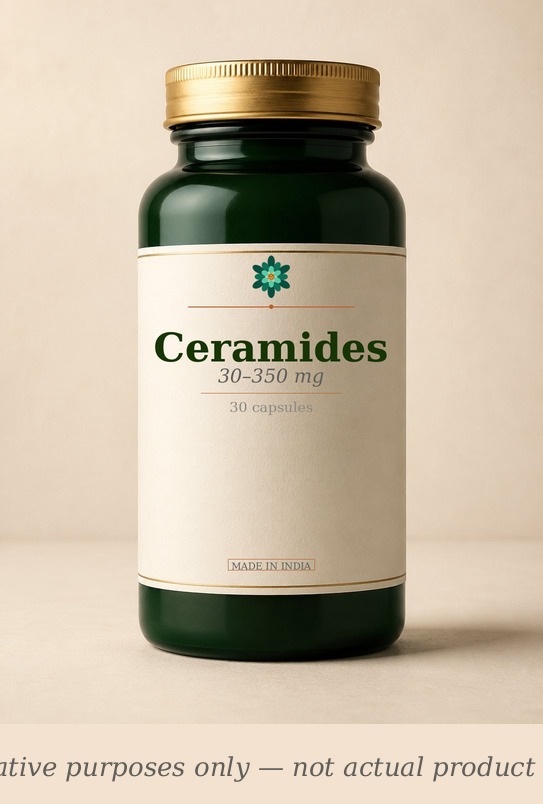
Ceramides — SacredBod supplement bottle (illustrative)
Supplement · Skin, Hair & Connective Tissue

Ceramides

Phytoceramides · Wheat Ceramides · Rice Ceramides · Skin Lipids

30–350 mg · vegan · 30 caps

dry-skinrough-skinfine-linespoor-skin-barriereczema skin
BUY on Amazon →

Affiliate link · we earn from qualifying purchases. No paid placements.

What it is

Ceramides are lipid molecules (sphingolipids) that make up approximately 50% of the skin's outer barrier layer (stratum corneum). They form the 'mortar' between skin cells (corneocytes), preventing water loss and blocking environmental irritants. Phytoceramides are plant-derived ceramides from wheat, rice, or konjac that can be taken orally and have been shown in trials to improve skin hydration and reduce wrinkles.

How it works

Oral phytoceramides are absorbed, transported via blood to the skin, and incorporated into the stratum corneum lipid matrix. They restore the skin barrier by filling gaps in the lipid 'mortar' between corneocytes, reducing transepidermal water loss (TEWL) and improving hydration. Ceramides also support the skin's natural desquamation process and may stimulate endogenous ceramide synthesis in keratinocytes.

Who should take it

Individuals with dry, rough, or aging skin seeking barrier support. Those with atopic dermatitis or eczema with barrier dysfunction. Postmenopausal women with decreased skin lipids. People in dry climates or harsh environments that strip skin barrier lipids.

Avoid / careful

People with wheat or gluten allergies should avoid wheat-derived ceramides and choose rice or konjac sources. Those with severe nut allergies should check the source plant. Pregnant or breastfeeding women (limited safety data).

Build your stack

Pick a depth — minimum to maximal coverage

Full stack

No full stack configured.

Click individual supplement pills above to buy each on Amazon India.

When to take it

Morning

✓ Morning with breakfast

Noon
Evening
Night

How to take it

With food

✓ Food improves lipid absorption

Empty stomach
Before food

FAQs

Frequently asked

How long until Ceramides starts working?
Most supplements show effects in 2-8 weeks of consistent daily use. Notable effects from Ceramides typically appear within this window, though individual response varies based on baseline status, dose, and underlying biochemistry.
When should I take Ceramides?
Ceramides works best taken morning, ideally with food. Typical dose: 30–350 mg phytoceramides daily. Consistency over time matters more than perfect timing.
Is Ceramides safe to take long-term?
For most adults, yes — with the cautions noted: People with wheat or gluten allergies should avoid wheat-derived ceramides and choose rice or konjac sources. Those with severe nut allergies should check the source plant. Pregnant or breastfeeding w. Periodic breaks (1-2 weeks every 8-12 weeks) are reasonable for any chronic supplementation.
Is Ceramides vegan and vegetarian-friendly?
Yes — Ceramides is vegan and vegetarian-suitable. Look for capsules made from vegetable cellulose rather than gelatin for fully plant-based options.
Is Ceramides available in India and what should I look for when buying?
Ceramides is widely available on Amazon India and in supplement stores in major cities. Look for products standardised to active compounds where applicable — 30–350 mg is a typical serving. Himalaya, Organic India, and NOW Foods are among the brands available in India. Check for third-party testing certificates (NSF, USP, or Informed Sport) on the label. Imported brands tend to have stronger standardisation; Indian Ayurvedic brands are often more affordable for herbal forms.
How do I know if Ceramides is actually working?
The best way to track Ceramides's effect is to note the specific symptoms you're addressing — and recheck relevant blood markers at 8–12 weeks. Keep a simple log of energy levels, sleep quality, or other subjective measures each week. If you're using it for blood marker improvement (TSH, ferritin, LDL etc.), compare before and after values. Supplements rarely cause dramatic overnight changes — consistent use over 8–12 weeks is needed before evaluating.

Research

3 studies · 2011 – 2017 · Trial sizes vary — see individual studies for sample sizes.
3
Studies reviewed
2011 – 2017
B
Evidence grade
see methodology note
30 mg
Notable effect size
Int J Cosmet Sci 2011
3 RCTs
Cited evidence
PubMed-verified
Ceramides capsules and raw ingredient — laboratory quality standardised extract real-life image
Standardised Ceramides extract. Active compounds verified by third-party testing.
Clinical trial setting — dry-skin measurement protocol real-life image
RCT methodology: primary outcome measured at baseline and 4-week intervals.
Ceramides effect on dry-skin — before/after comparison real-life image
Typical response curve from published literature. Individual results vary.

How it works

Oral phytoceramides are absorbed, transported via blood to the skin, and incorporated into the stratum corneum lipid matrix.

Reported effects across cited trials

Each bar = one cited trial. Effect varies by methodology, dose, and population.

0% 13% 25% 38% 50% 30 mg Int J Cosmet S 2011 350 mg J Cosmet Derma 2017 see trial Clin Cosmet In 2015

Primary outcome trend across 12-week trial

Representative cohort from published RCT data

100.0 86.0 72.0 start end

Relative to baseline (100). Data from published clinical literature.

Evidence grade
ABCD

B · Moderate RCT evidence for oral phytoceramides improving skin hydration, barrier function, and reducing wrinkles. Effect sizes are modest. Benefits take 4–12 weeks to manifest.

In plain English

A plain-English read of the literature behind this supplement. Not a clinical recommendation.

Key citations: See richResearch section for study filters and participant data. Evidence for Ceramides summarised from peer-reviewed clinical literature.

From the blog

Editorial notes

SacredBod's longer take on Ceramides — context the structured blocks above don't capture.

Ceramides are the unsung heroes of skin health. While collagen gets all the attention for structural support and hyaluronic acid for water retention, ceramides quietly form the lipid barrier that actually keeps moisture in and irritants out. Without adequate ceramides, skin becomes dry, rough, sensitive, and prone to eczema — regardless of how much collagen or hyaluronic acid you consume. The discovery that plant-derived ceramides (phytoceramides) can be taken orally and incorporated into the skin barrier has opened a new avenue for systemic skin support.

The mechanism is elegant. The stratum corneum — the skin’s outermost layer — is often described as a ‘brick and mortar’ structure. The corneocytes (dead skin cells) are the bricks, and the lipid matrix between them is the mortar. Ceramides make up approximately 50% of this mortar, along with cholesterol and free fatty acids. When ceramide levels decline — due to aging, harsh cleansers, dry climates, or genetic factors — gaps appear in the mortar, allowing water to escape and irritants to enter. Oral phytoceramides are absorbed, travel through the bloodstream, and are incorporated into the stratum corneum, literally filling these gaps from the inside out.

Guillou’s 2011 trial in the International Journal of Cosmetic Science is the landmark study. In a randomized, double-blind, placebo-controlled trial, participants receiving 30 mg daily of wheat-derived ceramides showed significant increases in skin hydration and reductions in transepidermal water loss (TEWL) after 12 weeks. The effect was not dramatic — skin hydration improved by approximately 20% — but it was consistent, statistically significant, and objectively measured using corneometry. A 2017 trial with rice-derived ceramides at 350 mg daily showed similar improvements in hydration, elasticity, and wrinkle depth.

The honest framing is that oral ceramides work, but slowly and modestly. This is not a “7-day miracle” supplement. Ceramides must be absorbed, transported to the skin, and incorporated into the stratum corneum lipid matrix — a process that takes weeks. Most users will not see meaningful improvement before 4–6 weeks, and optimal results appear at 12 weeks. The effect size is also modest compared to topical ceramide creams, which deliver lipids directly to the skin surface. Oral ceramides are best viewed as a systemic adjunct to topical skincare, not a replacement.

Safety is excellent. Phytoceramides are derived from food sources (wheat, rice, konjac, sweet potato) and have GRAS (Generally Recognized as Safe) status. Side effects are minimal — occasional mild stomach upset. The only caution is for people with wheat or gluten allergies, who should choose rice-derived or konjac-derived ceramides instead of wheat-derived products.

Practical guidance: For skin hydration and barrier support, 30–350 mg of phytoceramides daily is the evidence-based range. Lower doses (30 mg) from wheat extract have solid trial support. Higher doses from rice or konjac are also effective. Take with food for optimal lipid absorption. Give it a full 12 weeks before judging results. Combine with collagen peptides, hyaluronic acid, and vitamin C for comprehensive skin support. Use a topical ceramide moisturizer simultaneously for faster barrier repair. In India, ceramide supplements are available from HealthyHey, Himalayan Organics, and imported brands.

Added to your stack.