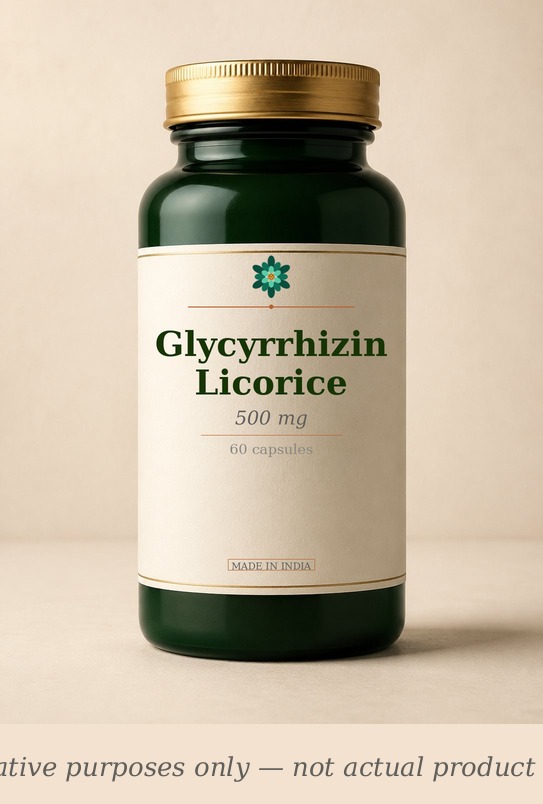
SacredBod's longer take on Glycyrrhizin Licorice — context the structured blocks above don't capture.
What It Is
Glycyrrhizin (also spelled glycyrrhizic acid) is the major triterpene saponin of licorice root (Glycyrrhiza glabra L.), a legume native to the Mediterranean and Central Asia. In India, the same plant is known as Mulethi or Yashtimadhu (Sanskrit) and is one of the most important rasayana (rejuvenative) herbs in Ayurveda, praised in the Charaka Samhita for its sweet, soothing and healing properties. While Ayurveda traditionally uses it for respiratory, digestive and vocal cord health, modern Japanese and European medicine has developed glycyrrhizin as an injectable hepatoprotective agent for chronic viral hepatitis (Stronger Neo-Minophagen C). Oral glycyrrhizin supplements are now available for adjunctive liver support. In India, INLIFE, Nature’s Way, Now Foods and HealthyHey offer standardised capsules.
How It Works
Glycyrrhizin protects hepatocytes through multiple mechanisms: (1) membrane stabilisation — it prevents phospholipase A2-mediated membrane damage, (2) antiviral activity — it inhibits HBV DNA replication and HCV protein expression in infected cells, (3) anti-inflammatory action — it suppresses NF-κB and reduces hepatic necroinflammation and fibrosis, and (4) immunomodulation — it enhances interferon-gamma production. A European phase I/II double-blind RCT in 57 chronic hepatitis C non-responders found that glycyrrhizin (240 mg TIW for 24 weeks) significantly reduced serum ALT and improved hepatic necroinflammation scores versus placebo, though it did not reduce HCV-RNA levels. A 2016 Hong Kong RCT in 60 patients with severe acute exacerbation of chronic hepatitis B found that adding intravenous glycyrrhizin to tenofovir produced significantly faster AST/ALT normalisation and greater MELD score improvement than tenofovir alone.
Who Benefits Most
Adults with chronic hepatitis B or C seeking adjunctive hepatoprotection, those with drug-induced or toxic liver injury, and individuals with elevated ALT from viral or inflammatory causes. It is not a substitute for nucleos(t)ide analogues or direct-acting antivirals. Those with vata and pitta imbalances and inflammatory conditions may find Yashtimadhu particularly soothing.
Dosage Guide
- Standardised extract capsules: 500 mg daily with food (standardised to 20–30% glycyrrhizin)
- Traditional Ayurvedic dose: 1–3 g Yashtimadhu powder daily
- Cycle: 8 weeks on, 2 weeks off; monitor BP and potassium
Safety and Interactions
The major risk is pseudohyperaldosteronism — glycyrrhizin inhibits 11β-hydroxysteroid dehydrogenase, causing cortisol-mediated sodium retention, potassium wasting, hypertension and oedema. This is dose- and duration-dependent. Contraindicated in hypertension, hypokalaemia, kidney disease, heart failure and pregnancy. Use cautiously with diuretics, digoxin, corticosteroids and antihypertensives.
India-Specific Context
Yashtimadhu is a classical Ayurvedic pradhana dravya with a 3,000-year history. On Amazon.in, it is widely available as Mulethi powder, chewable sticks and standardised extract capsules (₹300–₹800). INLIFE offers capsules standardised to >20% glycyrrhizinic acid (₹400). It is not a scheduled drug. In Ayurveda, its madhura (sweet) rasa and sheeta (cooling) virya make it a premier vata-pitta pacifier and rasayana for the throat, digestion and general vitality. For liver support, it is often combined with Kutki and Bhumyamalaki in modern Ayurvedic hepatoprotective protocols.