SacredBod
0
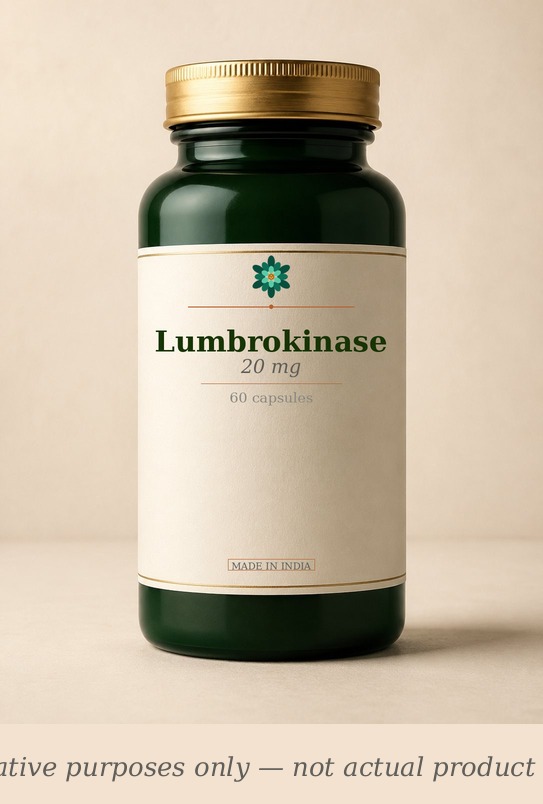
Lumbrokinase — SacredBod supplement bottle (illustrative)
Supplement · Enzyme

Lumbrokinase

20 mg · gluten-free · 60 caps

High fibrinogenPoor circulationCardiovascular riskHypercoagulabilityPeripheral arterial diseasePost-stroke recovery HeartBlood vesselsBrainLimbs
BUY on Amazon →

Affiliate link · we earn from qualifying purchases. No paid placements.

What it is

Lumbrokinase is a group of bioactive proteolytic enzymes (25–32 kDa) extracted from the earthworm Lumbricus rubellus. First identified in the early 1990s, it contains plasminogen activator and plasmin-like enzymes that dissolve fibrin clots. Unlike streptokinase or urokinase, lumbrokinase exhibits thrombolytic activity only in the presence of fibrin, minimising bleeding risk. It has been used clinically in China for stroke and cardiovascular disease since the 1990s.

How it works

Lumbrokinase converts plasminogen to plasmin by increasing endogenous t-PA activity, then directly degrades fibrin clots. Its fibrin-specific activity means it targets existing thrombi without causing systemic fibrinolysis and bleeding. A 2013 multicenter RCT in 310 stroke patients showed that one-year oral lumbrokinase therapy reduced carotid IMT, vulnerable plaque volume, and total vascular events (6.78% vs 2.08%) compared to standard care. A meta-analysis of two RCTs in peripheral arterial disease showed significant increases in ankle-brachial index.

Who should take it

Individuals with elevated fibrinogen or hypercoagulability seeking natural fibrinolytic support. Those with cardiovascular risk factors wanting adjunctive circulatory support. People with peripheral arterial disease. Not a replacement for prescription anticoagulants in acute thrombosis.

Avoid / careful

Individuals on warfarin, heparin, or direct oral anticoagulants without medical supervision. Those with bleeding disorders or active bleeding. Pregnant and breastfeeding women. People with severe liver disease. Not for children. Discontinue 2 weeks before surgery. Side effects: Generally well-tolerated. Mild gastrointestinal upset at higher doses. Theoretical bleeding risk if combined with anticoagulants — monitor closely. Rare allergic reactions.

When to take it

Morning
Noon
Evening
Night

How to take it

With food
Empty stomach
Before food

FAQs

Frequently asked

How long before I see results?
Fibrinogen reduction may be detectable within 2–4 weeks. Cardiovascular event reduction was demonstrated over 12 months in the stroke RCT. Consistent daily use is essential for fibrinolytic benefits.
Is it safe with blood thinners?
No — do not combine with warfarin, heparin, DOACs or antiplatelets without direct medical supervision. The additive bleeding risk is significant. If your physician approves combination use, close INR/PT monitoring is required.
Is it better than nattokinase?
Lumbrokinase has higher fibrinolytic activity per milligram and better oral bioavailability. It is also fibrin-specific, meaning it only acts where fibrin is present. Nattokinase has more consumer familiarity and lower cost. Both are valid fibrinolytic options.

In plain English

A plain-English read of the literature behind this supplement. Not a clinical recommendation.

Key citations: PMID 24229674 (stroke RCT, n=310), PMID 8263976 (PAD meta-analysis), PMID 6013847 (Sirt1 activation and cardioprotection in I-R injury), PMID 15532307 (exercise tolerance in CHD)

Editorial notes

SacredBod's longer take on Lumbrokinase — context the structured blocks above don't capture.

What It Is

Lumbrokinase is a group of bioactive proteolytic enzymes (25–32 kDa) extracted from the earthworm Lumbricus rubellus. First identified in the early 1990s, it contains plasminogen activator and plasmin-like enzymes that dissolve fibrin clots. Unlike streptokinase or urokinase, lumbrokinase exhibits thrombolytic activity only in the presence of fibrin, minimising bleeding risk. It has been used clinically in China for stroke and cardiovascular disease since the 1990s.

How It Works

Lumbrokinase converts plasminogen to plasmin by increasing endogenous t-PA activity, then directly degrades fibrin clots. Its fibrin-specific activity means it targets existing thrombi without causing systemic fibrinolysis and bleeding. A 2013 multicenter RCT in 310 stroke patients showed that one-year oral lumbrokinase therapy reduced carotid IMT, vulnerable plaque volume, and total vascular events (6.78% vs 2.08%) compared to standard care. A meta-analysis of two RCTs in peripheral arterial disease showed significant increases in ankle-brachial index.

Who Should Consider It

Individuals with elevated fibrinogen or hypercoagulability seeking natural fibrinolytic support. Those with cardiovascular risk factors wanting adjunctive circulatory support. People with peripheral arterial disease. Not a replacement for prescription anticoagulants in acute thrombosis.

Dosage Guide

Typical dose: 20 mg per day

Form: capsules (60 count)

Best time: morning

With food: empty-stomach

Expected onset: 2–4 weeks for fibrinogen reduction; 4–8 weeks for cardiovascular benefits

Cycling: No cycling required. Can be taken continuously under medical supervision.

Safety & Side Effects

Known side effects: Generally well-tolerated. Mild gastrointestinal upset at higher doses. Theoretical bleeding risk if combined with anticoagulants — monitor closely. Rare allergic reactions.

Who should avoid: Individuals on warfarin, heparin, or direct oral anticoagulants without medical supervision. Those with bleeding disorders or active bleeding. Pregnant and breastfeeding women. People with severe liver disease. Not for children. Discontinue 2 weeks before surgery.

Avoid combining with: Warfarin and anticoagulants, Aspirin and antiplatelets, NSAIDs, Nattokinase and serrapeptase (redundant fibrinolytics), Fish oil at high doses (additive bleeding risk)

India-Specific Context

Lumbrokinase is available on Amazon India with varying brand quality. When selecting a product, verify standardization claims against the evidence base cited above. Indian brand preferences include Carbamide Forte, HealthyHey, Nutrabay Pure, Pure Nutrition, Now Foods, Nutricost, Himalaya, Patanjali, Dabur, Trexgenics, Evorina, Nervana, Life Extension, VITARUHE, ASTERVEDA, BECLEC, GreenOpia, Rasayanam, Zyrex, and Shree Herbal. Prices vary significantly; compare cost-per-active-dose rather than capsule count alone.

Schedule status in India: Not a Schedule H drug; available as dietary supplement/herbal product.

Research Summary

Key citations: PMID 24229674 (stroke RCT, n=310), PMID 8263976 (PAD meta-analysis), PMID 6013847 (Sirt1 activation and cardioprotection in I-R injury), PMID 15532307 (exercise tolerance in CHD)

Evidence grade: B — n=310 in largest stroke RCT; meta-analysis of PAD trials

Added to your stack.