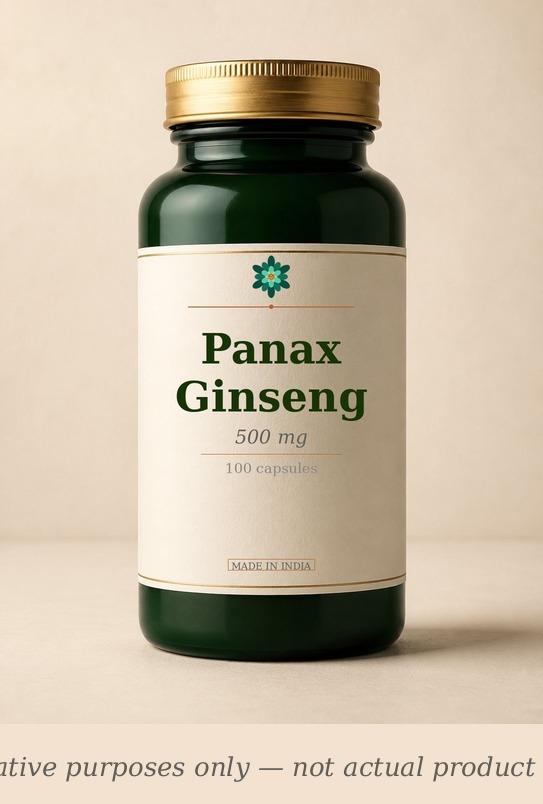
SacredBod's longer take on Panax Ginseng — context the structured blocks above don't capture.
Panax ginseng sits at the intersection of traditional medicine and modern marketing — and the gap between what the science shows and what supplement labels claim is significant. The clinical evidence is real: multiple RCTs show improved cognitive performance during sustained mental tasks and reduced mental fatigue. But the effect sizes are modest, the quality variation between products is enormous, and the “energy boost” most users expect is subtler than advertising suggests.
The mechanism involves ginsenosides, particularly Rg1 and Rb1, which modulate the HPA axis, influence neurotransmitter systems, and improve glucose uptake in brain tissue. Rg1 tends toward stimulation and cognitive enhancement; Rb1 toward calming and adaptogenic effects. The ratio of these compounds varies dramatically depending on processing: red ginseng (steamed) has a different ginsenoside profile than white ginseng (simply dried), and wild roots aged 6+ years contain markedly higher concentrations than 4-year cultivated roots.
The trial evidence is solid but not spectacular. Reay et al. (2005) showed that 200 mg of standardized G115 extract improved speed and accuracy on mental arithmetic tasks while reducing post-prandial blood glucose spikes. Lee et al.’s meta-analysis (2014) found consistent improvements in quality of life and sexual function in menopausal women. These are real, measurable effects — but they are not the dramatic transformation implied by marketing that positions ginseng as a natural Adderall or limitless pill.
The distinction between Panax ginseng and other “ginsengs” is critical. American ginseng (Panax quinquefolius) has a different ginsenoside profile and more calming effects. Eleuthero (Siberian ginseng) is not a true ginseng at all — it contains no ginsenosides and has entirely different active compounds. Marketing that lumps these together as interchangeable “energy herbs” is misleading. If you want the cognitive effects supported by trials, you need Panax ginseng specifically.
The safety profile is generally good but not benign. Ginseng can interact with warfarin (reducing INR), can cause insomnia if taken late in the day, and may overstimulate sensitive individuals. The most common side effect is insomnia, followed by gastrointestinal upset. Quality control is a major issue: non-standardized products vary by orders of magnitude in ginsenoside content, and some products tested have been found to contain negligible active compounds.
Practical guidance: look for products standardized to 4-7% ginsenosides. Start with 200 mg daily in the morning. If tolerated, increase to 400 mg. Cycle 2-3 weeks on, 1-2 weeks off. Take with food. If you are on warfarin, MAOIs, or have uncontrolled hypertension, avoid ginseng entirely. Do not expect dramatic effects — the evidence supports modest cognitive improvement during sustained mental tasks, not transformation of baseline function.
Marketing vs Evidence: A Clear-Eyed Look
The marketing for Panax ginseng often positions it as a natural cognitive enhancer that can replace or augment prescription stimulants. The evidence does not support this framing. The cognitive effects are real but modest — typically 10-15% improvement on specific mental arithmetic tasks, not the dramatic transformation implied by terms like “nootropic” or “brain booster.” The fatigue-reduction effects are more consistent, particularly for physical endurance in older adults or those with chronic fatigue conditions.
The standardization issue is critical and underemphasized. Ginsenoside content varies by orders of magnitude between products. A 2015 analysis of commercial ginseng products found that some contained less than 10% of the labeled ginsenoside content, while others exceeded it by 300%. Without third-party testing (USP, NSF, or equivalent), consumers have no way to know what they are actually taking. This variability explains why some users report dramatic effects while others feel nothing — they may literally be taking different supplements despite identical labels.
Practical Guidance: Getting the Most from Panax Ginseng
If you decide to try Panax ginseng, approach it with realistic expectations. Start with a standardized extract (4-7% ginsenosides, with specified Rg1:Rb1 ratio if available) at 200 mg daily. Take it in the morning with breakfast. If you tolerate it well for one week, increase to 400 mg. Do not take it after 2 PM — the stimulatory effects can disrupt sleep even in people who do not feel “wired.” Cycle 2-3 weeks on, 1-2 weeks off to prevent tolerance and to assess whether the effects are genuinely beneficial for you.
For cognitive effects, combine with L-theanine (100-200 mg) to smooth out any jitteriness. For stress resilience, combine with magnesium glycinate (200-400 mg elemental magnesium). Avoid combining with caffeine after noon, and avoid entirely if you take warfarin, MAOIs, or have uncontrolled hypertension. If you experience insomnia, anxiety, or gastrointestinal upset, reduce the dose or discontinue.