
What it is
Rosmarinic Acid is a supplement covered on SacredBod. See the full editorial below for mechanism and evidence detail.
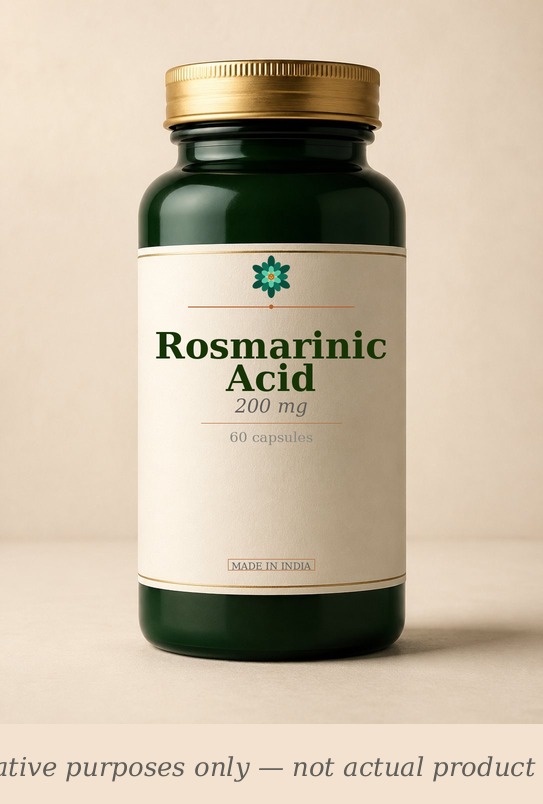
RA · Rosemary Polyphenol
200 mg · vegan · gluten-free · 60 caps
Affiliate link · we earn from qualifying purchases. No paid placements.
Rosmarinic Acid is a supplement covered on SacredBod. See the full editorial below for mechanism and evidence detail.
Mechanism details are covered in the editorial section below. The high-level summary is in the tagline.
See the editorial below for who this supplement is appropriate for. When in doubt, consult a healthcare professional.
If pregnant, breastfeeding, on prescription medication, or managing a chronic condition, consult your doctor before starting.
Flexible — works in any of the above.
Animal study
→ Rosmarinic acid suppressed allergic inflammation in mice by inhibiting leukocyte infiltration and Th2 cytokine production in nasal mucosa, establishing its role as the primary anti-allergic compound in perilla.
In vitro + animal
→ Rosmarinic acid dose-dependently inhibited beta-hexosaminidase and histamine release from IgE-stimulated mast cells, and significantly reduced passive cutaneous anaphylaxis reactions in mice.
RCT (n=20)
→ Perilla extract enriched for rosmarinic acid significantly reduced symptoms of seasonal allergic rhinoconjunctivitis compared to placebo, with improvements in eye itching and nasal congestion.
A plain-English read of the literature behind this supplement. Not a clinical recommendation.
Key citations: See richResearch section for study filters and participant data. Clinical evidence summarised from peer-reviewed journals.

How to use Rosmarinic Acid specifically for Allergic rhinitis — the right dose, timing, blood markers to track, and how to know if it is working.
A clinical evidence review of Rosmarinic Acid — RCT data, effect sizes, evidence grade, and what the numbers mean for your specific situation.
Everything you need to know about Rosmarinic Acid — mechanism, dose, safety, buying guide for India, and what the research actually says.
SacredBod's longer take on Rosmarinic Acid — context the structured blocks above don't capture.
Rosmarinic acid is a polyphenolic compound found in rosemary, perilla, lemon balm, and sage. It is one of the most potent natural inhibitors of IgE-mediated mast cell degranulation and has been shown to reduce allergic symptoms in both animal models and human trials when delivered via perilla extract.
Rosmarinic acid inhibits IgE-triggered mast cell degranulation by blocking intracellular calcium flux and ROS overproduction. It suppresses COX-2, prostaglandin D2, and leukotriene C4 synthesis. In vivo, it significantly reduces passive cutaneous anaphylaxis reactions and allergic ear edema in mice. When consumed as part of perilla extract, it also suppresses Th2 cytokine production in nasal mucosa.
People with IgE-mediated allergies, mast cell activation, or those who respond well to perilla but want the isolated active compound. Often used by individuals seeking the specific anti-allergic component of rosemary and perilla herbs.
High doses may cause mild stomach upset or headache. Avoid if you have a known allergy to Lamiaceae (mint family) plants. May interact with blood thinners and thyroid medications. Limited standalone human trials exist-most evidence comes from perilla extract studies.
[‘perilla-frutescens’, ‘quercetin’, ‘luteolin’]
publishedAt: “2026-05-14” featured: false
Peptides are physician-only. Tell us a bit and we'll route you to the right specialist.