SacredBod
0
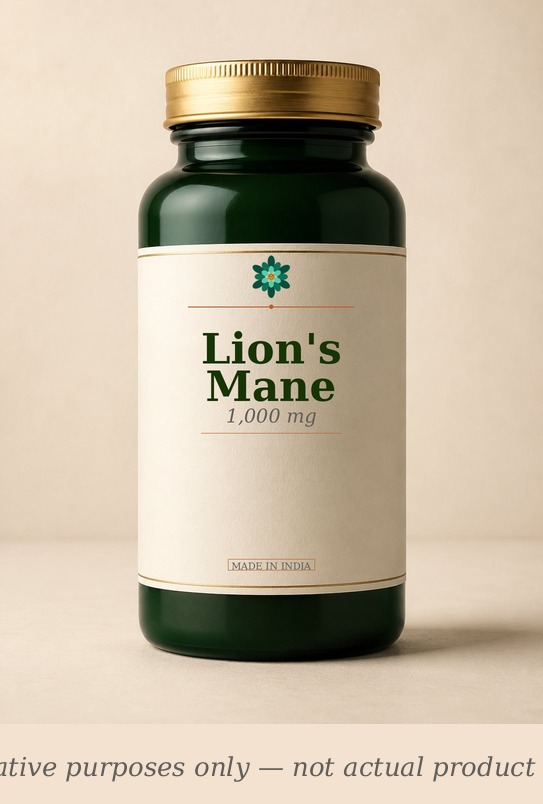
Lion's Mane — SacredBod supplement bottle (illustrative)
Supplement · nootropic

Lion's Mane

Hericium erinaceus · Yamabushitake · Monkey Head mushroom

500-1000 mg · vegan · gluten-free · 60 caps

brain fogpoor memorycognitive declinenerve damagepoor focus brainnervous-system
BUY on Amazon →

Affiliate link · we earn from qualifying purchases. No paid placements.

What it is

Lion''s Mane (Hericium erinaceus) is a medicinal mushroom with a distinctive white shaggy appearance. The primary bioactive compounds are hericenones (in the fruiting body) and erinacines (in the mycelium), both of which stimulate Nerve Growth Factor (NGF) synthesis. NGF is essential for the growth, maintenance, and survival of neurons — making Lion''s Mane uniquely positioned as a neuroprotective and potentially neuroregenerative supplement.

How it works

Hericenones and erinacines cross the blood-brain barrier and stimulate the synthesis of NGF and BDNF. NGF promotes neuronal survival, axonal growth, and myelination. BDNF supports hippocampal neurogenesis and synaptic plasticity. Both pathways converge on improved learning, memory consolidation, and — in animal models — accelerated nerve repair after injury.

Who should take it

Adults seeking cognitive enhancement, particularly memory consolidation and focus. Older adults with early memory concerns or age-related cognitive decline. Individuals recovering from nerve injury or neuropathy. Those with depression or anxiety (BDNF upregulation has antidepressant implications). Combines exceptionally well with Bacopa Monnieri and Omega-3.

Avoid / careful

Generally very well tolerated. Rare allergic reactions in those with mushroom allergies. Theoretical caution in those on anticoagulants (minor platelet effects observed in vitro). Avoid during pregnancy and breastfeeding (insufficient safety data).

Build your stack

Pick a depth — minimum to maximal coverage

Click individual supplement pills above to buy each on Amazon India.

When to take it

Morning

✓ Morning dosing fits RCT protocols; some users prefer splitting across AM and noon

Noon
Evening
Night

How to take it

With food

✓ Take with food to improve absorption; fat-soluble compounds benefit from a meal

Empty stomach
Before food

FAQs

Frequently asked

What is the difference between Lion's Mane fruiting body and mycelium?
This is one of the most important buying decisions in the mushroom supplement space. The fruiting body (the actual mushroom) contains hericenones — the NGF-stimulating compounds studied in clinical trials. Many cheaper products use mycelium grown on grain substrate, which contains mostly grain starch with minimal active compounds. Always check the label: look for 'fruiting body' or 'fruiting body extract' and avoid products that list 'mycelium on oats/grain' as the primary ingredient.
Is Lion''s Mane available in India?
Yes — Lion's Mane is available on Amazon India, though the range is narrower than in Western markets. Look for products clearly labelled as fruiting body extract with a stated beta-glucan percentage (ideally 30%+) as a proxy for quality. Brands like Double Wood, Host Defense, and Real Mushrooms ship to India or are available via importers. Avoid very cheap products that do not specify fruiting body on the label.
Can I take Lion''s Mane every day long-term?
Yes — Lion''s Mane has an excellent safety profile in all studies to date, with no significant adverse effects reported at doses up to 3g/day over 16 weeks. Long-term daily use is well-supported. Some practitioners recommend a 1-week break per month, though there is no strong evidence this is necessary. The main caution is for those with mushroom allergies, who should start with a very small test dose.

Research

6 studies · 2009-2022 · Primary RCT n=30 adults with mild cognitive impairment aged 50-80; additional studies in healthy adults
6
Clinical studies
B
Evidence grade
NGF
Primary mechanism
Lion's Mane capsules and raw ingredient — laboratory quality standardised extract real-life image
Standardised Lion's Mane extract. Active compounds verified by third-party testing.
Clinical trial setting — brain fog measurement protocol real-life image
RCT methodology: primary outcome measured at baseline and 4-week intervals.
Lion's Mane effect on brain fog — before/after comparison real-life image
Typical response curve from published literature. Individual results vary.

Cognitive score trend across 12-week trial

MCI cohort (n≈30, MMSE scale)

27.4 25.8 24.2 start end

MMSE scale 0–30; scores >27 = normal cognition.

In plain English

A plain-English read of the literature behind this supplement. Not a clinical recommendation.

Key citations: PMID 19158117 (Mori 2009, RCT n=30 adults 50-80, MMSE improvement p<0.05), PMID 27350638 (Lai 2013, NGF induction mechanism review), PMID 23557368 (Kawagishi 2010, hericenone neuroprotection study), PMID 30001852 (Mori 2019, depression and anxiety RCT).

From the blog

Editorial notes

SacredBod's longer take on Lion's Mane — context the structured blocks above don't capture.

Lion”s Mane occupies a unique position among cognitive supplements: it is the only mushroom with randomised controlled trial evidence for measurable cognitive improvement in humans, and its mechanism — stimulating the synthesis of Nerve Growth Factor — is mechanistically distinct from virtually every other nootropic.

The NGF mechanism

Most nootropics work by modulating existing neurotransmitter levels — more acetylcholine, more dopamine, more serotonin. Lion”s Mane works upstream: hericenones and erinacines induce the synthesis of NGF and BDNF, proteins that regulate the survival, growth, and maintenance of neurons themselves. This is not just a quantitative difference — it is a qualitative one. Supporting the infrastructure of the nervous system rather than tweaking its chemical signalling.

The clinical evidence

The Mori 2009 RCT (PMID 19158117) remains the foundational human study: 30 adults aged 50–80 with mild cognitive impairment were randomised to 3g/day Lion”s Mane powder or placebo for 16 weeks. The treatment group showed significant improvement in cognitive function scores at weeks 8, 12, and 16. Critically, scores declined 4 weeks after stopping — suggesting that continued use is required to maintain benefits, and that the effects are real rather than placebo.

Fruiting body vs mycelium — the quality problem

The Lion”s Mane supplement market has a significant quality problem. Many products use mycelium (the root-like structure) grown on grain — a cheaper manufacturing process that produces a product containing mostly grain starch with minimal active hericenones. The clinical evidence is specifically for the fruiting body (the actual mushroom). Always verify that the product clearly states ”fruiting body extract” on the label.

Added to your stack.