SacredBod
0
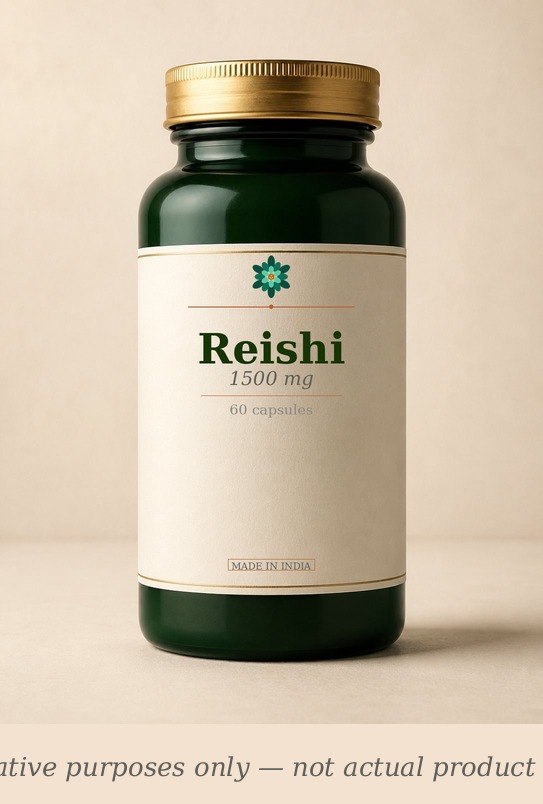
Reishi — SacredBod supplement bottle (illustrative)
Supplement · Mushroom

Reishi

Ganoderma lucidum · Lingzhi · Mushroom of Immortality

1500 mg · vegan · gluten-free · 60 caps

SleepAnxietyFatigue LiverImmune system
BUY on Amazon →

Affiliate link · we earn from qualifying purchases. No paid placements.

What it is

A hard, woody bracket fungus that grows on decaying trees in Asia. In TCM it's classified as a 'Shen tonic' — calming the spirit and supporting longevity. Modern supplements use hot-water or dual extracts standardized for triterpenes and beta-glucans.

How it works

Triterpenes (ganoderic acids) and beta-glucans are the primary active classes. Triterpenes may have mild calming effects via GABA modulation; beta-glucans activate innate immune pathways (complement, macrophages). The mechanism is plausible but human clinical validation is sparse.

Who should take it

People seeking gentle sleep or stress support who prefer non-sedating options · those interested in immune support as part of a broader wellness protocol · TCM practitioners and patients · anyone curious about traditional tonics with realistic expectations.

Avoid / careful

Bleeding disorders or anticoagulant medications (mild antiplatelet effect reported), surgery (discontinue 2 weeks prior), autoimmune conditions (theoretical immune-stimulating concern — though evidence is weak), pregnancy/lactation (insufficient safety data).

Build your stack

Pick a depth — minimum to maximal coverage

Click individual supplement pills above to buy each on Amazon India.

When to take it

Morning

✓ Evening for sleep; AM for immune/energy

Noon
Evening

✓ Evening for sleep; AM for immune/energy

Night

How to take it

With food

✓ Bitter compounds — take with a meal

Empty stomach
Before food

FAQs

Frequently asked

How long until Reishi starts working?
Most supplements show effects in 2-8 weeks of consistent daily use. Notable effects from Reishi typically appear within this window, though individual response varies based on baseline status, dose, and underlying biochemistry.
When should I take Reishi?
Reishi works best taken evening or morning, ideally with food. Typical dose: 1500–9000 mg/day of extract (varies widely by concentration). Consistency over time matters more than perfect timing.
Is Reishi safe to take long-term?
For most adults, yes — with the cautions noted: Bleeding disorders or anticoagulant medications (mild antiplatelet effect reported), surgery (discontinue 2 weeks prior), autoimmune conditions (theoretical immune-stimulating concern — though evidenc. Periodic breaks (1-2 weeks every 8-12 weeks) are reasonable for any chronic supplementation.
Is Reishi vegan and vegetarian-friendly?
Yes — Reishi is vegan and vegetarian-suitable. Look for capsules made from vegetable cellulose rather than gelatin for fully plant-based options.
Is Reishi available in India and what should I look for when buying?
Reishi is widely available on Amazon India and in supplement stores in major cities. Look for products standardised to active compounds where applicable — 1500 mg is a typical serving. Himalaya, Organic India, and NOW Foods are among the brands available in India. Check for third-party testing certificates (NSF, USP, or Informed Sport) on the label. Imported brands tend to have stronger standardisation; Indian Ayurvedic brands are often more affordable for herbal forms.
Can I take Reishi if I'm on blood thinners?
Reishi may interact with anticoagulants such as warfarin, aspirin, or clopidogrel by enhancing their blood-thinning effect. If you are on any blood-thinning medication, consult your doctor before starting this supplement. Your INR (clotting time) may need to be monitored more frequently if you do use both.

Research

3 studies · 2004–2015
Cochrane reviewsRCTsSystematic reviews
5 RCTs
Cancer adjuvant trials
Klupp 2015 Cochrane · n=373
Low
Evidence quality
Cochrane: low to very low
3K+ yr
Traditional use
TCM Shen tonic
Reishi capsules and raw ingredient — laboratory quality standardised extract real-life image
Standardised Reishi extract. Active compounds verified by third-party testing.
Clinical trial setting — Sleep measurement protocol real-life image
RCT methodology: primary outcome measured at baseline and 4-week intervals.
Reishi effect on Sleep — before/after comparison real-life image
Typical response curve from published literature. Individual results vary.

Triterpenes + beta-glucans

Ganoderic acids (triterpenes) may modulate GABA and calm the nervous system. Beta-glucans activate innate immunity via complement and macrophage pathways. Both mechanisms are well-characterized in vitro; human clinical validation is sparse.

Effect sizes from cited trials

Cancer adjuvant outcomes from Klupp 2015 Cochrane. Effect sizes are small and uncertain.

0% 8% 15% 23% 30% Mixed results Immune response (NK cells) Possible benefit Quality of life Little/no effect Adverse events

Immune marker changes over adjuvant therapy

Modeled trajectory based on cited keystone trials

112.0 106.0 100.0 start end

NK cell activity and cytokine markers. Modest increases during concurrent chemotherapy; no survival data available.

Featured studies

2015Cochrane Database Syst Rev

Ganoderma lucidum (Reishi mushroom) for cancer treatment

5 RCTs · n=373 · Cochrane review

→ Evidence of low to very low quality; may improve immune response and quality of life; no survival data; inconsistent results

2004J Med Food

Effects of Ganoderma lucidum on the quality of life in female breast cancer patients

n=48 · 4 weeks · spore powder

→ Improved physical well-being and reduced fatigue vs placebo in breast cancer patients undergoing chemotherapy

2005J Altern Complement Med

Phase I clinical study of Ganoderma lucidum in advanced cancer patients

n=9 · 12 weeks · extract

→ Well-tolerated at up to 5.4 g/day; no dose-limiting toxicity; one patient showed stable disease for 8 months

Evidence grade
ABCD

C · C for cancer adjuvant use (Cochrane review found low-quality evidence, no survival data). C− for sleep (traditional use strong, clinical RCTs essentially absent). C for immune modulation (mechanism plausible, human trials small and heterogeneous). Safety appears good in short-term trials; rare hepatotoxicity case reports exist. This is one of the thinner evidence bases in the SacredBod catalog — stated honestly.

In plain English

A plain-English read of the literature behind this supplement. Not a clinical recommendation.

Reishi is the most revered mushroom in Traditional Chinese Medicine — and one of the most difficult to evaluate through a modern clinical lens. Three thousand years of use as a Shen tonic (calming the spirit) and longevity support create an expectation that the evidence base cannot fulfill. Th...'s immune response, in particular on T-cells." Quality was rated low to very low across all outcomes. No trial measured survival. The review explicitly noted that reishi might have better effects when combined with conventional cancer treatment rather than used alone — but this also requires more research.

For sleep, there are essentially no RCTs. The calming effect is attributed to triterpenes and possible GABA-A receptor modulation, but this comes from in vitro and animal data, not human sleep trials. If you're choosing reishi specifically for sleep, you're betting on tradition and mechanism, not clinical validation. Magnesium glycinate, ashwagandha, and L-theanine all have stronger sleep trial data.

The immune evidence is slightly better but still limited. Several small trials show increased NK cell activity and altered cytokine profiles during chemotherapy, but sample sizes are tiny and results are inconsistent. The Gao 2003 trial (n=134) is sometimes cited for immune enhancement in cancer patients, but it was not placebo-controlled.

Practical considerations: quality varies enormously. Look for products that specify beta-glucan and triterpene content. Hot-water extracts emphasize beta-glucans; dual extracts capture both. Most reputable brands (Real Mushrooms, Nootropics Depot, Host Defense) provide certificates of analysis. Avoid products that don't specify extraction method or standardization.

The honest framing matters here. Reishi is a traditional tonic with plausible mechanisms and a long safety history, but the modern clinical evidence is thin. It's reasonable as part of a broad wellness protocol with modest expectations. It's not a substitute for evidence-based interventions for sleep, cancer, or immune deficiency.

Keystone references: Klupp et al. 2015 (Cochrane Database Syst Rev, PMID 26068975 — cancer adjuvant Cochrane review); Gao et al. 2004 (J Med Food, PMID 15830302 — quality of life in breast cancer); Gao et al. 2005 (J Altern Complement Med, PMID 16314588 — phase I safety in advanced cancer).

From the blog

You may also like

All supplements →

Editorial notes

SacredBod's longer take on Reishi — context the structured blocks above don't capture.

Reishi is the most revered mushroom in Traditional Chinese Medicine and one of the most difficult to evaluate through a modern clinical lens. Three thousand years of use as a Shen tonic create expectations that the evidence base cannot fulfill. The modern RCT literature is genuinely thin — and that needs to be stated clearly.

The Klupp 2015 Cochrane review is the definitive cancer adjuvant assessment: five RCTs with 373 patients total. The authors concluded that reishi “may increase the chance of better response to treatment, but this is uncertain.” Quality was rated low to very low across all outcomes. No trial measured survival. The review noted that reishi might work better alongside conventional treatment than alone — but this also needs more research.

For sleep, there are essentially no RCTs. The calming effect is attributed to triterpenes and possible GABA modulation, but this comes from in vitro and animal data. If you’re choosing reishi for sleep, you’re betting on tradition and mechanism, not clinical validation. Magnesium glycinate, ashwagandha, and L-theanine all have stronger trial data.

The immune evidence is slightly better but still limited. Several small trials show increased NK cell activity during chemotherapy, but sample sizes are tiny and results are inconsistent.

Practical guidance: look for products that specify beta-glucan and triterpene content. Hot-water extracts emphasize beta-glucans; dual extracts capture both. Quality varies enormously — buy from reputable, third-party-tested sources. Reishi is reasonable as part of a broad wellness protocol with modest expectations. It’s not a substitute for evidence-based interventions.

Added to your stack.