SacredBod
0
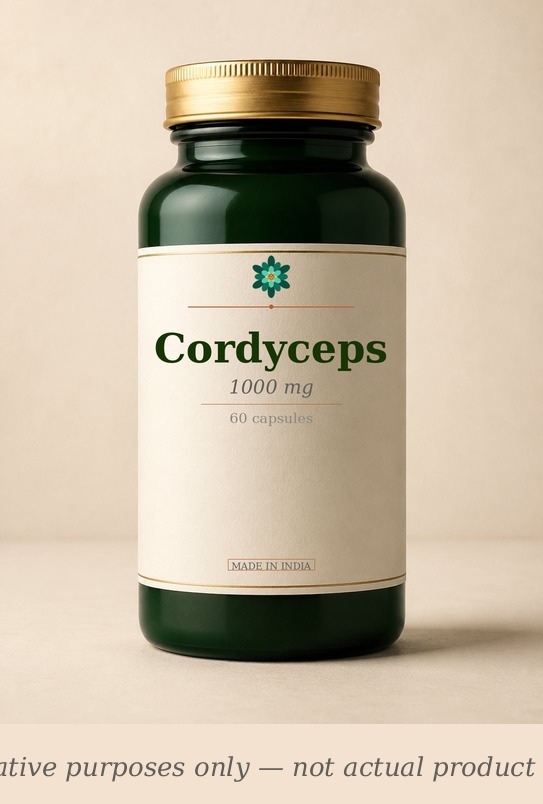
Cordyceps — SacredBod supplement bottle (illustrative)
Supplement · Mushroom

Cordyceps

Cordyceps sinensis · Cs-4 · Caterpillar Fungus

1000 mg · vegan · gluten-free · 60 caps

FatigueBrain fog MuscleLungs
BUY on Amazon →

Affiliate link · we earn from qualifying purchases. No paid placements.

What it is

A parasitic fungus that grows on insect larvae in high-altitude regions of Tibet and Nepal. Most modern supplements use cultivated Cordyceps militaris or a fermented mycelial extract (Cs-4), not the wild-harvested Ophiocordyceps sinensis, which is prohibitively expensive and ecologically threatened.

How it works

Cordycepin and polysaccharides may improve oxygen utilization, ATP production, and lactate clearance. The mechanism is thought to involve enhanced mitochondrial efficiency and vascular endothelial function — but human clinical data is thinner than the marketing suggests.

Who should take it

Older adults seeking exercise capacity support · people in high-altitude or low-oxygen environments · those wanting a non-stimulant energy adjunct · athletes curious about traditional ergogenic tonics.

Avoid / careful

Autoimmune conditions (theoretical immune-modulating concern — though evidence is weak), bleeding disorders (mild anticoagulant effect reported in vitro), surgery (discontinue 2 weeks prior), MAOIs (theoretical interaction with cordycepin).

Build your stack

Pick a depth — minimum to maximal coverage

Click individual supplement pills above to buy each on Amazon India.

When to take it

Morning

✓ Morning for energy support

Noon
Evening
Night

How to take it

With food
Empty stomach
Before food

Flexible — works in any of the above.

FAQs

Frequently asked

How long until Cordyceps starts working?
Most supplements show effects in 2-8 weeks of consistent daily use. Notable effects from Cordyceps typically appear within this window, though individual response varies based on baseline status, dose, and underlying biochemistry.
When should I take Cordyceps?
Cordyceps works best taken morning, ideally with or without food. Typical dose: 1000–3000 mg/day of Cs-4 or Cordyceps militaris extract. Consistency over time matters more than perfect timing.
Is Cordyceps safe to take long-term?
For most adults, yes — with the cautions noted: Autoimmune conditions (theoretical immune-modulating concern — though evidence is weak), bleeding disorders (mild anticoagulant effect reported in vitro), surgery (discontinue 2 weeks prior), MAOIs (t. Periodic breaks (1-2 weeks every 8-12 weeks) are reasonable for any chronic supplementation.
Is Cordyceps vegan and vegetarian-friendly?
Yes — Cordyceps is vegan and vegetarian-suitable. Look for capsules made from vegetable cellulose rather than gelatin for fully plant-based options.
Is Cordyceps available in India and what should I look for when buying?
Cordyceps is widely available on Amazon India and in supplement stores in major cities. Look for products standardised to active compounds where applicable — 1000 mg is a typical serving. Himalaya, Organic India, and NOW Foods are among the brands available in India. Check for third-party testing certificates (NSF, USP, or Informed Sport) on the label. Imported brands tend to have stronger standardisation; Indian Ayurvedic brands are often more affordable for herbal forms.
Can I take Cordyceps if I'm on blood thinners?
Cordyceps may interact with anticoagulants such as warfarin, aspirin, or clopidogrel by enhancing their blood-thinning effect. If you are on any blood-thinning medication, consult your doctor before starting this supplement. Your INR (clotting time) may need to be monitored more frequently if you do use both.

Research

3 studies · 2004–2010
RCTsPlacebo-controlled
+10.5%
Metabolic threshold
Chen 2010 · Cs-4 · elderly · 12 wk
+8.5%
Ventilatory threshold
Chen 2010 · same cohort
0/3
Cyclist trials positive
Parcell, Earnest, Colson — no benefit
Cordyceps capsules and raw ingredient — laboratory quality standardised extract real-life image
Standardised Cordyceps extract. Active compounds verified by third-party testing.
Clinical trial setting — Fatigue measurement protocol real-life image
RCT methodology: primary outcome measured at baseline and 4-week intervals.
Cordyceps effect on Fatigue — before/after comparison real-life image
Typical response curve from published literature. Individual results vary.

Mitochondrial efficiency and oxygen utilization

Cordyceps polysaccharides and cordycepin may enhance mitochondrial ATP generation and improve oxygen extraction during exercise. The mechanism is better characterized in animal models than in humans.

% change in exercise parameters

From cited keystone trials. Mixed picture — positive in elderly, null in trained athletes.

0% 4% 8% 11% 15% +10.5% Metabolic threshold (Chen) +8.5% Ventilatory threshold (Chen) No change VO2max (Chen)

Exercise threshold improvement over 12 weeks

Modeled trajectory based on cited keystone trials

110.0 105.0 100.0 start end

Metabolic threshold. Improvements emerge gradually; most gain by week 8–12.

Evidence grade
ABCD

C · C+ for exercise performance in elderly (one positive RCT, but small and in a specific population). C for trained athletes (multiple null trials). C for immune modulation (traditional use strong, clinical RCTs thin). Safety is good in trials up to 12 weeks. The evidence base is genuinely thinner than marketing implies — this is not creatine or beta-alanine.

In plain English

A plain-English read of the literature behind this supplement. Not a clinical recommendation.

Cordyceps occupies an odd space in modern supplementation: a traditional Chinese tonic with genuine pharmacological interest but a clinical evidence base that doesn't match the marketing hype. The key distinction most consumers miss is that virtually no supplement contains wild Ophiocordyceps sinensis — it's ecologically threatened and costs more per gram than gold. What you're buying is either a fermented mycelial extract (Cs-4) or cultivated Cordyceps militaris. Both are valid; neither is the legendary Himalayan fungus.

The Chen 2010 trial is the most-cited positive study: 20 healthy elderly adults (ages 50–75) took 333 mg Cs-4 three times daily for 12 weeks. Metabolic threshold improved 10.5% and ventilatory threshold 8.5% — meaningful for older adults wanting to maintain exercise capacity. But VO2max didn't budge, and the trial was small.

The problem is the athlete trials. Parcell 2004 gave 22 male cyclists 3 g/day Cs-4 for 5 weeks and found nothing. Earnest 2004 tested a commercial herbal formula with cordyceps in cyclists — nothing. Colson 2005 tested cordyceps plus rhodiola in cyclists — nothing on muscle oxygen saturation or performance. The pattern is consistent: if you're already trained, cordyceps doesn't add much.

The immune and anti-fatigue claims have even less RCT support. A few small studies show increased NK cell activity and reduced oxidative stress markers, but the trial quality is low and sample sizes are tiny. The Klupp 2015 Cochrane review on reishi for cancer is sometimes cited in cordyceps marketing by association — that's a different mushroom.

Practical guidance: 1000–3000 mg/day of a Cs-4 or militaris extract from a reputable source (Real Mushrooms, Host Defense, Nootropics Depot). Expect modest benefits if you're older or untrained; don't expect ergogenic magic if you're already fit. The traditional tonic framing — gentle support, not dramatic intervention — is closer to the evidence than the supplement industry's performance claims.

Keystone references: Chen et al. 2010 (J Altern Complement Med, PMID 20804368 — elderly exercise trial); Parcell et al. 2004 (Int J Sport Nutr Exerc Metab, PMID 15118196 — null cyclist trial); Colson et al. 2005 (J Strength Cond Res, PMID 15903375 — null cyclist trial with rhodiola).

From the blog

You may also like

All supplements →

Editorial notes

SacredBod's longer take on Cordyceps — context the structured blocks above don't capture.

Cordyceps is a traditional Chinese tonic with genuine pharmacological interest and a clinical evidence base that doesn’t match the marketing. The first thing to know: virtually no supplement contains wild Ophiocordyceps sinensis. It’s ecologically threatened and costs more per gram than gold. What you’re buying is either a fermented mycelial extract (Cs-4) or cultivated Cordyceps militaris. Both are valid; neither is the legendary Himalayan fungus.

The Chen 2010 trial is the best positive evidence: 20 healthy elderly adults took 333 mg Cs-4 three times daily for 12 weeks. Metabolic threshold improved 10.5% and ventilatory threshold 8.5% — meaningful for maintaining exercise capacity with age. But VO2max didn’t change, and the trial was small.

The athlete data is less encouraging. Parcell 2004 (22 cyclists, 5 weeks, 3 g/day), Earnest 2004 (commercial formula with cordyceps), and Colson 2005 (cordyceps plus rhodiola) all found no endurance benefit in trained cyclists. The pattern is consistent: cordyceps may help if you’re older or untrained; it doesn’t add performance if you’re already fit.

The immune and anti-fatigue claims have even less RCT support. A few small studies show increased NK cell activity, but trial quality is low. Traditional use is strong; modern clinical validation is thin.

Practical guidance: 1000–3000 mg/day of Cs-4 or militaris extract from a reputable, third-party-tested source. Expect gentle support, not dramatic intervention. The traditional tonic framing is closer to the evidence than the supplement industry’s performance claims.

Added to your stack.