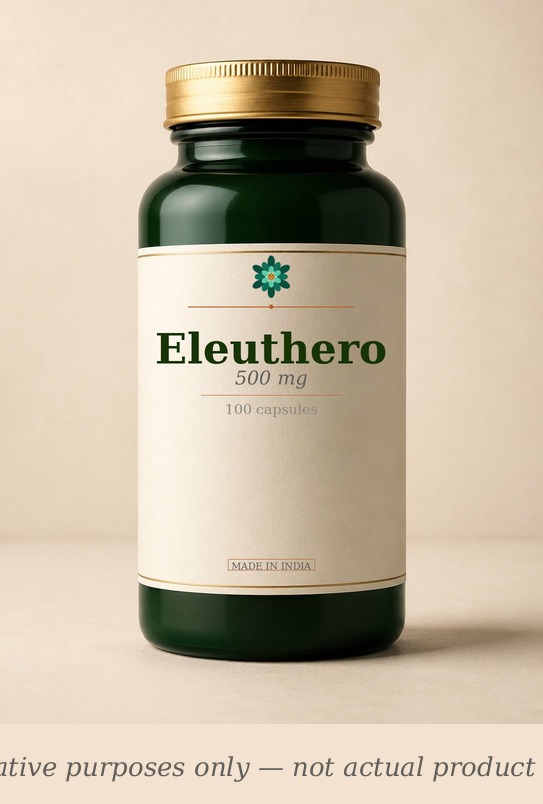
SacredBod's longer take on Eleuthero — context the structured blocks above don't capture.
Eleuthero occupies a unique position in the supplement world: it was the original Soviet adaptogen, extensively studied behind the Iron Curtain, but much of that research is difficult to access and does not meet modern RCT standards. The result is a botanical with impressive historical credentials but surprisingly thin high-quality modern evidence — and marketing that often conflates the two.
The classification as an adaptogen comes from Israel Brekhman’s work in the 1960s Soviet Union, where eleuthero was studied as a performance enhancer for athletes and military personnel. The active compounds, eleutherosides B and E, were identified and standardized. But the vast majority of this research was published in Russian or Chinese journals, used small sample sizes, and lacked the methodological rigor (randomization, blinding, placebo control) that modern evidence-based medicine requires.
The modern evidence is more modest. Kuo et al. (2010) found that 800 mg/day for eight weeks improved endurance capacity and shifted metabolism toward fat oxidation during cycling in healthy men. This is a real, measurable effect — but it is one of the few well-designed modern trials, and the effect size was modest (approximately 10% improvement in time to exhaustion). A 2004 review in Phytomedicine noted that while some trials showed benefits, the overall evidence was inconsistent and many studies were methodologically flawed.
The mechanism is less well-characterized than Panax ginseng. Eleutherosides appear to modulate the HPA axis and may improve oxygen utilization in muscle tissue, but the precise molecular targets are not as clearly defined. This is not a true ginseng — it contains no ginsenosides — and its pharmacological profile is distinct. The Soviet-era research suggested immune-modulating effects, but these studies are particularly difficult to verify and replicate.
Safety is generally good, but eleuthero can raise blood pressure in some individuals and may interact with sedatives. The most common side effects are insomnia (if taken late in the day) and mild gastrointestinal upset. Quality control is a concern: some products labeled as eleuthero have been found to contain little to no eleutherosides, and adulteration with other Eleutherococcus species has been documented.
Practical guidance: if you choose to use eleuthero, look for products standardized to 0.8% eleutherosides. Start with 300 mg daily in the morning. If tolerated, increase to 500 mg. Cycle 6 weeks on, 2 weeks off. Take with food. If you have uncontrolled hypertension, avoid eleuthero. Do not expect dramatic effects — the evidence supports modest endurance improvement in healthy adults, not transformation of athletic performance. Consider Panax ginseng if your primary goal is cognitive enhancement, as the evidence base is stronger.
Marketing vs Evidence: The Soviet Legacy Problem
Eleuthero marketing often cites the extensive Soviet research base as evidence of efficacy. This is misleading. While the Soviet Union did conduct extensive research on eleuthero, the vast majority of these studies are not accessible in English, were not peer-reviewed by international standards, and used methodologies that would not pass modern ethical review or RCT standards. The few studies that have been translated and analyzed show small sample sizes, lack of placebo control, and inconsistent results.
The modern Western evidence base consists of fewer than 20 well-designed RCTs, most with sample sizes under 50 participants. This is not a robust evidence base for the broad claims made about eleuthero — particularly the claims that it enhances immune function, improves athletic performance in competitive athletes, or provides “adaptogenic” benefits that protect against all forms of stress. The evidence supports modest endurance improvement in healthy adults; it does not support the broader adaptogen narrative.
Practical Guidance: Using Eleuthero Responsibly
If you choose to use eleuthero, look for products standardized to 0.8% eleutherosides (specifically eleutheroside B and E). Start with 300 mg daily in the morning with breakfast. If tolerated after one week, increase to 500 mg. Cycle 6 weeks on, 2 weeks off — this pattern is based on traditional use rather than specific clinical data, but it provides a reasonable framework for assessing benefit.
Do not combine with other stimulants (high-dose caffeine, synephrine, yohimbine). If you have uncontrolled hypertension, avoid eleuthero entirely — it can raise blood pressure in some individuals. If you experience insomnia, reduce the dose or take only in the morning. For endurance support, consider combining with rhodiola rosea (200-400 mg) for complementary adaptogenic effects, but monitor for overstimulation. Do not expect dramatic effects — the evidence supports modest improvement, not transformation.