
SacredBod
0
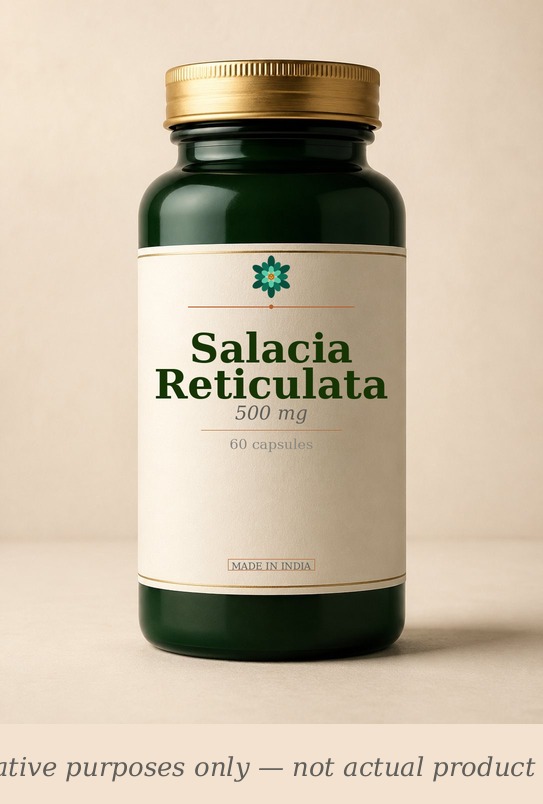
Salacia Reticulata — SacredBod supplement bottle (illustrative)
Supplement · Carbohydrate Blocker

Salacia Reticulata

500 mg · vegan · gluten-free · 60 caps

High post-meal glucoseType 2 diabetesPrediabetesCarbohydrate sensitivityInsulin resistance IntestinesLiverPancreas
BUY on Amazon →

Affiliate link · we earn from qualifying purchases. No paid placements.

What it is

Salacia reticulata, known as Kothala Himbutu in Sinhala, Saptarangi in Sanskrit, and Ekanayakam in Tamil, is a woody climbing shrub native to Sri Lanka and southern India. Its roots contain potent alpha-glucosidase inhibitors including salacinol, kotalanol, and de-O-sulfonated compounds that block intestinal carbohydrate digestion. It has been used in Ayurveda and Sri Lankan traditional medicine for diabetes for over 2,000 years.

How it works

Salacinol and kotalanol are unique thiosugar compounds that potently inhibit intestinal alpha-glucosidase (sucrase, maltase, isomaltase) — the enzymes that break down dietary carbohydrates into absorbable glucose. Unlike synthetic acarbose, Salacia's inhibitors are not absorbed into the bloodstream and act only in the gut lumen, making them exceptionally safe. The root also contains mangiferin and kotalanol B, which improve insulin sensitivity and reduce oxidative stress.

Who should take it

Individuals with Type 2 diabetes or prediabetes seeking natural carbohydrate blocking, those with post-meal glucose spikes, people wanting to reduce sugar absorption from high-carb Indian meals, and anyone interested in Ayurvedic antidiabetic herbs. Relevant for India's carbohydrate-rich diet and high diabetes prevalence.

Avoid / careful

People with chronic intestinal diseases (IBD, IBS with diarrhea), those with severe malabsorption disorders, pregnant or breastfeeding women (limited safety data), individuals already on acarbose or miglitol. Side effects: Very safe. May cause mild bloating, gas, or loose stools from unabsorbed carbohydrates reaching the colon. Rarely: mild stomach upset. No systemic absorption means no liver or kidney toxicity.

When to take it

Morning
Noon
Evening
Night

How to take it

With food
Empty stomach
Before food

FAQs

Frequently asked

How long before I see results?
Post-meal glucose effects are immediate when taken with meals. Fasting glucose improvements appear within 2–4 weeks. HbA1c changes require 8–12 weeks of consistent use at 500 mg twice daily.
Is it safe to take daily?
Yes. Salacia has been used in Ayurveda and Sri Lankan medicine for thousands of years. The active compounds are not absorbed systemically — they act only in the gut. Daily doses of 500–1000 mg are well-tolerated.
Can I take it with metformin?
Yes. Salacia complements metformin beautifully — metformin works primarily on the liver (reducing hepatic glucose output), while Salacia works in the intestine (reducing carb absorption). Together they address both sources of blood glucose.

In plain English

A plain-English read of the literature behind this supplement. Not a clinical recommendation.

Key citations: PMID 22120962 (Salacia reticulata extract on T2DM patients — RCT, 2012), PMID 17262844 (Salacinol & kotalanol alpha-glucosidase inhibition, 2007), PMID 16608284 (Salacia oblonga on postprandial glycemia, 2006)

Editorial notes

SacredBod's longer take on Salacia Reticulata — context the structured blocks above don't capture.

Salacia reticulata — Kothala Himbutu, Saptarangi, Ekanayakam — is one of Ayurveda’s most powerful yet underappreciated antidiabetic herbs. This woody climber from Sri Lanka and southern India contains unique thiosugar compounds (salacinol and kotalanol) that inhibit carbohydrate-digesting enzymes with a potency that rivals prescription acarbose — but without any systemic absorption or side effects.

What the Research Shows

A 2012 randomised controlled trial (PMID 22120962) gave 40 Type 2 diabetes patients either 500 mg of Salacia reticulata extract or placebo twice daily for 6 weeks. The Salacia group showed significant reductions in fasting blood glucose, postprandial glucose, and HbA1c compared to placebo. No adverse effects were reported.

A 2007 study (PMID 17262844) isolated and characterised salacinol and kotalanol from Salacia roots, demonstrating their potent alpha-glucosidase inhibitory activity. These thiosugar compounds are structurally unique — found nowhere else in nature — and bind to the enzyme active site with high specificity.

A 2006 clinical study (PMID 16608284) evaluated Salacia oblonga (a related species) in healthy adults and found significant reductions in postprandial glucose and insulin responses after carbohydrate-rich meals. The effect was dose-dependent and comparable to low-dose acarbose.

India Context

  • Availability: Planet Ayurveda, Vedikroots, CAREQUE, and Sanjeevana Ayurveda offer Salacia capsules and powders on Amazon India. Most products use Salacia oblonga or reticulata root extract.
  • Price: ₹300–₹700 for 60 capsules or 50g powder
  • Ayurvedic heritage: Saptarangi is described in Charaka Samhita and Sushruta Samhita for prameha (diabetes) and related metabolic disorders. It is classified as tikta (bitter) and kashaya (astringent) in rasa, with katu vipaka (pungent post-digestive effect) — the classic Ayurvedic profile for antidiabetic herbs.
  • Sri Lankan tradition: Kothala Himbutu is one of the most important medicinal plants in Sri Lankan traditional medicine (Hela Wedakama), used specifically for diabetes. The name literally means “sugar destroyer.”
  • Dietary relevance: Indian cuisine relies heavily on rice, wheat, and lentils — all carbohydrate-dense foods. Salacia’s ability to block carbohydrate absorption at the intestinal level is directly relevant to the Indian dietary pattern.

Dosage & Safety

  • Standard dose: 500 mg twice daily with meals
  • Best time: With breakfast and dinner (carbohydrate-rich meals)
  • Caution: May cause gas and bloating from unabsorbed carbs — same as acarbose. Not for use with acarbose or miglitol. Those with chronic diarrhea or IBD should avoid.
Added to your stack.