What it is
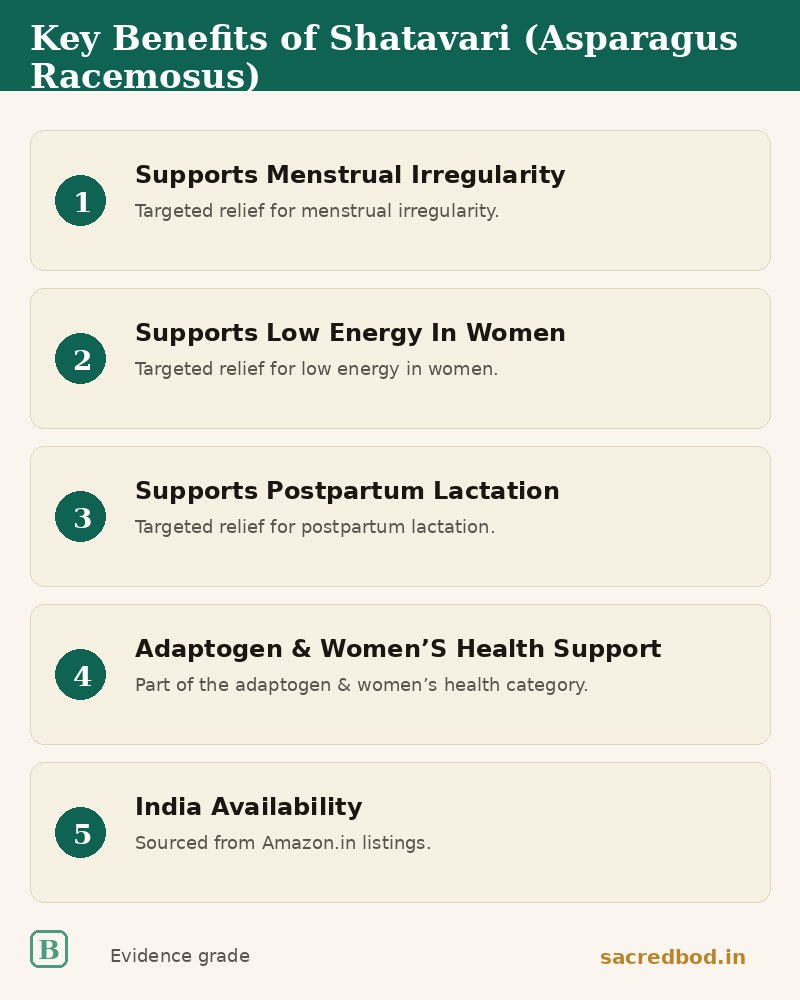
Shatavari is the Indian asparagus root, the central women’s tonic of Ayurveda. Its saponins (shatavarins) modulate hormone-sensitive receptors gently.
Indian asparagus
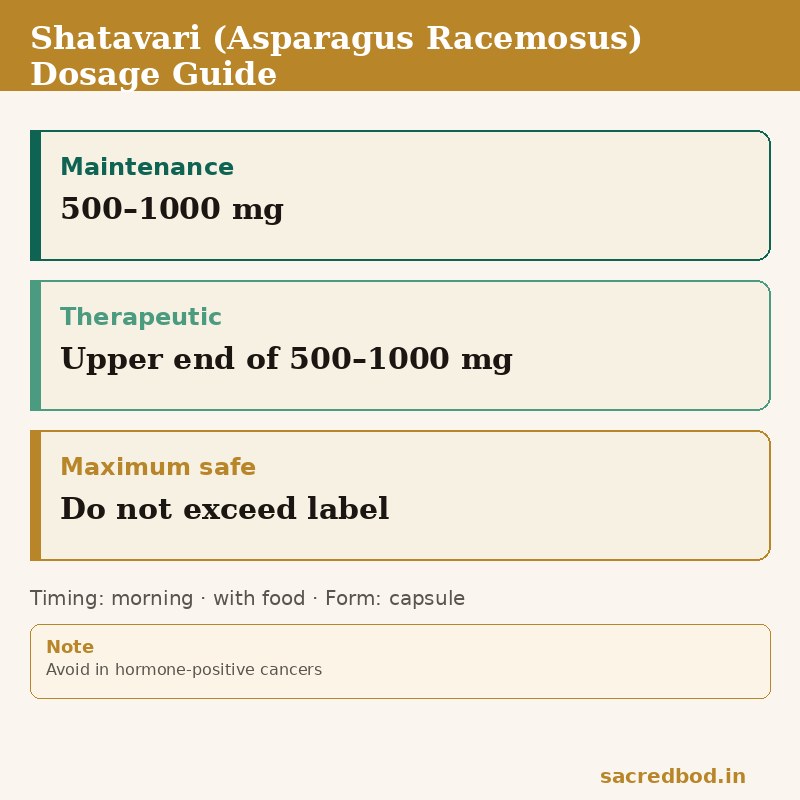
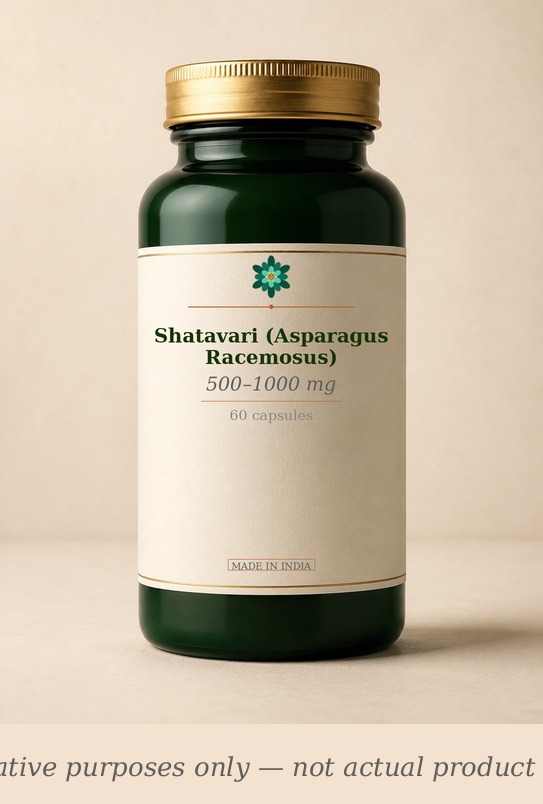
500–1000 mg · vegan · gluten-free · 60 caps
Affiliate link · we earn from qualifying purchases. No paid placements.
Shatavari is the Indian asparagus root, the central women’s tonic of Ayurveda. Its saponins (shatavarins) modulate hormone-sensitive receptors gently.
Shatavarin saponins act as selective estrogen receptor modulators (SERMs) — providing mild estrogenic support in peri-menopause while not driving estrogen-positive proliferation. Lactogenic prolactin support is folk-attested.
Women across reproductive and peri-menopausal life stages, postpartum lactating mothers, athletes balancing training load.
Avoid in hormone-positive cancers. Coordinate with HRT and SERM medications.
A plain-English read of the literature behind this supplement. Not a clinical recommendation.
Indian RCTs in peri-menopausal symptom relief and lactation. Pharmacological in-vitro data on SERM activity.
SacredBod's longer take on Shatavari (Asparagus Racemosus) — context the structured blocks above don't capture.
Shatavari (Asparagus Racemosus) is a adaptogen & women’s health supplement. Shatavari is the Indian asparagus root, the central women’s tonic of Ayurveda. Its saponins (shatavarins) modulate hormone-sensitive receptors gently.
Shatavarin saponins act as selective estrogen receptor modulators (SERMs) — providing mild estrogenic support in peri-menopause while not driving estrogen-positive proliferation. Lactogenic prolactin support is folk-attested.
Women across reproductive and peri-menopausal life stages, postpartum lactating mothers, athletes balancing training load.
Availability on Amazon India is currently limited or import-only for this form. International brands (iHerb, NOW Foods, Doctor’s Best) ship to India with variable customs handling. Local Ayurvedic equivalents may offer overlapping benefits.
Avoid in hormone-positive cancers. Coordinate with HRT and SERM medications.
Peptides are physician-only. Tell us a bit and we'll route you to the right specialist.
Request received.
We'll route this to a clinician familiar with peptide protocols. Expect a reply within about 48 hours.
How's your experience? We read every note.