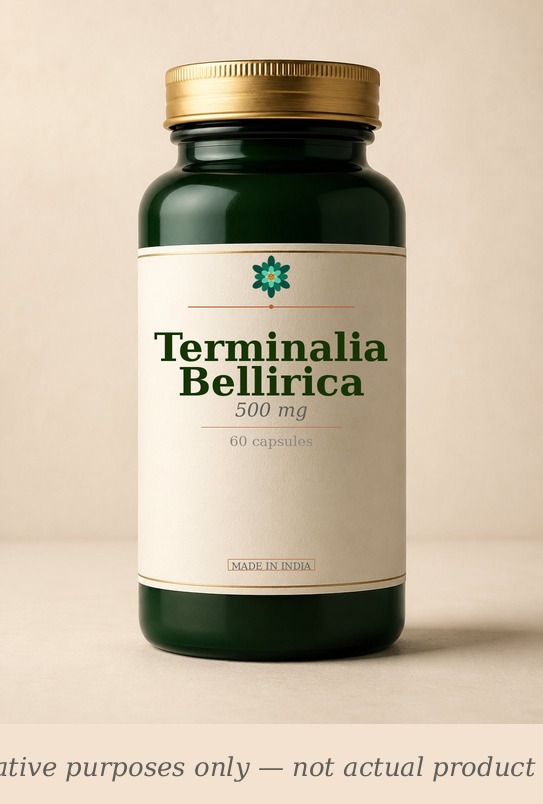
SacredBod's longer take on Terminalia Bellirica — context the structured blocks above don't capture.
Dried fruit of Terminalia bellirica tree. Known as Bibhitaki in Sanskrit and one of three fruits in Triphala (with Amalaki/amla and Haritaki). Standalone supplements are less common than Triphala but used in classical Ayurveda for respiratory and digestive support.
Tannins, gallic acid, ellagic acid, and other polyphenols drive antioxidant activity. Animal studies show hypolipidemic and hepatoprotective effects. The standalone mechanism is poorly characterized vs the Triphala combination, where synergy with amla and haritaki is presumed.
The evidence base (C grade) reflects this: Most clinical evidence is from Triphala combinations rather than standalone Bibhitaki. Limited modern Western trials. Ayurvedic literature is substantial but not RCT-grade. For practical use, the typical dose range is 500-1000 mg standardized extract daily, ideally with a fat-containing meal for fat-soluble compounds.
Who benefits most: Those preferring single-herb approach over Triphala combination. Adults with lipid concerns seeking Ayurvedic adjunct (alongside conventional care).
Cautions: Pregnancy and breastfeeding (limited data). Concurrent diabetes medications (additive hypoglycemia risk). Heavy metal contamination concerns universal to Ayurvedic supplements — buy third-party tested products only.
Pairing notes: Amla and haritaki for full Triphala effect. Turmeric for combined Ayurvedic anti-inflammatory.