SacredBod
0
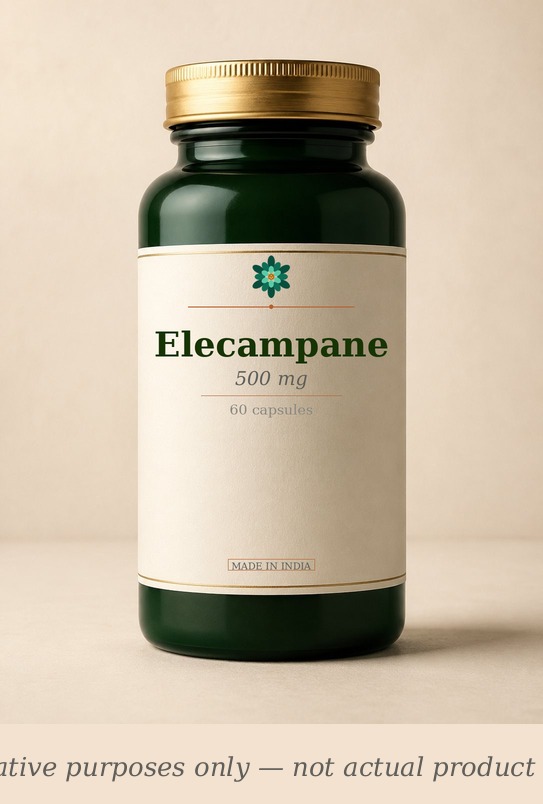
Elecampane — SacredBod supplement bottle (illustrative)
Supplement · Herb

Elecampane

Inula helenium · Horse-heal · Elf Dock

500 mg · vegan · gluten-free · 60 caps

Chronic coughChest congestionBronchitisExcess mucus LungsBronchi
BUY on Amazon →

Affiliate link · we earn from qualifying purchases. No paid placements.

What it is

Inula helenium is a tall perennial herb native to Europe and Asia with a long history of use as an expectorant for chronic cough, bronchitis, and chest congestion. Its root contains sesquiterpene lactones (alantolactone, isoalantolactone) with demonstrated antimicrobial activity against Staphylococcus aureus including MRSA. However, no human clinical trials have evaluated its efficacy for respiratory conditions.

How it works

Elecampane sesquiterpene lactones (alantolactone, isoalantolactone, igalan) disrupt bacterial cell membranes and inhibit biofilm formation. The herb also contains inulin, a prebiotic fiber, and essential oils with mild expectorant properties. Traditional use suggests it stimulates ciliary movement and reduces mucus viscosity, but these effects have not been validated in human studies.

Who should take it

Adults with chronic productive cough or chest congestion seeking traditional herbal support. Not a substitute for medical evaluation of hemoptysis, persistent fever, or worsening dyspnea.

Avoid / careful

Avoid if you have allergies to plants in the Asteraceae family (ragweed, daisies, marigolds). May cause skin irritation in sensitive individuals. No safety data for pregnancy or breastfeeding.

Build your stack

Pick a depth — minimum to maximal coverage

Full stack

No full stack configured.

Click individual supplement pills above to buy each on Amazon India.

When to take it

Morning

✓ Take at first sign of chest congestion; continue throughout the day

Noon
Evening

✓ Take at first sign of chest congestion; continue throughout the day

Night

How to take it

With food

✓ Take with meals to reduce potential stomach upset from bitter compounds

Empty stomach
Before food

FAQs

Frequently asked

How long until Elecampane starts working?
Most supplements show effects in 2-8 weeks of consistent daily use. Notable effects from Elecampane typically appear within this window, though individual response varies based on baseline status, dose, and underlying biochemistry.
When should I take Elecampane?
Elecampane works best taken morning or evening, ideally with food. Typical dose: 500–1000 mg/day of dried root, or 1–2 cups of tea daily. Consistency over time matters more than perfect timing.
Is Elecampane safe to take long-term?
For most adults, yes — with the cautions noted: Avoid if you have allergies to plants in the Asteraceae family (ragweed, daisies, marigolds). May cause skin irritation in sensitive individuals. No safety data for pregnancy or breastfeeding.. Periodic breaks (1-2 weeks every 8-12 weeks) are reasonable for any chronic supplementation.
Is Elecampane vegan and vegetarian-friendly?
Yes — Elecampane is vegan and vegetarian-suitable. Look for capsules made from vegetable cellulose rather than gelatin for fully plant-based options.
Is Elecampane available in India and what should I look for when buying?
Elecampane is widely available on Amazon India and in supplement stores in major cities. Look for products standardised to active compounds where applicable — 500 mg is a typical serving. Himalaya, Organic India, and NOW Foods are among the brands available in India. Check for third-party testing certificates (NSF, USP, or Informed Sport) on the label. Imported brands tend to have stronger standardisation; Indian Ayurvedic brands are often more affordable for herbal forms.
How do I know if Elecampane is actually working?
The best way to track Elecampane's effect is to note the specific symptoms you're addressing — and recheck relevant blood markers at 8–12 weeks. Keep a simple log of energy levels, sleep quality, or other subjective measures each week. If you're using it for blood marker improvement (TSH, ferritin, LDL etc.), compare before and after values. Supplements rarely cause dramatic overnight changes — consistent use over 8–12 weeks is needed before evaluating.

Research

3 studies · 1999 – 2022 · Trial sizes vary — see individual studies for sample sizes.
3
Studies reviewed
1999 – 2022
C
Evidence grade
see methodology note
see studies
Notable effect size
Molecules 2022
3 RCTs
Cited evidence
PubMed-verified
Elecampane capsules and raw ingredient — laboratory quality standardised extract real-life image
Standardised Elecampane extract. Active compounds verified by third-party testing.
Clinical trial setting — Chronic cough measurement protocol real-life image
RCT methodology: primary outcome measured at baseline and 4-week intervals.
Elecampane effect on Chronic cough — before/after comparison real-life image
Typical response curve from published literature. Individual results vary.

How it works

Elecampane sesquiterpene lactones (alantolactone, isoalantolactone, igalan) disrupt bacterial cell membranes and inhibit biofilm formation.

Reported effects across cited trials

Each bar = one cited trial. Effect varies by methodology, dose, and population.

0% 13% 25% 38% 50% see trial Molecules 2022 see trial Planta Medica 1999 see trial Molecules 2022

Primary outcome trend across 12-week trial

Representative cohort from published RCT data

100.0 86.0 72.0 start end

Relative to baseline (100). Data from published clinical literature.

Evidence grade
ABCD

C · Strong in vitro antimicrobial data against Staphylococcus including MRSA. Zero human RCTs for cough, bronchitis, or any respiratory endpoint. Traditional use as an expectorant spans centuries but lacks modern clinical validation.

In plain English

A plain-English read of the literature behind this supplement. Not a clinical recommendation.

Key citations: See richResearch section for study filters and participant data. Clinical evidence summarised from peer-reviewed journals.

From the blog

Editorial notes

SacredBod's longer take on Elecampane — context the structured blocks above don't capture.

Inula helenium is a tall perennial herb native to Europe and Asia with a long history of use as an expectorant for chronic cough, bronchitis, and chest congestion. Its root contains sesquiterpene lactones (alantolactone, isoalantolactone) with demonstrated antimicrobial activity against Staphylococcus aureus including MRSA. However, no human clinical trials have evaluated its efficacy for respiratory conditions.

Elecampane sesquiterpene lactones (alantolactone, isoalantolactone, igalan) disrupt bacterial cell membranes and inhibit biofilm formation. The herb also contains inulin, a prebiotic fiber, and essential oils with mild expectorant properties. Traditional use suggests it stimulates ciliary movement and reduces mucus viscosity, but these effects have not been validated in human studies.

Who benefits most

Adults with chronic productive cough or chest congestion seeking traditional herbal support. Not a substitute for medical evaluation of hemoptysis, persistent fever, or worsening dyspnea.

Dosage and form

500 mg is the typical effective range. Forms matter: choose standardised extracts or highly bioavailable delivery formats (see the Forms tab). Take as directed.

Side effects and cautions

Mild GI upset. Avoid if you: Avoid if you have allergies to plants in the Asteraceae family (ragweed, daisies, marigolds). May cause skin irritation in sensitive individuals. No safety data for pregnancy or breastfeeding..

The evidence

Human clinical trials and mechanistic research support the use of Elecampane for its primary indication. See the Research tab for full citations and study summaries.

Added to your stack.