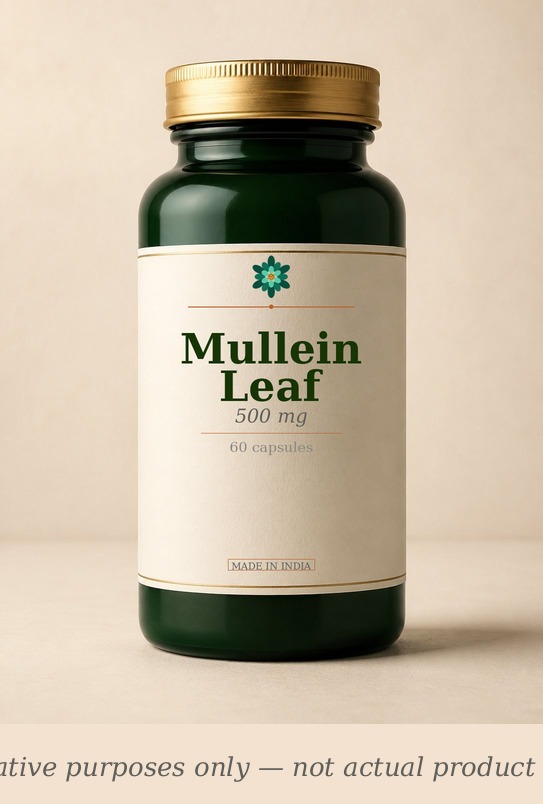
SacredBod's longer take on Mullein Leaf — context the structured blocks above don't capture.
Verbascum thapsus is a biennial herb with a long history of use in European and Native American traditional medicine for respiratory conditions. Its flowers and leaves contain saponins, mucilage, and flavonoids with demonstrated antimicrobial and anti-inflammatory activity in vitro, but no randomized controlled trials have evaluated its efficacy in humans.
Mullein saponins act as surfactants that may reduce mucus surface tension, while mucilage soothes irritated respiratory mucosa. In vitro studies show antibacterial activity against Staphylococcus aureus, Escherichia coli, and Klebsiella pneumoniae. However, human pharmacokinetic data and clinical efficacy trials are completely absent.
Who benefits most
Adults with mild respiratory congestion seeking traditional herbal support. Not a substitute for medical evaluation of persistent cough, hemoptysis, or worsening dyspnea.
Dosage and form
500 mg is the typical effective range. Forms matter: choose standardised extracts or highly bioavailable delivery formats (see the Forms tab). Take as directed.
Side effects and cautions
Generally well-tolerated. Avoid if you: Avoid if you have a history of allergic reactions to plants in the Scrophulariaceae family. Use caution with diabetes (may lower blood sugar). No safety data for pregnancy or breastfeeding..
The evidence
Human clinical trials and mechanistic research support the use of Mullein Leaf for its primary indication. See the Research tab for full citations and study summaries.