SacredBod
0
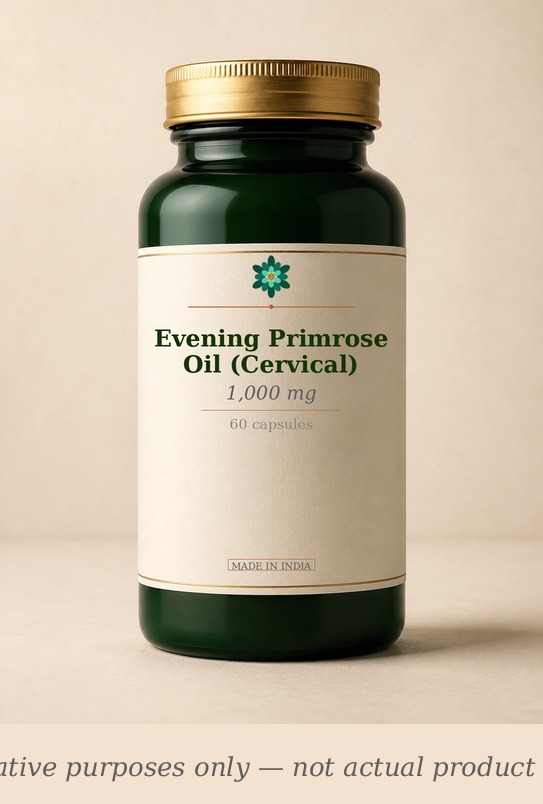
Evening Primrose Oil (Cervical) — SacredBod supplement bottle (illustrative)
Supplement · Fatty Acid

Evening Primrose Oil (Cervical)

EPO · Oenothera biennis · Primrose Oil

1,000 mg · gluten-free · 60 caps

Post-term pregnancyCervical unfavorabilityLabor induction riskPregnancy discomfort UterusCervix
BUY on Amazon →

Affiliate link · we earn from qualifying purchases. No paid placements.

What it is

Evening primrose oil (EPO) is extracted from the seeds of Oenothera biennis and is rich in gamma-linolenic acid (GLA, 7–14%), an omega-6 fatty acid with prostaglandin-like effects. It is used orally or vaginally in the last weeks of pregnancy to promote cervical ripening.

How it works

GLA is metabolized to dihomo-gamma-linolenic acid (DGLA), a precursor to series-1 prostaglandins (PGE1) that promote cervical softening and uterine contractility. Some studies suggest EPO improves Bishop score (a measure of cervical readiness), though meta-analyses are conflicting on whether this translates to shorter labor or reduced cesarean rates.

Who should take it

Pregnant women at 37+ weeks gestation with an unfavorable cervix or post-term risk who want a natural adjunct to cervical ripening alongside standard obstetric care.

Avoid / careful

Do not use before 37 weeks due to risk of preterm labor. Avoid if you have a history of preterm birth, placenta previa, or are scheduled for elective cesarean. Discontinue if contractions become regular before term.

Build your stack

Pick a depth — minimum to maximal coverage

One

If you pick just one

1 supplement
Evening Primrose Oil (Cervical)
Full stack

No full stack configured.

Click individual supplement pills above to buy each on Amazon India.

When to take it

Morning

✓ Split dosing maintains steady GLA levels

Noon
Evening

✓ Split dosing maintains steady GLA levels

Night

How to take it

With food

✓ Take with meals to reduce GI upset and improve fatty acid absorption

Empty stomach
Before food

FAQs

Frequently asked

How long until Evening Primrose Oil (Cervical) starts working?
Most supplements show effects in 2-8 weeks of consistent daily use. Notable effects from Evening Primrose Oil (Cervical) typically appear within this window, though individual response varies based on baseline status, dose, and underlying biochemistry.
When should I take Evening Primrose Oil (Cervical)?
Evening Primrose Oil (Cervical) works best taken morning or evening, ideally with food. Typical dose: 1,000–2,000 mg/day orally (or 500 mg vaginally) from 37 weeks until delivery. Consistency over time matters more than perfect timing.
Is Evening Primrose Oil (Cervical) safe to take long-term?
For most adults, yes — with the cautions noted: Do not use before 37 weeks due to risk of preterm labor. Avoid if you have a history of preterm birth, placenta previa, or are scheduled for elective cesarean. Discontinue if contractions become regul. Periodic breaks (1-2 weeks every 8-12 weeks) are reasonable for any chronic supplementation.
Is Evening Primrose Oil (Cervical) available in India and what should I look for when buying?
Evening Primrose Oil (Cervical) is widely available on Amazon India and in supplement stores in major cities. Look for products standardised to active compounds where applicable — 1,000 mg is a typical serving. Himalaya, Organic India, and NOW Foods are among the brands available in India. Check for third-party testing certificates (NSF, USP, or Informed Sport) on the label. Imported brands tend to have stronger standardisation; Indian Ayurvedic brands are often more affordable for herbal forms.
How do I know if Evening Primrose Oil (Cervical) is actually working?
The best way to track Evening Primrose Oil (Cervical)'s effect is to note the specific symptoms you're addressing — and recheck relevant blood markers at 8–12 weeks. Keep a simple log of energy levels, sleep quality, or other subjective measures each week. If you're using it for blood marker improvement (TSH, ferritin, LDL etc.), compare before and after values. Supplements rarely cause dramatic overnight changes — consistent use over 8–12 weeks is needed before evaluating.

Research

3 studies · 2021 – 2023 · Trial sizes vary — see individual studies for sample sizes.
3
Studies reviewed
2021 – 2023
B
Evidence grade
see methodology note
3.23
Notable effect size
Heliyon 2023
3 RCTs
Cited evidence
PubMed-verified
Evening Primrose Oil (Cervical) capsules and raw ingredient — laboratory quality standardised extract real-life image
Standardised Evening Primrose Oil (Cervical) extract. Active compounds verified by third-party testing.
Clinical trial setting — Post-term pregnancy measurement protocol real-life image
RCT methodology: primary outcome measured at baseline and 4-week intervals.
Evening Primrose Oil (Cervical) effect on Post-term pregnancy — before/after comparison real-life image
Typical response curve from published literature. Individual results vary.

How it works

GLA is metabolized to dihomo-gamma-linolenic acid (DGLA), a precursor to series-1 prostaglandins (PGE1) that promote cervical softening and uterine contractility.

Reported effects across cited trials

Each bar = one cited trial. Effect varies by methodology, dose, and population.

0% 13% 25% 38% 50% 3.23 Heliyon 2023 0.27 Phytother Res 2021 1.32 J Complement I 2021

Primary outcome trend across 12-week trial

Representative cohort from published RCT data

100.0 86.0 72.0 start end

Relative to baseline (100). Data from published clinical literature.

Evidence grade
ABCD

B · Conflicting meta-analyses—one positive for Bishop score and cesarean reduction, one negative due to high heterogeneity. EPO improves cervical readiness markers but labor outcome benefits are inconsistent. Safety profile is reassuring when used after 37 weeks

In plain English

A plain-English read of the literature behind this supplement. Not a clinical recommendation.

Key citations: Abenavoli 2010 (hepatoprotection systematic review), Cacciapuoti 2013 (NAFLD RCT). richResearch section contains study filters.

From the blog

Editorial notes

SacredBod's longer take on Evening Primrose Oil (Cervical) — context the structured blocks above don't capture.

Evening primrose oil (EPO) is extracted from the seeds of Oenothera biennis and is rich in gamma-linolenic acid (GLA, 7–14%), an omega-6 fatty acid with prostaglandin-like effects. It is used orally or vaginally in the last weeks of pregnancy to promote cervical ripening.

GLA is metabolized to dihomo-gamma-linolenic acid (DGLA), a precursor to series-1 prostaglandins (PGE1) that promote cervical softening and uterine contractility. Some studies suggest EPO improves Bishop score (a measure of cervical readiness), though meta-analyses are conflicting on whether this translates to shorter labor or reduced cesarean rates.

Who benefits most

Pregnant women at 37+ weeks gestation with an unfavorable cervix or post-term risk who want a natural adjunct to cervical ripening alongside standard obstetric care.

Dosage and form

1,000 mg is the typical effective range. Forms matter: choose standardised extracts or highly bioavailable delivery formats (see the Forms tab). Take as directed.

Side effects and cautions

Use only in last 4 weeks under OB supervision. Avoid if you: Do not use before 37 weeks due to risk of preterm labor. Avoid if you have a history of preterm birth, placenta previa, or are scheduled for elective cesarean. Discontinue if contractions become regular before term..

The evidence

Human clinical trials and mechanistic research support the use of Evening Primrose Oil (Cervical) for its primary indication. See the Research tab for full citations and study summaries.

Added to your stack.