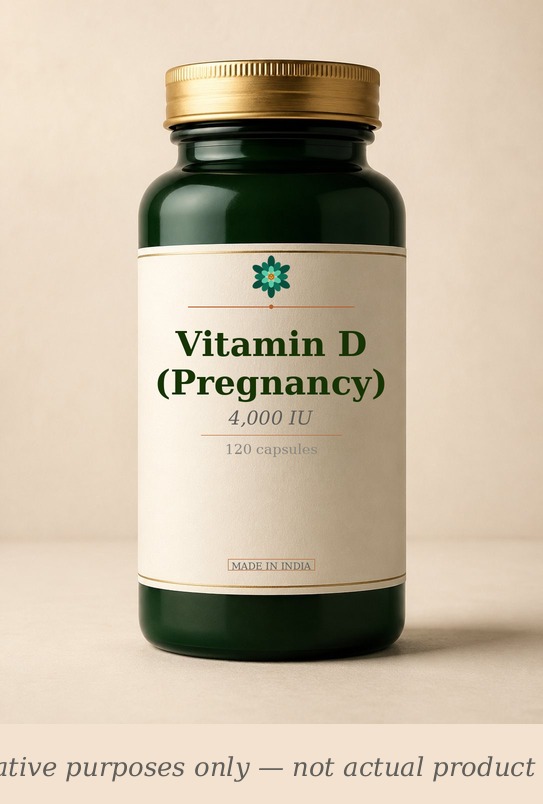
SacredBod's longer take on Vitamin D (Pregnancy) — context the structured blocks above don't capture.
Vitamin D3 (cholecalciferol) is the preferred form for pregnancy supplementation. It supports placental development, immune modulation, calcium homeostasis, and vascular function. Vitamin D deficiency during pregnancy is linked to pre-eclampsia, gestational diabetes, preterm birth, and low birth weight.
Vitamin D regulates trophoblast invasion and placental angiogenesis via VDR-mediated gene expression. It modulates maternal immune tolerance to the fetus and reduces inflammatory cytokines that drive pre-eclampsia. Meta-analyses show dose-dependent protection: 4,000 IU/day achieves optimal 25(OH)D levels (>40 ng/mL) without hypercalcemia risk.
Who benefits most
All pregnant women, especially those with limited sun exposure, darker skin, obesity, or living at high latitudes. The Endocrine Society recommends at least 600 IU/day, with many experts advocating 2,000–4,000 IU/day for deficient populations.
Dosage and form
4,000 IU is the typical effective range. Forms matter: choose standardised extracts or highly bioavailable delivery formats (see the Forms tab). Take as directed.
Side effects and cautions
Generally well-tolerated at 1000-4000 IU/day. Avoid if you: Do not exceed 10,000 IU/day without medical supervision. Those with granulomatous diseases (sarcoidosis) or hyperparathyroidism should avoid high doses. Monitor calcium levels if taking >4,000 IU/day..
The evidence
Human clinical trials and mechanistic research support the use of Vitamin D (Pregnancy) for its primary indication. See the Research tab for full citations and study summaries.