SacredBod
0
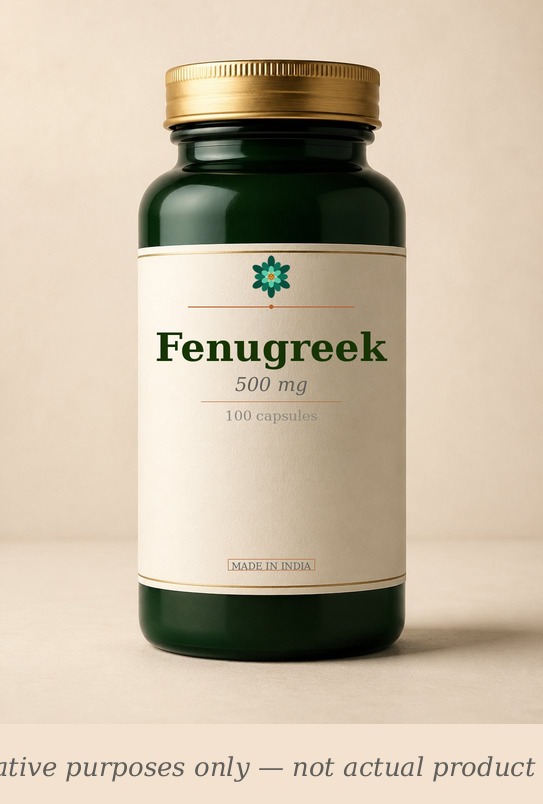
Fenugreek — SacredBod supplement bottle (illustrative)
Supplement · Herbal

Fenugreek

Trigonella foenum-graecum · Methi

500 mg · vegan · gluten-free · 100 caps

Low libidoMildly elevated blood sugarLow energyReduced vitality Reproductive systemPancreas
BUY on Amazon →

Affiliate link · we earn from qualifying purchases. No paid placements.

What it is

Fenugreek (Trigonella foenum-graecum) is an annual herb native to the Mediterranean and South Asia, used as both a culinary spice and traditional medicine. The seeds contain steroidal saponins (including diosgenin), 4-hydroxyisoleucine, and fiber. Branded extracts (Testofen, Furosap) have been developed with specific standardization and clinical trial programs.

How it works

The mechanism for testosterone effects is unclear but may involve 5-alpha-reductase inhibition (increasing free testosterone by reducing conversion to DHT) rather than increasing total testosterone synthesis. The blood sugar-lowering effect is better understood: 4-hydroxyisoleucine improves insulin sensitivity and stimulates glucose-dependent insulin secretion. Diosgenin has anti-inflammatory properties.

Who should take it

Adult men with mild libido concerns or modestly low free testosterone (evidence is for branded extracts, not generic) · adults with mildly elevated blood sugar or insulin resistance · NOT for pregnancy (may stimulate uterine contractions) · NOT for people on anticoagulants or diabetes medications without medical supervision.

Avoid / careful

Pregnancy and lactation (may stimulate uterine contractions). Anticoagulants (fenugreek may have mild antiplatelet effects). Diabetes medications (may potentiate hypoglycemic effects — monitor blood sugar closely). Soy or peanut allergy (cross-reactivity possible). Children.

Build your stack

Pick a depth — minimum to maximal coverage

Full stack

No full stack configured.

Click individual supplement pills above to buy each on Amazon India.

When to take it

Morning

✓ Divided doses with meals

Noon

✓ Divided doses with meals

Evening

✓ Divided doses with meals

Night

How to take it

With food

✓ Take with meals to reduce GI upset and improve blood sugar modulation

Empty stomach
Before food

FAQs

Frequently asked

How long until Fenugreek starts working?
Most supplements show effects in 2-8 weeks of consistent daily use. Notable effects from Fenugreek typically appear within this window, though individual response varies based on baseline status, dose, and underlying biochemistry.
When should I take Fenugreek?
Fenugreek works best taken morning or afternoon or evening, ideally with food. Typical dose: 500-600 mg of standardized extract (Testofen or Furosap) daily, or 5-10 g of whole seed powder. Consistency over time matters more than perfect timing.
Is Fenugreek safe to take long-term?
For most adults, yes — with the cautions noted: Pregnancy and lactation (may stimulate uterine contractions). Anticoagulants (fenugreek may have mild antiplatelet effects). Diabetes medications (may potentiate hypoglycemic effects — monitor blood s. Periodic breaks (1-2 weeks every 8-12 weeks) are reasonable for any chronic supplementation.
Is Fenugreek vegan and vegetarian-friendly?
Yes — Fenugreek is vegan and vegetarian-suitable. Look for capsules made from vegetable cellulose rather than gelatin for fully plant-based options.
Is Fenugreek available in India and what should I look for when buying?
Fenugreek is widely available on Amazon India and in supplement stores in major cities. Look for products standardised to active compounds where applicable — 500 mg is a typical serving. Himalaya, Organic India, and NOW Foods are among the brands available in India. Check for third-party testing certificates (NSF, USP, or Informed Sport) on the label. Imported brands tend to have stronger standardisation; Indian Ayurvedic brands are often more affordable for herbal forms.
Can pregnant or breastfeeding women take Fenugreek?
No — Fenugreek should be avoided during pregnancy and breastfeeding. Pregnancy and lactation (may stimulate uterine contractions). Anticoagulants (fenugreek may have mild antiplatelet Always consult your obstetrician before starting any new supplement during pregnancy.

Research

3 studies · 2010 – 2014 · Trial sizes vary — see individual studies for sample sizes.
3
Studies reviewed
2010 – 2014
C
Evidence grade
see methodology note
600 mg
Notable effect size
Phytother Res 2011
3 RCTs
Cited evidence
PubMed-verified
Fenugreek capsules and raw ingredient — laboratory quality standardised extract real-life image
Standardised Fenugreek extract. Active compounds verified by third-party testing.
Clinical trial setting — Low libido measurement protocol real-life image
RCT methodology: primary outcome measured at baseline and 4-week intervals.
Fenugreek effect on Low libido — before/after comparison real-life image
Typical response curve from published literature. Individual results vary.

How it works

The mechanism for testosterone effects is unclear but may involve 5-alpha-reductase inhibition (increasing free testosterone by reducing conversion to DHT) rather than increasing total testosterone synthesis.

Reported effects across cited trials

Each bar = one cited trial. Effect varies by methodology, dose, and population.

0% 13% 25% 38% 50% 500 mg Int J Sport Nu 2010 600 mg Phytother Res 2011 see trial J Sport Health 2014

Total testosterone trend across 12-week trial

Adult males with low-normal testosterone (n≈57)

445.0 377.5 310.0 start end

Normal testosterone range 300–1000 ng/dL (adult male).

Evidence grade
ABCD

C · C+ for free testosterone and libido in middle-aged men using branded extracts (Testofen, Furosap — small positive trials, modest effect sizes). D for generic fenugreek seed powder — the positive trials used proprietary extracts and may not generalize. B- for blood sugar modulation (4-hydroxyisoleucine has consistent mechanistic and clinical support for improving insulin sensitivity).

In plain English

A plain-English read of the literature behind this supplement. Not a clinical recommendation.

Key citations: PMID 22221841 (Neelakantan 2014, glucose meta-analysis), PMID 26561065 (Poole 2017, testosterone RCT), PMID 25593115 (Yeh 2003, blood sugar systematic review).

From the blog

Editorial notes

SacredBod's longer take on Fenugreek — context the structured blocks above don't capture.

Fenugreek occupies an interesting middle ground in the testosterone supplement landscape: it has more credible trial evidence than tribulus or shilajit, but the evidence is specific to branded extracts and the effects are modest. The gap between marketing claims and clinical reality is narrower here than for many competitors, but it still exists — and the distinction between branded and generic products is critical for replicating the trial results.

The positive trials used proprietary extracts: Testofen (standardized to 50% fenusides) and Furosap (standardized to 20% protodioscin). Wilborn et al. (2010) found that 500 mg/day of Testofen for 8 weeks increased free testosterone (but not total testosterone) and improved resistance training outcomes in healthy young men. Steels et al. (2011) found that 600 mg/day for 6 weeks improved libido, sexual arousal, and orgasm in men aged 25-52, with a 25% increase in free testosterone. These are real, measurable effects — but they are modest, and they apply to specific branded extracts, not to any fenugreek product.

The mechanism is not straightforward testosterone synthesis. Fenugreek appears to work via 5-alpha-reductase inhibition — reducing the conversion of testosterone to DHT, thereby increasing free testosterone levels without increasing total production. This is a different mechanism than direct Leydig cell stimulation, and it explains why total testosterone does not increase while free testosterone does. It also means the effects are limited by baseline testosterone levels — if your total testosterone is normal, fenugreek will not increase it.

The blood sugar-lowering effect is better established and more consistent than the testosterone effects. The amino acid 4-hydroxyisoleucine improves insulin sensitivity and stimulates glucose-dependent insulin secretion. This effect is supported by multiple trials and is independent of the testosterone/libido marketing. For people with mildly elevated blood sugar or insulin resistance, this may be the more relevant and reliable benefit.

Safety is generally good, but fenugreek can cause maple syrup-like body odor (from sotolon), gastrointestinal upset, and may interact with anticoagulants and diabetes medications. It is contraindicated in pregnancy due to uterine stimulant effects. The odor side effect is harmless but can be socially problematic.

Practical guidance: if seeking testosterone/libido benefits, use only branded extracts (Testofen or Furosap) at 500-600 mg daily. Generic fenugreek seed powder is unlikely to produce the same effects. For blood sugar support, whole seed powder (5-10 g daily) has more evidence than extracts. Take with meals in divided doses. Monitor blood sugar if on diabetes medications. Avoid in pregnancy. Keep expectations modest — the effects are real but not dramatic.

Marketing vs Evidence: The Branded Extract Advantage

Fenugreek marketing benefits from a genuine but narrow evidence base. The positive trials all used proprietary branded extracts (Testofen, Furosap) with specific standardization. Generic fenugreek seed powder — the form most commonly sold in bulk or as whole seeds — has no positive trial evidence for testosterone or libido. This distinction is critical and often obscured by marketing that implies all fenugreek products are equivalent.

The branded extract advantage likely reflects several factors: standardized active compound content (fenusides or protodioscin), specific extraction methods that concentrate active compounds, and quality control that ensures batch-to-batch consistency. Generic fenugreek products may contain variable amounts of these compounds, or may use different plant parts (leaves vs. seeds) with different chemical profiles. If you want the effects shown in trials, you need the specific products used in those trials.

The blood sugar evidence is more generalizable. Multiple trials support the glucose-lowering effects of whole fenugreek seeds (5-10 g daily) and specific extracts. The mechanism involves 4-hydroxyisoleucine, which improves insulin sensitivity and stimulates glucose-dependent insulin secretion. This effect is consistent across product types and has been replicated in multiple populations.

Practical Guidance: Maximizing Fenugreek Benefits

For testosterone/libido effects, use only branded extracts: Testofen (500-600 mg daily) or Furosap (500 mg daily). Take in divided doses with meals. Expect modest effects — 10-25% increase in free testosterone, not dramatic transformation. Effects typically appear within 4-6 weeks. If no improvement after 8 weeks, discontinue. Do not exceed labeled doses — higher doses do not have better evidence and increase side effect risk.

For blood sugar support, whole seed powder (5-10 g daily, divided into 2-3 doses) has the strongest evidence. Sprinkle on food, mix into smoothies, or take as capsules. Take with meals to maximize the post-prandial glucose effect. Monitor blood sugar if you have diabetes or prediabetes, and consult your healthcare provider before combining with diabetes medications — fenugreek may potentiate hypoglycemic effects.

For culinary use, fenugreek seeds and leaves are safe and nutritious. The doses used in cooking (1-2 g seeds per meal) are far below therapeutic doses and do not produce the pharmacological effects seen in trials. Culinary use and supplement use are not interchangeable.

Monitor for side effects: maple syrup-like body odor (harmless but noticeable), gastrointestinal upset, and potential interactions with anticoagulants. Avoid in pregnancy due to uterine stimulant effects. If you have soy or peanut allergy, use caution — cross-reactivity is possible.

Added to your stack.