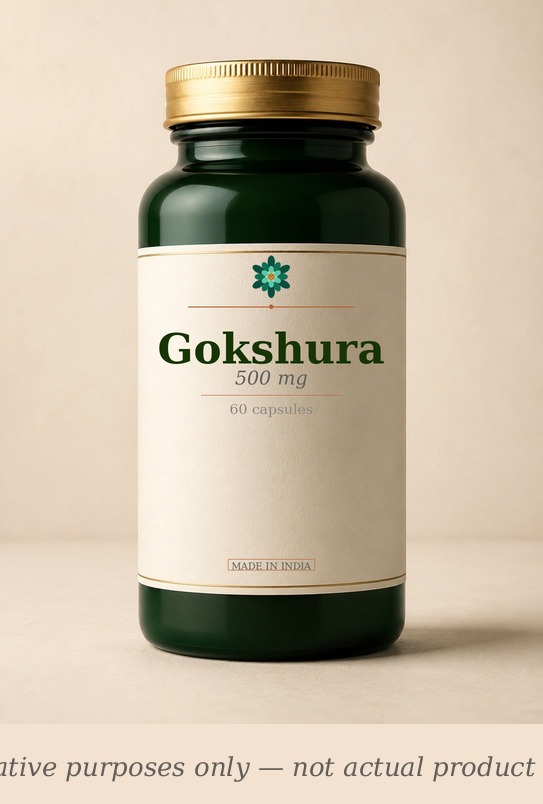
SacredBod's longer take on Gokshura — context the structured blocks above don't capture.
Gokshura occupies a unique position in Ayurvedic pharmacology: it is one of the most revered herbs for male reproductive health, yet modern clinical evidence paints a more nuanced picture than traditional texts suggest. For men exploring Ayurvedic options, understanding where gokshura delivers and where it disappoints is essential.
What the evidence actually shows
The 2017 meta-analysis by Qin et al. (PMID 28364864) synthesized data from multiple RCTs and found that tribulus significantly improved International Index of Erectile Function (IIEF) scores in men with ED and increased sexual desire in women. This was a rigorous meta-analysis with low heterogeneity, suggesting a genuine if modest effect on sexual function.
However, the 2014 RCT by Santos et al. (PMID 24630840) randomly assigned 30 men with ED to either tribulus or placebo for 12 weeks. Result: no significant difference in IIEF scores, intercourse satisfaction, or total testosterone between groups. This was a well-controlled study that directly contradicts the testosterone-boosting narrative.
The 2025 systematic review (PMID 40219032) attempted to settle the question by evaluating all available RCTs. The verdict: evidence for testosterone enhancement is “low-quality and inconsistent,” while there is “some support” for erectile function benefits in men with pre-existing dysfunction. This is the most current and comprehensive assessment.
The testosterone myth
Gokshura’s popularity in bodybuilding circles rests on the assumption that it raises testosterone. The mechanism proposed — steroidal saponins stimulating luteinizing hormone release — is biologically plausible and supported by some animal studies. However, human RCTs have repeatedly failed to show significant testosterone increases in men with normal baseline levels. The 2025 review explicitly downgrades this claim. For men with clinically low testosterone, gokshura is not a replacement for medical evaluation and potential TRT.
Classical Ayurveda uses the whole dried fruit (not isolated extracts) at doses of 3-6 g/day, often in combination with other herbs like ashwagandha, shatavari, or shilajit in formulations such as Gokshuradi Guggulu. Modern supplement capsules typically provide 500-1000 mg of extract standardized to 40-60% saponins. Whether these concentrated extracts replicate the traditional preparation’s effects is unknown — the classical synergy of multiple herbs may matter more than any single compound.
Honest comparison
For erectile support, saffron has stronger and more consistent RCT evidence than gokshura. Tongkat ali has better human testosterone trial data. Ashwagandha provides both stress reduction and modest testosterone support with a larger evidence base. Gokshura’s niche is in traditional Ayurvedic practice where it is valued as a diuretic and general tonic for the urinary-genital system — not as a pharmaceutical-grade ED or testosterone therapy.