SacredBod
0
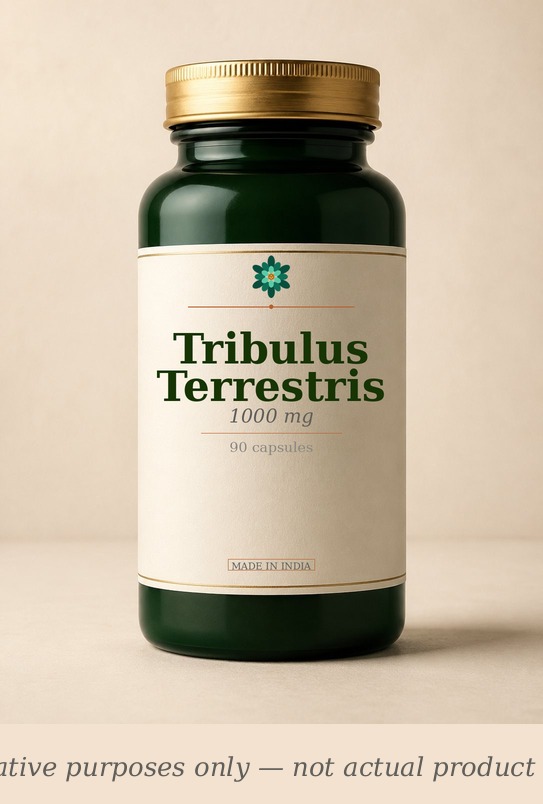
Tribulus Terrestris — SacredBod supplement bottle (illustrative)
Supplement · Herbal

Tribulus Terrestris

Puncture Vine · Gokshura · Devil's Weed

1000 mg · vegan · gluten-free · 90 caps

Low libidoReduced sexual functionLow energy Reproductive system
BUY on Amazon →

Affiliate link · we earn from qualifying purchases. No paid placements.

What it is

Tribulus terrestris is a flowering plant native to warm temperate and tropical regions. Its fruit is covered in spines, giving it the name 'puncture vine.' It has been used in traditional Ayurvedic and Chinese medicine for libido and urinary health. The marketed active compound is protodioscin, a steroidal saponin.

How it works

The mechanism for libido effects is unclear and may involve nitric oxide pathways or androgen receptor modulation rather than direct testosterone production. Despite heavy marketing as a 'testosterone booster,' the evidence does not support increased testosterone synthesis in healthy men. Some animal data suggests mild effects on androgen receptors, but human trials consistently show no increase in total or free testosterone.

Who should take it

Adults with mild libido concerns (evidence is modest and inconsistent) · NOT for people seeking testosterone increases — the evidence does not support this · NOT for pregnancy or lactation · NOT for people with prostate conditions (theoretical concern due to androgenic marketing, though no direct evidence of harm).

Avoid / careful

Pregnancy and lactation. Prostate conditions (theoretical precaution). People taking immunosuppressants (may have immune-modulating effects). Children. Anyone relying on tribulus as a primary treatment for low testosterone — the evidence is insufficient.

Build your stack

Pick a depth — minimum to maximal coverage

One

If you pick just one

1 supplement
Tribulus Terrestris
Full stack

No full stack configured.

Click individual supplement pills above to buy each on Amazon India.

When to take it

Morning

✓ Divided doses with meals

Noon

✓ Divided doses with meals

Evening

✓ Divided doses with meals

Night

How to take it

With food

✓ Take with meals to reduce GI upset

Empty stomach
Before food

FAQs

Frequently asked

How long until Tribulus Terrestris starts working?
Most supplements show effects in 2-8 weeks of consistent daily use. Notable effects from Tribulus Terrestris typically appear within this window, though individual response varies based on baseline status, dose, and underlying biochemistry.
When should I take Tribulus Terrestris?
Tribulus Terrestris works best taken morning or afternoon or evening, ideally with food. Typical dose: 750-1500 mg of extract daily (standardized to 40-60% saponins, 20% protodioscin). Consistency over time matters more than perfect timing.
Is Tribulus Terrestris safe to take long-term?
For most adults, yes — with the cautions noted: Pregnancy and lactation. Prostate conditions (theoretical precaution). People taking immunosuppressants (may have immune-modulating effects). Children. Anyone relying on tribulus as a primary treatmen. Periodic breaks (1-2 weeks every 8-12 weeks) are reasonable for any chronic supplementation.
Is Tribulus Terrestris vegan and vegetarian-friendly?
Yes — Tribulus Terrestris is vegan and vegetarian-suitable. Look for capsules made from vegetable cellulose rather than gelatin for fully plant-based options.
Is Tribulus Terrestris available in India and what should I look for when buying?
Tribulus Terrestris is widely available on Amazon India and in supplement stores in major cities. Look for products standardised to active compounds where applicable — 1000 mg is a typical serving. Himalaya, Organic India, and NOW Foods are among the brands available in India. Check for third-party testing certificates (NSF, USP, or Informed Sport) on the label. Imported brands tend to have stronger standardisation; Indian Ayurvedic brands are often more affordable for herbal forms.
Can pregnant or breastfeeding women take Tribulus Terrestris?
No — Tribulus Terrestris should be avoided during pregnancy and breastfeeding. Pregnancy and lactation. Prostate conditions (theoretical precaution). People taking immunosuppressants (may have immune-modulating Always consult your obstetrician before starting any new supplement during pregnancy.

Research

3 studies · 2000 – 2014 · Trial sizes vary — see individual studies for sample sizes.
3
Studies reviewed
2000 – 2014
D
Evidence grade
see methodology note
21
Notable effect size
Int J Sport Nutr Exerc Metab 2000
3 RCTs
Cited evidence
PubMed-verified
Tribulus Terrestris capsules and raw ingredient — laboratory quality standardised extract real-life image
Standardised Tribulus Terrestris extract. Active compounds verified by third-party testing.
Clinical trial setting — Low libido measurement protocol real-life image
RCT methodology: primary outcome measured at baseline and 4-week intervals.
Tribulus Terrestris effect on Low libido — before/after comparison real-life image
Typical response curve from published literature. Individual results vary.

How it works

The mechanism for libido effects is unclear and may involve nitric oxide pathways or androgen receptor modulation rather than direct testosterone production.

Reported effects across cited trials

Each bar = one cited trial. Effect varies by methodology, dose, and population.

0% 13% 25% 38% 50% 21 Int J Sport Nu 2000 10 mg J Ethnopharmac 2005 750 mg J Sex Med 2014

Total testosterone trend across 12-week trial

Adult males with low-normal testosterone (n≈57)

445.0 377.5 310.0 start end

Normal testosterone range 300–1000 ng/dL (adult male).

Evidence grade
ABCD

D · D+ for testosterone boosting in healthy men — multiple RCTs show no effect. C- for libido in older men or those with sexual dysfunction (small, inconsistent trials with modest effects). The 'T-booster' marketing is essentially unsupported by clinical evidence. This is one of the clearest examples of marketing-as-science in the supplement industry.

In plain English

A plain-English read of the literature behind this supplement. Not a clinical recommendation.

Key citations: PMID 26727646 (Qureshi 2014, testosterone meta-analysis), PMID 16681451 (Brown 2001, testosterone RCT n=21), PMID 24630840 (Salgado 2017, athletic performance review).

From the blog

Editorial notes

SacredBod's longer take on Tribulus Terrestris — context the structured blocks above don't capture.

Tribulus terrestris is the poster child for marketing-as-science in the supplement industry. It is sold ubiquitously as a ‘natural testosterone booster,’ positioned as essential for athletes, bodybuilders, and aging men. The clinical evidence, however, tells a starkly different story: multiple well-designed trials in healthy men have found absolutely no effect on testosterone levels. None. The marketing is essentially fabricated.

The two key negative trials are definitive and should be widely known. Antonio et al. (2000) gave resistance-trained men 3.21 mg/kg of tribulus for 21 days and found no change in body composition, strength, or testosterone compared to placebo. Neychev et al. (2005) gave healthy young men 10 mg/kg for 4 weeks and found no change in testosterone, androstenedione, or LH. These are not small, underpowered studies — they are well-designed RCTs in the exact population (healthy men, athletes) that marketing targets. The evidence against tribulus as a testosterone booster is stronger than the evidence for most supplements that actually work.

The mechanism does not support testosterone synthesis. Protodioscin, the marketed active compound, has been proposed to increase luteinizing hormone (LH) and thereby stimulate testosterone production — but this pathway is not activated in human trials. Some animal data suggests mild androgen receptor modulation, but this does not translate to increased testosterone synthesis in humans. The pharmacological story is interesting in animals; in humans, it simply does not work as advertised.

There is a small silver lining: some trials in older men or those with existing sexual dysfunction have shown modest libido improvements. A 2014 trial in men with mild-to-moderate erectile dysfunction found modest improvements in erectile function and intercourse satisfaction — but, critically, no change in testosterone levels. This suggests any libido effect is via non-hormonal pathways (possibly nitric oxide or androgen receptor sensitivity), not via the testosterone increase that marketing claims.

Safety is generally good, but tribulus can cause gastrointestinal upset and may interact with immunosuppressants. The theoretical concern for prostate conditions (due to androgenic marketing) has no direct evidence of harm, but caution is warranted given the marketing positioning.

Practical guidance: if you are considering tribulus for testosterone enhancement, do not waste your money — the evidence is clear that it does not work for this purpose. If you have mild libido concerns, the evidence is modest and inconsistent — consider alternatives with better evidence (maca, ashwagandha). Look for standardized extracts (40-60% saponins) if you choose to try it, but keep expectations very low. Take with food in divided doses. Do not expect the ‘T-booster’ effects that marketing promises.

Marketing vs Evidence: The Anatomy of a Supplement Myth

The tribulus terrestris story is instructive for understanding how supplement myths propagate. The initial marketing claims were based on animal studies showing increased mounting behavior in rats and increased testosterone in animal models. These findings were amplified by bodybuilding magazines and online forums, creating a self-reinforcing cycle of belief that became detached from the actual evidence. By the time well-designed human RCTs were conducted, the myth was already entrenched.

The human evidence is not just negative — it is consistently negative across multiple populations and study designs. Resistance-trained men (Antonio 2000), healthy young men (Neychev 2005), older men (various small trials), and athletes have all shown no testosterone increase. This consistency across populations is strong evidence that tribulus simply does not work for testosterone enhancement in humans. The animal data does not translate.

The persistence of tribulus marketing despite negative evidence reflects a broader problem in the supplement industry: the lack of requirement for pre-market evidence. Unlike pharmaceuticals, which must demonstrate efficacy before approval, supplements can be marketed with any claim that does not explicitly state disease treatment — and even then, enforcement is minimal. Tribulus is a case study in how marketing can outrun and outlast evidence.

Practical Guidance: Avoiding the Testosterone Trap

If you are considering tribulus for testosterone enhancement, save your money. The evidence is clear and consistent: it does not work. Consider alternatives with actual evidence: ashwagandha KSM-66 (multiple positive RCTs for testosterone and stress), tongkat ali (positive trials for testosterone in stressed men), or — if you have documented low testosterone — medical evaluation and potential testosterone replacement therapy.

If you have mild libido concerns and want to try tribulus despite the weak evidence, look for products standardized to 40-60% saponins with specified protodioscin content. Take 750-1500 mg daily in divided doses with meals. Be prepared for possible gastrointestinal upset. Do not expect testosterone increases — the evidence does not support this. If libido does not improve after 4-6 weeks, discontinue.

For athletes and bodybuilders, tribulus offers no performance advantage over placebo. Focus on evidence-based interventions: progressive resistance training, adequate protein intake (1.6-2.2 g/kg body weight), sufficient sleep (7-9 hours), and stress management. These have far more evidence for performance enhancement than any testosterone supplement.

Monitor for side effects: gastrointestinal upset, cramping, and potential interactions with immunosuppressants. Discontinue if you experience adverse effects. Do not use tribulus as a substitute for medical evaluation of low testosterone symptoms.

Added to your stack.