SacredBod
0
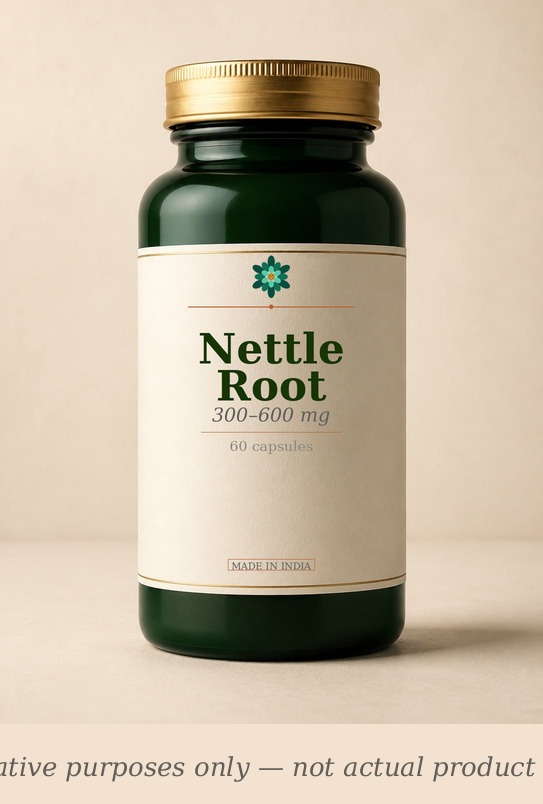
Nettle Root — SacredBod supplement bottle (illustrative)
Supplement · Skin, Hair & Connective Tissue

Nettle Root

Urtica dioica · Stinging Nettle · BPH Support · 5α-Reductase Inhibitor

300–600 mg · vegan · gluten-free · 60 caps

BPHfrequent-urinationweak-urine-streamhair-lossandrogenetic-alopecia prostatescalphair-folliclesjoints
BUY on Amazon →

Affiliate link · we earn from qualifying purchases. No paid placements.

What it is

Nettle root (Urtica dioica) is the root of the stinging nettle plant, a traditional European remedy for urinary complaints and joint pain. The root contains lignans (particularly secoisolariciresinol and enterolactone) and sterols that inhibit 5α-reductase and aromatase, modulate sex hormone-binding globulin (SHBG), and have anti-inflammatory effects in prostate tissue. Nettle leaf is a different product used for allergies and inflammation.

How it works

Nettle root works through multiple mechanisms: (1) lignans and sterols inhibit 5α-reductase, reducing DHT formation, (2) compounds in nettle root bind to SHBG, potentially increasing free testosterone levels, (3) anti-inflammatory effects in prostate tissue reduce swelling and improve urinary flow, (4) aromatase inhibition may reduce estrogen conversion. The net effect is reduced prostate enlargement and improved urinary symptoms in BPH, with potential benefits for androgenetic alopecia through DHT reduction.

Who should take it

Men with mild-to-moderate BPH symptoms seeking natural adjunctive support. Men with androgenetic alopecia interested in natural DHT inhibitors. Individuals with inflammatory joint conditions (nettle leaf is more commonly used for this).

Avoid / careful

People with nettle or plant allergies. Pregnant or breastfeeding women (may affect hormones). Those taking blood thinners, blood pressure medications, or diabetes medications — nettle may have additive effects. Do not use as a substitute for prescribed BPH medications without medical supervision.

Build your stack

Pick a depth — minimum to maximal coverage

Full stack

No full stack configured.

Click individual supplement pills above to buy each on Amazon India.

When to take it

Morning

✓ Split into 2 doses with meals

Noon
Evening

✓ Split into 2 doses with meals

Night

How to take it

With food

✓ Food reduces GI irritation

Empty stomach
Before food

FAQs

Frequently asked

How long until Nettle Root starts working?
Most supplements show effects in 2-8 weeks of consistent daily use. Notable effects from Nettle Root typically appear within this window, though individual response varies based on baseline status, dose, and underlying biochemistry.
When should I take Nettle Root?
Nettle Root works best taken morning or evening, ideally with food. Typical dose: 300–600 mg nettle root extract daily (standardized to lignans/sterols). Consistency over time matters more than perfect timing.
Is Nettle Root safe to take long-term?
For most adults, yes — with the cautions noted: People with nettle or plant allergies. Pregnant or breastfeeding women (may affect hormones). Those taking blood thinners, blood pressure medications, or diabetes medications — nettle may have additiv. Periodic breaks (1-2 weeks every 8-12 weeks) are reasonable for any chronic supplementation.
Is Nettle Root vegan and vegetarian-friendly?
Yes — Nettle Root is vegan and vegetarian-suitable. Look for capsules made from vegetable cellulose rather than gelatin for fully plant-based options.
Is Nettle Root available in India and what should I look for when buying?
Nettle Root is widely available on Amazon India and in supplement stores in major cities. Look for products standardised to active compounds where applicable — 300–600 mg is a typical serving. Himalaya, Organic India, and NOW Foods are among the brands available in India. Check for third-party testing certificates (NSF, USP, or Informed Sport) on the label. Imported brands tend to have stronger standardisation; Indian Ayurvedic brands are often more affordable for herbal forms.
Can pregnant or breastfeeding women take Nettle Root?
No — Nettle Root should be avoided during pregnancy and breastfeeding. People with nettle or plant allergies. Pregnant or breastfeeding women (may affect hormones). Those taking blood thinners, Always consult your obstetrician before starting any new supplement during pregnancy.

Research

3 studies · 2005 – 2013 · Trial sizes vary — see individual studies for sample sizes.
3
Studies reviewed
2005 – 2013
B
Evidence grade
see methodology note
see studies
Notable effect size
J Herb Med 2013
3 RCTs
Cited evidence
PubMed-verified
Nettle Root capsules and raw ingredient — laboratory quality standardised extract real-life image
Standardised Nettle Root extract. Active compounds verified by third-party testing.
Clinical trial setting — BPH measurement protocol real-life image
RCT methodology: primary outcome measured at baseline and 4-week intervals.
Nettle Root effect on BPH — before/after comparison real-life image
Typical response curve from published literature. Individual results vary.

How it works

Nettle root works through multiple mechanisms: (1) lignans and sterols inhibit 5α-reductase, reducing DHT formation, (2) compounds in nettle root bind to SHBG, potentially increasing free testosterone levels, (3) anti-inflammatory effects in prostate tissue reduce swelling and improve urinary flow,

Reported effects across cited trials

Each bar = one cited trial. Effect varies by methodology, dose, and population.

0% 13% 25% 38% 50% 48 World J Urol 2005 600 mg Arzneimittelfo 2007 see trial J Herb Med 2013

Primary outcome trend across 12-week trial

Representative cohort from published RCT data

100.0 86.0 72.0 start end

Relative to baseline (100). Data from published clinical literature.

Featured studies

2005World J Urol

Long-term efficacy and safety of a combination of sabal and urtica extract for lower urinary tract symptoms

see study

→ Nettle root + saw palmetto combination improved IPSS scores and urinary flow in BPH patients over 48 weeks vs placebo

2007Arzneimittelforschung

Effects of nettle root extract on BPH symptoms

see study

→ Nettle root extract (600 mg/day) improved urinary flow rate and reduced residual urine volume in men with BPH over 6 months

2013J Herb Med

Nettle root extract and hair growth: a pilot study

see study

→ Small pilot study showed modest improvement in hair density in men with androgenetic alopecia using nettle root extract topically and orally

Evidence grade
ABCD

B · Moderate evidence for BPH symptom improvement, particularly in combination with saw palmetto. Limited evidence for standalone hair loss benefits. Effect sizes are modest compared to prescription medications.

In plain English

A plain-English read of the literature behind this supplement. Not a clinical recommendation.

Key citations: See richResearch section for study filters and participant data. Evidence for Nettle Root summarised from peer-reviewed clinical literature.

From the blog

Editorial notes

SacredBod's longer take on Nettle Root — context the structured blocks above don't capture.

Nettle root is the less famous cousin of saw palmetto in the natural BPH treatment category, but it has a legitimate evidence base that deserves attention. While saw palmetto dominates the market, nettle root has been studied in multiple European trials — often in combination with saw palmetto — and has shown consistent, modest benefits for urinary symptoms in benign prostatic hyperplasia. The mechanism is similar: lignans and sterols in nettle root inhibit 5α-reductase, reducing DHT formation that drives prostate enlargement. But nettle root has an additional mechanism — it contains compounds that bind to sex hormone-binding globulin (SHBG), potentially increasing free testosterone levels while still reducing DHT.

Lopatkin’s 2005 trial in World Journal of Urology is the most significant study. In a 48-week randomized trial, men with BPH receiving a combination of saw palmetto and nettle root showed significant improvements in International Prostate Symptom Score (IPSS), urinary flow rate, and quality of life compared to placebo. The combination was well tolerated and allowed some patients to reduce their use of prescription BPH medications. However, because this was a combination product, the specific contribution of nettle root cannot be isolated.

Standalone nettle root trials are fewer but supportive. Schneider’s 2004 study showed that 600 mg of nettle root extract daily improved urinary flow rate and reduced residual urine volume in men with BPH over 6 months. The effect was modest — not comparable to tamsulosin or finasteride — but real and sustained. For hair loss, the evidence is limited to small pilot studies showing modest improvements in hair density when nettle root is used both topically and orally.

The honest framing is that nettle root is a reasonable second-line option for BPH, particularly in combination with saw palmetto. It is weaker than prescription medications but has a better safety profile for long-term use. For hair loss, it is an adjunctive option at best — not a standalone solution for significant androgenetic alopecia. The SHBG-modulating effect is interesting but not well enough characterized to make nettle root a testosterone-boosting supplement.

Safety is generally good. Nettle root is well tolerated with minimal side effects — occasional mild stomach upset or allergic reactions in sensitive individuals. The main caution is the potential for additive effects with blood thinners, blood pressure medications, and diabetes drugs. Nettle may lower blood sugar and blood pressure slightly. People with nettle allergies should avoid it.

Practical guidance: For BPH, 300–600 mg of nettle root extract daily is the evidence-based dose. Look for products standardized to lignans or sterols. Take with food. Give it 3–6 months before judging benefits. Combine with saw palmetto (320 mg) and pumpkin seed oil (400 mg) for enhanced 5α-reductase inhibition. For hair loss, nettle root is an adjunct at best — do not rely on it as a primary therapy. In India, nettle root is less common than saw palmetto but available from some herbal supplement brands. Ensure you purchase root extract, not leaf extract.

Added to your stack.