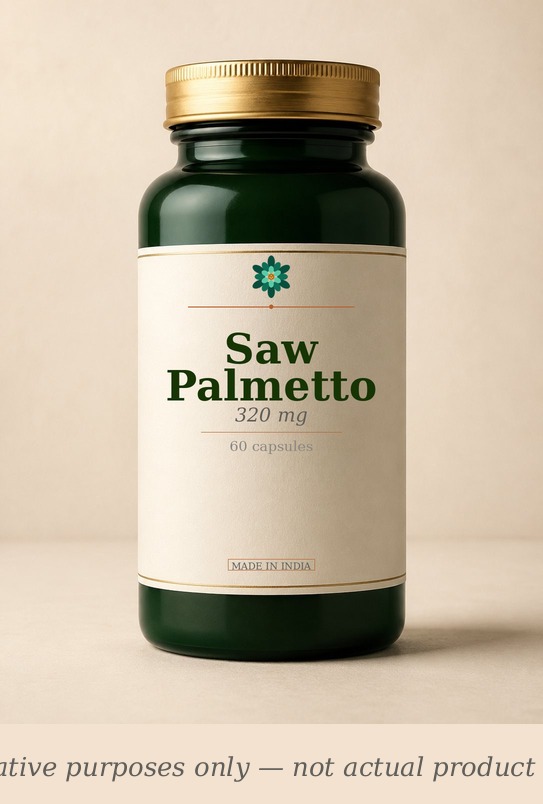
SacredBod's longer take on Saw Palmetto — context the structured blocks above don't capture.
Saw palmetto is the best-selling herbal supplement for prostate health in North America and Europe, yet its clinical track record is surprisingly contested. For men waking up multiple times per night to urinate, it represents a low-risk, over-the-counter option — but one that should be approached with realistic expectations.
What the evidence actually shows
The landmark JAMA trial (Barry et al., 2011) randomly assigned 369 men to escalating doses of saw palmetto extract (up to 960 mg/day) versus placebo for 72 weeks. The result: no significant difference in IPSS scores, urine flow, or quality of life. This was a high-quality, long-duration study that substantially dampened enthusiasm for saw palmetto as a standalone BPH therapy.
However, a more recent 2020 RCT (Sudeep et al.) tested a β-sitosterol-enriched saw palmetto oil formulation in 120 men and reported significant improvements in IPSS, peak urine flow, and free testosterone compared with placebo. This suggests that formulation and standardization may matter: plain berry powder may not deliver the same liposterolic fraction that earlier European studies used.
Mechanism: theory vs. practice
Saw palmetto’s fatty acid and phytosterol content is hypothesized to inhibit 5-alpha-reductase (the enzyme that produces DHT) and reduce inflammation in prostatic tissue. In vitro and ex vivo studies support these mechanisms, but human pharmacokinetic data is weak. The active compounds are poorly characterized, and supplement quality varies enormously between brands.
The traditional evidence-based dose is 320 mg/day of a liposterolic extract, standardized to 85-95% fatty acids. This can be taken as a single softgel or divided into two 160 mg doses. Plain dried berry powder at 1-2 g/day is common in commercial products but lacks the clinical trial backing of the liposterolic extract.
Honest comparison
If your primary goal is BPH symptom relief, beta-sitosterol has stronger and more consistent RCT evidence than saw palmetto. If your goal is testosterone elevation, saw palmetto is the wrong tool — look to tongkat ali or lifestyle interventions instead. Saw palmetto sits in a middle ground: reasonable to try for mild symptoms, but not a proven disease-modifying therapy.