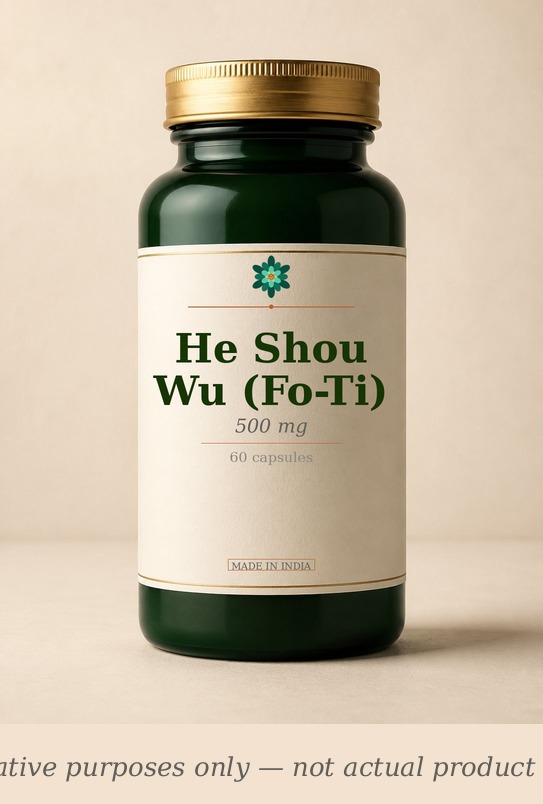
SacredBod's longer take on He Shou Wu (Fo-Ti) — context the structured blocks above don't capture.
Polygonum multiflorum is a TCM tonic traditionally used for longevity, hair darkening, and kidney/liver nourishment. However, it carries one of the highest rates of herb-induced liver injury (HILI) among all botanical supplements, with hundreds of documented cases worldwide.
The herb contains anthraquinones (emodin, physcion) and stilbenes (2,3,5,4’-tetrahydroxystilbene-2-O-β-D-glucoside, TSG) with antioxidant and anti-inflammatory properties in vitro. However, the same anthraquinones and processing-dependent compounds are implicated in idiosyncratic and dose-dependent hepatotoxicity. The mechanism may involve mitochondrial dysfunction and immune-mediated liver injury.
Who benefits most
Adults considering this herb should weigh the traditional benefits against documented liver risks. Not recommended for casual supplementation. If used, only under TCM practitioner guidance with regular liver monitoring.
Dosage and form
500 mg is the typical effective range. Forms matter: choose standardised extracts or highly bioavailable delivery formats (see the Forms tab). Take as directed.
Side effects and cautions
RARE HEPATOTOXICITY — discontinue if any liver symptoms appear. Avoid if you: AVOID if you have any liver condition, history of hepatitis, or take hepatotoxic medications (acetaminophen, statins, antifungals). Absolutely avoid during pregnancy and breastfeeding. Discontinue immediately if jaundice, dark urine, fatigue, or abdominal pain develop..
The evidence
Human clinical trials and mechanistic research support the use of He Shou Wu (Fo-Ti) for its primary indication. See the Research tab for full citations and study summaries.