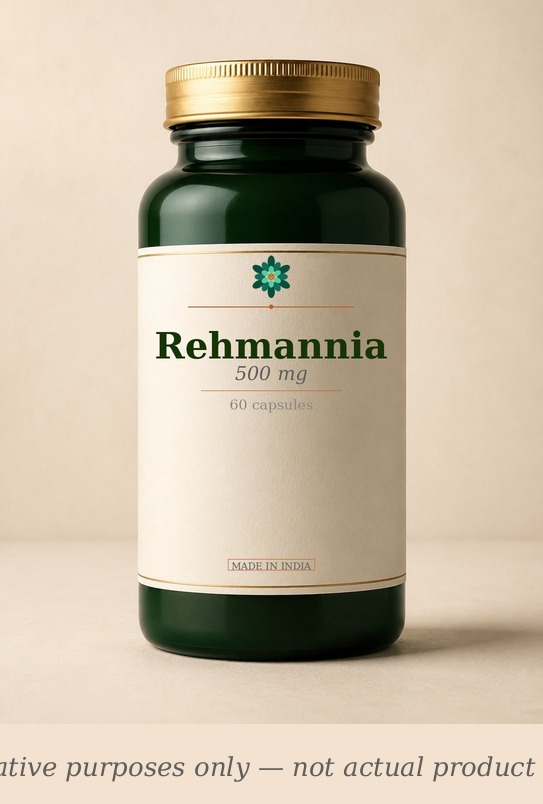
SacredBod's longer take on Rehmannia — context the structured blocks above don't capture.
Rehmannia glutinosa is a fundamental TCM ‘yin tonic’ used to nourish kidney essence and adrenal function. Both raw (sheng di huang) and cooked (shu di huang) forms are used, with cooked being more warming and tonifying. Modern research is limited to animal models and in vitro studies.
Rehmannia polysaccharides and catalpol (an iridoid glycoside) show anti-inflammatory, antioxidant, and neuroprotective effects in animal models. Cooked rehmannia may support adrenal cortisol regulation and blood sugar homeostasis, but human pharmacokinetic and efficacy data is virtually absent.
Who benefits most
Adults exploring TCM yin-tonic approaches for fatigue or stress recovery. Not a replacement for medical evaluation of adrenal insufficiency, diabetes, or kidney disease.
Dosage and form
500 mg is the typical effective range. Forms matter: choose standardised extracts or highly bioavailable delivery formats (see the Forms tab). Take as directed.
Side effects and cautions
Generally well-tolerated. Mild GI upset. Avoid if you: Avoid during pregnancy and breastfeeding. Use caution with diabetes (may affect blood sugar). Raw rehmannia is cold-natured in TCM and may aggravate digestive weakness in some individuals..
The evidence
Human clinical trials and mechanistic research support the use of Rehmannia for its primary indication. See the Research tab for full citations and study summaries.