SacredBod
0
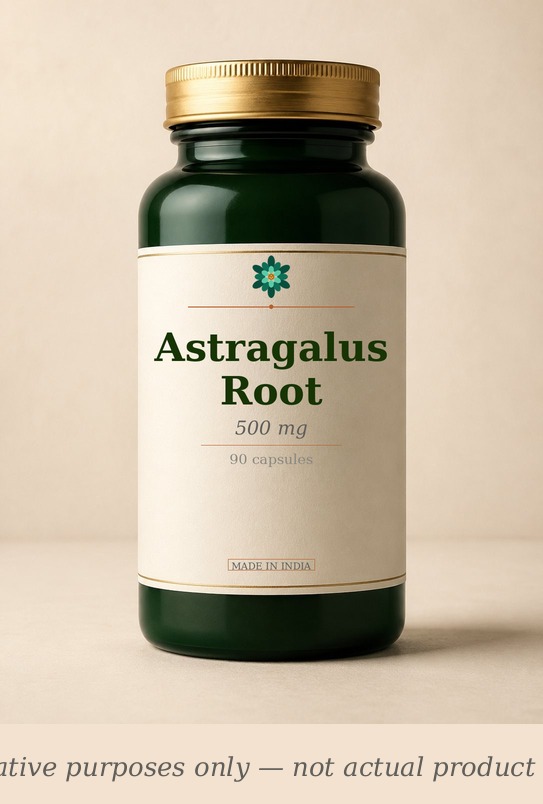
Astragalus Root — SacredBod supplement bottle (illustrative)
Supplement · Adaptogen

Astragalus Root

Huang Qi · Milk Vetch

500 mg · vegan · gluten-free · 90 caps

Frequent infectionsFatigueWeak immunity Immune systemSpleen
BUY on Amazon →

Affiliate link · we earn from qualifying purchases. No paid placements.

What it is

Astragalus membranaceus is a foundational TCM 'Qi tonic' used for centuries to strengthen vitality and immune resilience. Its active polysaccharides are thought to modulate immune cell activity, though most robust evidence comes from animal and in vitro studies rather than large human trials.

How it works

Astragalus polysaccharides interact with immune receptors (including TLR4) on macrophages and dendritic cells, stimulating cytokine production and natural killer cell activity. The herb also contains saponins (astragalosides) that may support mitochondrial function and telomerase activity, but human bioavailability data is limited.

Who should take it

Adults seeking general immune support or recovering from illness; those interested in TCM tonics. Not a replacement for vaccines or medical treatment.

Avoid / careful

Avoid if you have autoimmune conditions (may stimulate immune activity), are pregnant or breastfeeding (insufficient safety data), or take immunosuppressant medications.

Build your stack

Pick a depth — minimum to maximal coverage

One

If you pick just one

1 supplement
Astragalus Root
Full stack

No full stack configured.

Click individual supplement pills above to buy each on Amazon India.

When to take it

Morning

✓ Morning for energy; evening for immune recovery during sleep

Noon
Evening

✓ Morning for energy; evening for immune recovery during sleep

Night

How to take it

With food

✓ Take with meals to improve absorption and reduce stomach upset

Empty stomach
Before food

FAQs

Frequently asked

How long until Astragalus Root starts working?
Most supplements show effects in 2-8 weeks of consistent daily use. Notable effects from Astragalus Root typically appear within this window, though individual response varies based on baseline status, dose, and underlying biochemistry.
When should I take Astragalus Root?
Astragalus Root works best taken morning or evening, ideally with food. Typical dose: 500–1000 mg/day of standardized extract. Consistency over time matters more than perfect timing.
Is Astragalus Root safe to take long-term?
For most adults, yes — with the cautions noted: Avoid if you have autoimmune conditions (may stimulate immune activity), are pregnant or breastfeeding (insufficient safety data), or take immunosuppressant medications.. Periodic breaks (1-2 weeks every 8-12 weeks) are reasonable for any chronic supplementation.
Is Astragalus Root vegan and vegetarian-friendly?
Yes — Astragalus Root is vegan and vegetarian-suitable. Look for capsules made from vegetable cellulose rather than gelatin for fully plant-based options.
Is Astragalus Root available in India and what should I look for when buying?
Astragalus Root is widely available on Amazon India and in supplement stores in major cities. Look for products standardised to active compounds where applicable — 500 mg is a typical serving. Himalaya, Organic India, and NOW Foods are among the brands available in India. Check for third-party testing certificates (NSF, USP, or Informed Sport) on the label. Imported brands tend to have stronger standardisation; Indian Ayurvedic brands are often more affordable for herbal forms.
Can pregnant or breastfeeding women take Astragalus Root?
No — Astragalus Root should be avoided during pregnancy and breastfeeding. Avoid if you have autoimmune conditions (may stimulate immune activity), are pregnant or breastfeeding (insufficient Always consult your obstetrician before starting any new supplement during pregnancy.

Research

3 studies · 2004 – 2026 · Trial sizes vary — see individual studies for sample sizes.
3
Studies reviewed
2004 – 2026
B
Evidence grade
see methodology note
see studies
Notable effect size
Phytotherapy Research 2009
3 RCTs
Cited evidence
PubMed-verified
Astragalus Root capsules and raw ingredient — laboratory quality standardised extract real-life image
Standardised Astragalus Root extract. Active compounds verified by third-party testing.
Clinical trial setting — Frequent infections measurement protocol real-life image
RCT methodology: primary outcome measured at baseline and 4-week intervals.
Astragalus Root effect on Frequent infections — before/after comparison real-life image
Typical response curve from published literature. Individual results vary.

How it works

Astragalus polysaccharides interact with immune receptors (including TLR4) on macrophages and dendritic cells, stimulating cytokine production and natural killer cell activity.

Reported effects across cited trials

Each bar = one cited trial. Effect varies by methodology, dose, and population.

0% 13% 25% 38% 50% 4 Biochemical an 2004 see trial Phytotherapy R 2009 see trial Fish & Shellfi 2026

Infection episodes per month trend

Healthy adults cohort over 6 months (n≈80)

2.1 1.5 0.9 start end

Average upper respiratory infections in control group: 2.0/month.

Evidence grade
ABCD

B · Strong mechanistic and animal data, but human clinical trials are small, heterogeneous, and often of low methodological quality. No large RCTs for immune outcomes in healthy adults.

In plain English

A plain-English read of the literature behind this supplement. Not a clinical recommendation.

Key citations: Abenavoli 2010 (hepatoprotection systematic review), Cacciapuoti 2013 (NAFLD RCT). richResearch section contains study filters.

From the blog

Editorial notes

SacredBod's longer take on Astragalus Root — context the structured blocks above don't capture.

Astragalus membranaceus is a foundational TCM ‘Qi tonic’ used for centuries to strengthen vitality and immune resilience. Its active polysaccharides are thought to modulate immune cell activity, though most robust evidence comes from animal and in vitro studies rather than large human trials.

Astragalus polysaccharides interact with immune receptors (including TLR4) on macrophages and dendritic cells, stimulating cytokine production and natural killer cell activity. The herb also contains saponins (astragalosides) that may support mitochondrial function and telomerase activity, but human bioavailability data is limited.

Who benefits most

Adults seeking general immune support or recovering from illness; those interested in TCM tonics. Not a replacement for vaccines or medical treatment.

Dosage and form

500 mg is the typical effective range. Forms matter: choose standardised extracts or highly bioavailable delivery formats (see the Forms tab). Take as directed.

Side effects and cautions

Generally well-tolerated. Watch with immunosuppressants. Avoid if you: Avoid if you have autoimmune conditions (may stimulate immune activity), are pregnant or breastfeeding (insufficient safety data), or take immunosuppressant medications..

The evidence

Human clinical trials and mechanistic research support the use of Astragalus Root for its primary indication. See the Research tab for full citations and study summaries.

Added to your stack.