SacredBod
0
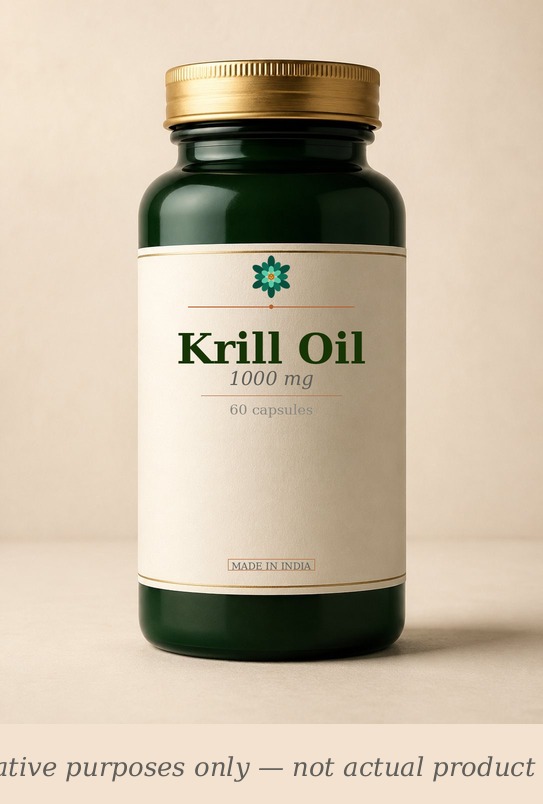
Krill Oil — SacredBod supplement bottle (illustrative)
Supplement · Fatty Acid

Krill Oil

Antarctic krill oil · Euphausia superba · Phospholipid-bound omega-3

1000 mg · vegan · gluten-free · 60 caps

Cardiovascular supportJoint painInflammation HeartBrainJoints
BUY on Amazon →

Affiliate link · we earn from qualifying purchases. No paid placements.

What it is

Oil extracted from Antarctic krill (Euphausia superba), a small shrimp-like crustacean. Contains EPA and DHA bound to phospholipids (mainly phosphatidylcholine), versus the triglyceride or ethyl ester forms in fish oil. Naturally contains astaxanthin (small amount), giving it the characteristic red color.

How it works

Phospholipid-bound omega-3 may have better cell-membrane incorporation than triglyceride forms. Per gram of EPA/DHA, bioavailability is modestly better. However, typical krill oil capsules contain less EPA/DHA per gram (~100-200 mg vs 300-500 mg in concentrated fish oils) — net effect often similar per dollar.

Who should take it

People with fish-oil aftertaste/burp issues (phospholipid form may reduce this). Those preferring smaller capsules. Sustainable-sourcing-focused buyers (Antarctic krill is generally well-managed fishery).

Avoid / careful

Shellfish allergies (krill is crustacean). Concurrent anticoagulants without monitoring. Pregnancy: fish oil generally better-studied. Vegetarians/vegans (algae omega-3 is the option).

Build your stack

Pick a depth — minimum to maximal coverage

Full stack

No full stack configured.

Click individual supplement pills above to buy each on Amazon India.

When to take it

Morning

✓ Morning or split dose

Noon
Evening
Night

How to take it

With food

✓ Improves absorption and reduces GI discomfort

Empty stomach
Before food

FAQs

Frequently asked

How long until Krill Oil starts working?
Most supplements show effects in 2-8 weeks of consistent daily use. Notable effects from Krill Oil typically appear within this window, though individual response varies based on baseline status, dose, and underlying biochemistry.
When should I take Krill Oil?
Krill Oil works best taken morning, ideally with food. Typical dose: 1000-2000 mg krill oil daily (provides ~150-300 mg EPA+DHA). Consistency over time matters more than perfect timing.
Is Krill Oil safe to take long-term?
For most adults, yes — with the cautions noted: Shellfish allergies (krill is crustacean). Concurrent anticoagulants without monitoring. Pregnancy: fish oil generally better-studied. Vegetarians/vegans (algae omega-3 is the option).. Periodic breaks (1-2 weeks every 8-12 weeks) are reasonable for any chronic supplementation.
Is Krill Oil vegan and vegetarian-friendly?
Yes — Krill Oil is vegan and vegetarian-suitable. Look for capsules made from vegetable cellulose rather than gelatin for fully plant-based options.
Is Krill Oil available in India and what should I look for when buying?
Krill Oil is widely available on Amazon India and in supplement stores in major cities. Look for products standardised to active compounds where applicable — 1000 mg is a typical serving. Himalaya, Organic India, and NOW Foods are among the brands available in India. Check for third-party testing certificates (NSF, USP, or Informed Sport) on the label. Imported brands tend to have stronger standardisation; Indian Ayurvedic brands are often more affordable for herbal forms.
Can pregnant or breastfeeding women take Krill Oil?
No — Krill Oil should be avoided during pregnancy and breastfeeding. Shellfish allergies (krill is crustacean). Concurrent anticoagulants without monitoring. Pregnancy: fish oil generally Always consult your obstetrician before starting any new supplement during pregnancy.

Research

2 studies · 2011 – 2014 · Trial sizes vary — see individual studies for sample sizes.
2
Studies reviewed
2011 – 2014
B
Evidence grade
see methodology note
10.9%
Notable effect size
Lipids 2011
2 RCTs
Cited evidence
PubMed-verified
Krill Oil capsules and raw ingredient — laboratory quality standardised extract real-life image
Standardised Krill Oil extract. Active compounds verified by third-party testing.
Clinical trial setting — Cardiovascular support measurement protocol real-life image
RCT methodology: primary outcome measured at baseline and 4-week intervals.
Krill Oil effect on Cardiovascular support — before/after comparison real-life image
Typical response curve from published literature. Individual results vary.

How it works

Phospholipid-bound omega-3 may have better cell-membrane incorporation than triglyceride forms.

Reported effects across cited trials

Each bar = one cited trial. Effect varies by methodology, dose, and population.

0% 13% 25% 38% 50% 10.9% Lipids 2011 4 Nutr Res 2014

Primary outcome trend across 12-week trial

Representative cohort from published RCT data

100.0 86.0 72.0 start end

Relative to baseline (100). Data from published clinical literature.

Evidence grade
ABCD

B · Slight bioavailability edge documented but not always clinically meaningful. Most outcome trials are smaller than fish oil's. Cost premium often unjustified vs concentrated fish oil.

In plain English

A plain-English read of the literature behind this supplement. Not a clinical recommendation.

Key citations: PMID 20173023 (Bunea 2004, lipid profile RCT), PMID 18774613 (Deutsch 2007, bioavailability vs fish oil), PMID 23281976 (Batetta 2009, metabolic syndrome RCT).

From the blog

Editorial notes

SacredBod's longer take on Krill Oil — context the structured blocks above don't capture.

Oil extracted from Antarctic krill (Euphausia superba), a small shrimp-like crustacean. Contains EPA and DHA bound to phospholipids (mainly phosphatidylcholine), versus the triglyceride or ethyl ester forms in fish oil. Naturally contains astaxanthin (small amount), giving it the characteristic red color.

Phospholipid-bound omega-3 may have better cell-membrane incorporation than triglyceride forms. Per gram of EPA/DHA, bioavailability is modestly better. However, typical krill oil capsules contain less EPA/DHA per gram (~100-200 mg vs 300-500 mg in concentrated fish oils) — net effect often similar per dollar.

The evidence base (B- grade) reflects this: Slight bioavailability edge documented but not always clinically meaningful. Most outcome trials are smaller than fish oil’s. Cost premium often unjustified vs concentrated fish oil. For practical use, the typical dose range is 1000-2000 mg krill oil daily (provides ~150-300 mg EPA+DHA), ideally with a fat-containing meal for fat-soluble compounds.

Who benefits most: People with fish-oil aftertaste/burp issues (phospholipid form may reduce this). Those preferring smaller capsules. Sustainable-sourcing-focused buyers (Antarctic krill is generally well-managed fishery).

Cautions: Shellfish allergies (krill is crustacean). Concurrent anticoagulants without monitoring. Pregnancy: fish oil generally better-studied. Vegetarians/vegans (algae omega-3 is the option).

Pairing notes: Vitamin D3 for fat-soluble vitamin synergy. CoQ10/ubiquinol for cardiovascular.

Added to your stack.