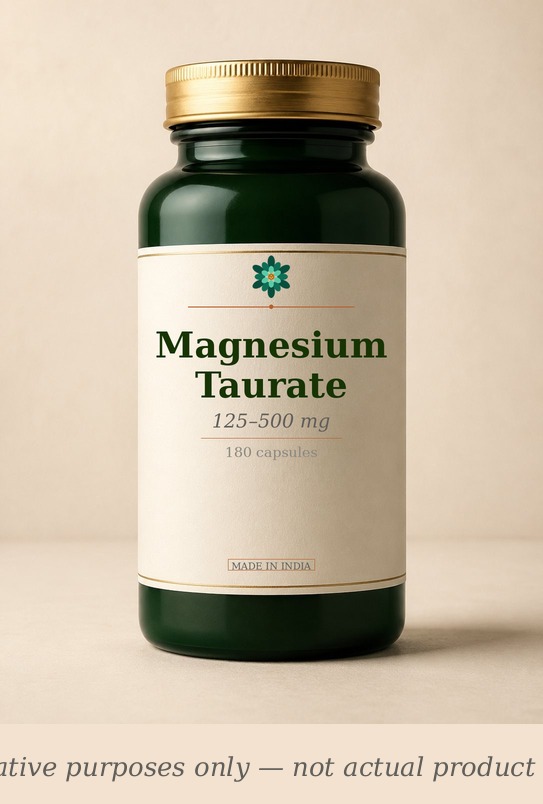
SacredBod's longer take on Magnesium Taurate — context the structured blocks above don't capture.
Magnesium taurate is one of the most popular “cardiovascular” magnesium forms, yet it has a peculiar evidence problem: there are no human clinical trials specifically testing magnesium taurate. None. The entire evidence base consists of theoretical proposals, preclinical studies on taurine and magnesium separately, and extrapolation from general magnesium cardiovascular research. This does not mean magnesium taurate is ineffective — it means we do not know whether the specific combination provides benefits beyond what magnesium or taurine would provide individually.
McCarty’s 1996 article in Medical Hypotheses proposed that magnesium taurate combined with fish oil might prevent migraines through vascular stabilization and neuronal protection. This was a hypothesis paper, not a clinical trial — it suggested a mechanism and called for research, but no subsequent large trial tested the specific combination. The mechanism is plausible: both magnesium and taurine modulate vascular tone, calcium signaling, and neuronal excitability. But plausible mechanism without clinical validation is the definition of theoretical evidence.
Taurine itself has a more robust cardiovascular evidence base. A 2017 review in Nutrients summarized taurine’s effects: blood pressure reduction through modulation of the renin-angiotensin system, anti-inflammatory effects on vascular endothelium, cardioprotective effects in heart failure models, and anti-arrhythmic properties in animal studies. Some human trials show modest blood pressure reduction with taurine supplementation at 1.6–6 grams daily. Magnesium also has established cardiovascular benefits — a 2022 review in Frontiers in Cardiovascular Medicine documented that magnesium deficiency is associated with hypertension, arrhythmia, and coronary artery disease, and that supplementation improves blood pressure and cardiac function in deficient individuals.
The honest framing is that magnesium taurate is a reasonable choice for people who want magnesium supplementation and are interested in cardiovascular health, but the specific combination has no dedicated clinical trial evidence. The benefits you experience are likely attributable to magnesium (if you are deficient) and possibly to taurine (at the doses provided), not to some unique synergy of the two. The taurine content in a typical magnesium taurate supplement (approximately 8–10 times the magnesium content by weight) is modest compared to standalone taurine doses used in trials, so the taurine contribution may be small.
Safety is consistent with other magnesium forms. Magnesium taurate is generally well tolerated with minimal laxative effect. The main concerns are the same as for all magnesium supplements: avoid in kidney disease, myasthenia gravis, and severe heart block. Taurine has an excellent safety record, though high doses should be used cautiously in pregnancy due to limited data.
Practical guidance: If you choose magnesium taurate for cardiovascular support, the typical dose is 125–500 mg elemental magnesium daily, split into two doses. Start at the lower end and increase gradually. Take with food. Give it 2–3 months before assessing blood pressure or symptom effects. Do not discontinue prescribed cardiac medications in favor of magnesium taurate. If you have kidney disease, heart block, or take digoxin, consult a physician before use. In India, magnesium taurate is available as an import from Cardiovascular Research (B00AESH6YQ) and some local brands.